Choosing the right wall adapter for a dryer can simplify moving into a home with an older outlet or upgrading to a newer dryer cord. This guide reviews five solid options that help you convert between 3-prong and 4-prong configurations without rewiring. Each product aligns with common American dryer setups (NEMA 10-30 and NEMA 14-30) and emphasizes safety, durability, and straightforward installation. The following selection aims to help homeowners, renters, and landlords make informed decisions for reliable, code-compliant operation.
Summary of chosen products
- Strightinc 4 Prong to 3 Prong Dryer Plug Adapter with Green Ground Wire
- WELLUCK 1.5FT 3 Prong to 4 Prong Dryer Adapter
- 1.5FT 3 Prong to 4 Prong Dryer Adapter, 4 Prong to 3 Prong Dryer Adapter by WimiSom
- PlugSaf 1.5FT 30AMP 125V/250V 3 Prong to 4 Prong Dryer Adapter
- CircleCord Dryer Adapter 4 Prong to 3 Prong (ETL Listed)
Strightinc 4 Prong to 3 Prong Dryer Adapter
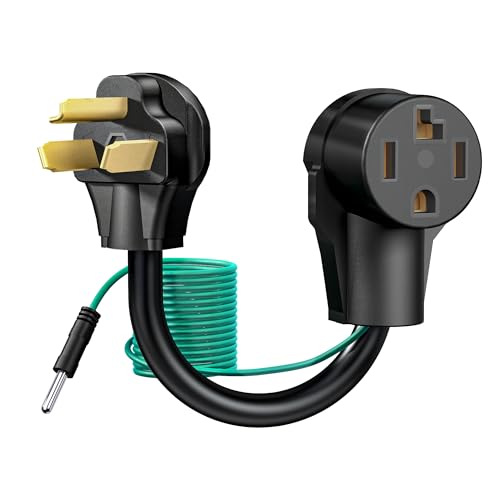
The Strightinc adapter enables a newly purchased dryer to work with older 3-prong outlets without changing the cord. It connects a 4-prong dryer receptacle (14-30R) to a 3-prong outlet (10-30P) and includes a green ground wire for grounding safety. The unit is positioned as a straightforward plug-in solution suitable for pre-1997 home wiring, offering a practical bridge for apartments or homes with legacy outlets.
Key features include ease of use, compatibility with common older outlets, and a focus on preserving existing wiring while supporting modern dryer components. Users should verify outlet compatibility and ensure grounding is properly connected to meet local electrical codes. This option is a practical first step when upgrading a dryer but not rewiring a home’s circuits.
WELLUCK 1.5FT 3 Prong to 4 Prong Dryer Adapter

The WELLUCK adapter provides a compact solution to convert a 3-prong dryer plug to a 4-slot wall outlet. It highlights cost and time savings by avoiding a full appliance replacement or professional rewiring. The design features a longer, wide extension 4-prong cord that can bend 180 degrees for flexible positioning. The molded right-angle plug and easy-grip receptacle design are tailored for convenient use in tight laundry spaces. It is promoted as a practical, economical choice for older installations that still rely on 3-prong outlets, enabling a smoother transition to newer dryers while maintaining safety considerations.
1.5FT 3 Prong to 4 Prong Dryer Adapter — WimiSom

Designed to connect a 3-prong dryer plug to a 4-prong wall outlet, this adapter fits 14-30P to 10-30R configurations. It notes compatibility with 30-amp, 250V systems and positions itself as a no-hassle solution when moving into a home with older wiring. The product emphasizes a sturdy build with 10 AWG copper wiring and UL-listed components to promote safe operation up to 7500 watts. The description suggests easy plug-in use without the need for disassembly or professional rewiring, making it a practical option for renters and homeowners looking to preserve existing dryers.
PlugSaf 1.5FT 30AMP 3 Prong to 4 Prong Dryer Adapter

The PlugSaf model covers 125/250V with a 1.5-foot length and 10 AWG wiring, rated for 30 amps and 7500 watts. It features ETL listing and includes a protective cover on the plug to enhance safety and prevent damage when not in use. The design emphasizes a right-angle, space-saving plug that fits tight spaces against walls, along with a grip-friendly design for easy insertion and removal. It also cautions against usage with non-dryer high-power equipment, emphasizing appropriate, dedicated dryer applications.
CircleCord Dryer Adapter 4 Prong to 3 Prong

This adapter converts a 4-prong dryer outlet to a 3-prong house receptacle (NEMA 14-30P to NEMA 10-30P) and includes an ETL listing and a safety ground wire. The 10 AWG construction and 1.5-foot length provide a sturdy, space-conscious solution, with a grounding wire to maintain safety protection in older installations. The product highlights the ability to use the adapter without rewiring, helping households accommodate newer dryers with legacy outlets while maintaining a grounded configuration.
CircleCord 4 Prong to 3 Prong — Blue Ground Wire

This CircleCord variant also bridges 4-prong cords to 3-prong receptacles but distinguishes itself with a blue safety ground wire and ETL-listed credentials. The 10 AWG wiring and 1.5-foot length offer robust performance for standard 30A, 250V dryer circuits. The product emphasizes plug-and-play convenience, suitable for households updating only the outlet style rather than the entire dryer, and highlights grounding as a key safety feature when integrating older infrastructure with newer appliances.
WELLUCK 4 Prong to 3 Prong Dryer Adapter

The WELLUCK model converts a 4-prong dryer cord to a 3-slot wall outlet, emphasizing ease of use and an economical approach to avoid rewiring. Details highlight a longer, wide extension with a flexible bend, molded right-angle plug and receptacle, and a user-friendly grip design. It positions itself as a quick fix for homes with older outlets while maintaining compatibility with common 30A, 250V dryer setups. The design notes focus on flexible operation and safety features to prevent accidental misconnection.
Buying Guide: Key Considerations For Dryer Adapters
- Outlet Compatibility: Verify whether your home outlets are NEMA 10-30 (older 3-prong, no ground) or NEMA 14-30 (newer 4-prong, with grounding). Choose an adapter that matches both your dryer plug and wall receptacle, without forcing mismatched voltages.
- Grounding and Safety: Grounding wires or grounding provisions are essential when converting to or from older outlets. Prefer adapters with a dedicated grounding path to minimize shock risk and voltage fluctuations.
- Electrical Rating: Most dryer adapters operate around 30 amps and up to 250V, supporting up to 7500 watts. Confirm your dryer’s wattage and ensure the adapter’s rating aligns with or exceeds it.
- Safety Certifications: ETL or UL listings indicate compliance with safety standards. An ETL-listed adapter, like several options here, provides additional assurance.
- Cord Length And Flexibility: Short cords are space-saving but may limit placement. Look for 1.5 ft lengths with right-angle designs if you’re working in tight laundry spaces.
- Compatibility With Appliances: Some adapters are explicitly marketed for “dryer only” use. Avoid using them with EV chargers, stoves, or other high-power devices to prevent misuse and safety hazards.
- Installation Simplicity: A plug-and-play approach minimizes the need for professional rewiring. However, always verify that your installation complies with local electrical codes and, if in doubt, consult a licensed electrician.
- Durability And Materials: Copper conductors, flame-resistant jackets, and weather- or heat-resistant features extend durability. Look for sturdy housings and strain relief for long-term reliability.
- User Safety Features: Grounding wires, protective covers, and easy-grip designs reduce the risk of accidental contact or improper connections during plug-in.
- Limitations And Warnings: These adapters are designed for specific configurations. Do not attempt to power devices beyond the adapter’s rating or use adapters beyond their intended purpose.
In sum, selecting a wall adapter for a dryer requires matching the correct NEMA plug configuration, ensuring grounding, and confirming that the overall system remains within safe electrical ratings. For many households, these adapters offer a practical, non-invasive path to preserve functionality while awaiting or enabling upgrades to outlets or cords.