For homeowners seeking robust defense against power surges, choosing the right panel surge protector is essential. The following selections cover Type 1 and Type 2 devices, compatibility with various load centers, and a range of amperage capacities suitable for modern households. This guide highlights reliable brands, installation considerations, and how to compare protection specs to fit residential electrical panels.
Summary of selected products
| Product | Brand | Type | Protection (amperage) |
|---|---|---|---|
| Eaton BRNSURGE Type BR Whole-Panel Circuit Breaker | Eaton | Type BR, Whole-Panel | 18 kA surge current |
| Leviton R2120-B SPD | Leviton | Type 1 SPD, residential | 36 kA per phase |
| Eaton CHSPT2SURGE SPD | Eaton | Type 2 SPD, whole-home | Noted for 120/240V systems |
| ProSurge Whole House SPD | ProSurge | Type 1/Type 2 capable, outdoor/indoor | 100–200 kA per phase range |
| Furniqro FHSPD108S | Furniqro | 108 kA, whole-house | 108,000 Amps |
Note: The table provides general protection capacities. Always verify compatibility with your panel and local electrical codes before installation. The listed products span a range of configurations from Type 1 to Type 2 devices, suitable for residential applications and system protection needs.
Eaton BRNSURGE Whole-Panel Protection — 18 kA
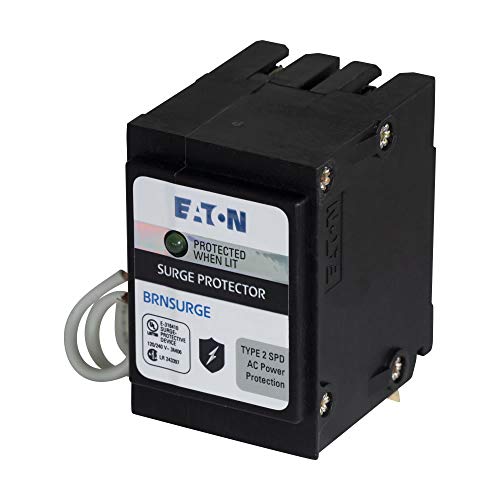
The Eaton BRNSURGE Type BR device is designed to be installed at the main panel, using two branch circuit spaces for its connection. It offers 18 kA surge current capacity and is compatible with standard residential panels that accept Eaton BR-series breakers. This unit aims to divert transient overvoltages away from sensitive electronics, preserving equipment life and reducing nuisance firmware resets in HVAC, entertainment systems, and computing gear. Its installation approach focuses on co-location with the main breaker space, making it a practical option for upgrading existing panels to metered surge standards.
Leviton R2120-B SPD — Residential Type 1

Leviton’s R2120-B SPD is designed specifically for residential applications. This Type 1 surge protector offers compact installation and is described as easy to install within standard service panels. It provides protection by diverting voltage transients away from the electrical system, aligning with Article 230.67 of the 2020 NEC which requires an SPD for dwelling services. The device’s Type 1 rating positions it for primary protection at the service entrance, potentially reducing the risk to downstream circuits and appliances.
Eaton CHSPT2SURGE — Type 2, Whole-Home

The Eaton CHSPT2SURGE SPD is a Type 2 device designed to be connected to a load center, providing universal compatibility with many manufacturers’ panels. The design supports a fast, reliable response to AC power surges, and its quick-connect features help protect the internal wiring with a straightforward mounting approach. Ideal for retrofits, it complements existing protection by guarding against surges that reach the main service panel and branch circuits, helping maintain the safety of electronics, appliances, and HVAC systems connected throughout the home.
ProSurge Whole House SPD — Compact Outdoor/Indoor

ProSurge’s Whole House SPD is a Type 1 or Type 2 device designed for single-phase or split-phase 120/240V systems. With a robust surge capacity range and a compact, versatile enclosure, this unit is suitable for outdoor or indoor installation. It is built to guard entire electrical distribution systems against surges, including those produced by lightning, while meeting UL Type 1/Type 2 standards. Its compact footprint makes it easier to fit into many service equipment configurations, reducing the need for extensive panel modifications.
Bxmgr 120/240CM+ Surge Arrestor — Type 1 SPD

Bxmgr’s 120/240CM+ Surge Arrestor is positioned as a parallel protector compatible with HVAC systems and other critical loads. It features UL-listed Type 1 protection and emphasizes rapid response to transient overvoltages to shield equipment from surges, lightning, and similar disturbances. The device is marketed for easy installation and ongoing maintenance, including fault indicators to simplify troubleshooting. Its focus on high reliability makes it suitable for systems demanding resilient surge protection in variable weather conditions.
Furniqro FHSPD108S — 108 kA Whole-House

The Furniqro FHSPD108S is a high-capacity whole-house surge protector rated up to 108,000 amps. It is designed for indoor or outdoor installations and emphasizes compatibility with a wide range of load centers and breakers. This device aims to deliver strong surge suppression for single-phase or split-phase 120/240V systems while maintaining a compact footprint. Its commercial-grade enclosure helps ensure durability in varied climates and electrical environments, making it suitable for homes with extensive electronics, smart devices, and HVAC equipment.
Zuomeng HVAC Surge Protector — 20 kA, IP65

Zuomeng’s HVAC surge protector is designed specifically for air conditioning systems and related equipment. It provides up to 20 kA of surge absorption and features three protection modes (L-G, L-L, L-N) for versatile wiring configurations. The device includes dual LED indicators to show operational status and fault conditions, and it is built with IP65 waterproofing and flame-retardant materials to withstand harsh outdoor environments. This makes it a practical choice for outdoor HVAC installations and where weather exposure is a consideration.
Buying Guide: Key Purchase Considerations
- Protection type and location: Type 1 devices are typically installed at the service entrance for primary protection, while Type 2 devices are placed at the main distribution panel to guard downstream circuits. Consider whether you need main- or branch-level protection based on your panel and installation goals.
- Surge capacity and clamping: Higher surge current ratings (kA) generally indicate stronger protection. Look for devices that align with your panel’s specifications and the electronics you want to shield, especially with sensitive home networks and smart devices.
- Compatibility with load centers: Verify that the surge protector is listed for your panel brand and model. Some devices are universal, while others require specific breaker types or bus configurations.
- Environmental considerations: Outdoor installations typically require UL-listed or IP-rated devices designed for weather exposure. Indoor options may be sufficient for garages or basements, depending on your environment.
- Installation and maintenance: Some units offer easy mounting, quick-connect cables, and fault indicators. Consider devices with clear status indicators to simplify routine checks and perform inspections safely.
- Code compliance: NEC requirements for service equipment and SPD installation can vary by year and locality. Ensure the product you choose aligns with current codes and your electrician’s recommendations.
- Warranty and brand support: Reputable brands with solid warranties help ensure long-term protection and access to replacement parts if needed.
- Budget versus capacity: Higher-capacity units deliver stronger protection but may require more substantial panel space and potentially professional installation. Balance protection needs with panel compatibility and space constraints.
- Outdoor versus indoor: If the device will be exposed to weather, invest in an IP-rated unit designed for outdoor use to ensure durability and safety.
- Monitoring features: Some surge protectors offer fault alarms or indicator lights. These can help with proactive maintenance by signaling when a device has degraded.
When selecting a surge protector for a panel, prioritize compatibility with your existing service equipment, the expected surge environment, and how the installation will interact with home electronics. A properly chosen panel surge protector can reduce the risk of damage from lightning strikes, voltage spikes, and power quality issues, contributing to longer equipment life and fewer outages.