Finding a reliable solar water pump for a deep well can power remote watering, off-grid irrigation, and livestock needs without depending on grid electricity. This article reviews five top options from Eco-Worthy and a versatile model from Josbuynls, highlighting lift, flow, power options, and installation considerations to help you choose the right system for your well depth and climate.
Summary of Selected Products
| Product | Type | Max Lift | Flow | Power Source |
|---|---|---|---|---|
| ECO-WORTHY 12V DC Submersible Deep Well Pump | Submersible | 230 ft | 3.2 GPM | DC 12V |
| ECO-WORTHY 24V Well Pump (4″ Stainless) | Submersible | 230 ft | 3.2 GPM | DC 24V |
| ECO-WORTHY Solar Well Pump Kit (100W Panel) | Solar Kit | 230 ft | 1.6 GPM | Solar |
| ECO-WORTHY 24V Submersible Deep Well Pump (10 ft Cable) | Submersible | 230 ft | 1.6 GPM | DC 24V |
| Josbuynls Solar Deep Well Pump (DC 370W) | Submersible | 213 ft | ~3.0 GPM | DC Solar |
ECO-WORTHY 12V DC Submersible Deep Well Pump
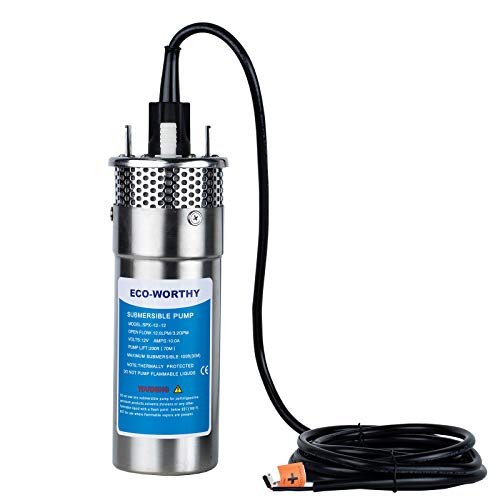
This 12V DC submersible well pump is designed for deep wells with a maximum lift up to 230 feet and a flow rate of 3.2 GPM (12 LPM). It can be powered by solar, a 12V battery, or certain vehicle batteries, making it a flexible option for remote watering, livestock tanks, or garden irrigation. The unit includes a 10-foot cable and is suitable for use in off-grid systems where electric power isn’t available.
Key features:
- DC 120W, max flow 12 LPM / 3.2 GPM
- Maximum lift 230 ft (70 m)
- 10-foot (3 m) cable
- Compatible with solar panels or battery banks
ECO-WORTHY 24V Well Pump 3.2GPM 4″ Stainless Steel

This 24V deep-well pump is built for reliability with a stainless steel body and a flow rate of 3.2 GPM and lift up to 230 feet. It’s optimized for DC power sources such as solar panels and batteries, delivering efficient startup and stable operation for off-grid irrigation, garden irrigation, or water storage. The model supports remote watering needs where electrical power is unavailable.
Key features:
- DC 24V, 5A max; 12 LPM / 3.2 GPM
- Max lift 230 ft; submersion up to 100 ft
- Engineered for solar or battery power
ECO-WORTHY Solar Well Pump Kit

This kit combines a 100W solar panel with a 12V deep-well pump, suitable for off-grid living, irrigation, and farm water transfer. It emphasizes high lift (up to 230 ft) and a flow rate up to 1.6 GPM, with the option to run directly from sunlight or with a battery and controller for improved stability. Panel cleanliness and sun exposure are crucial for optimal performance.
Key features:
- Max lift 230 ft; 1.6 GPM (6 L/min)
- Direct panel connection or battery with controller
- Solar panel efficiency considerations for shading
ECO-WORTHY 24V Submersible Deep Well Pump with 10ft Cable
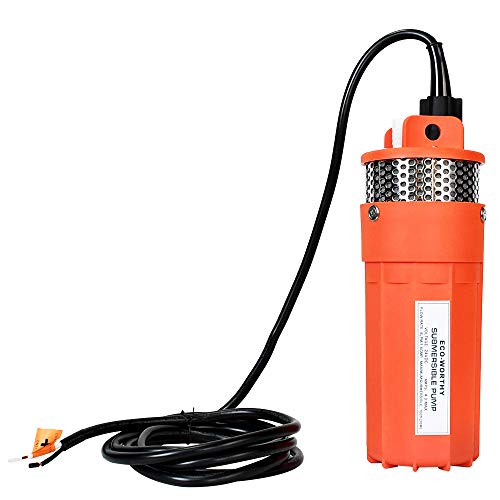
This 24V submersible deep-well pump features a 10-foot cable and a maximum lift of 230 feet with a flow of 1.6 GPM. It is designed for solar or battery power, suitable for wells 4 inches or larger, ponds, or tanks. Easy installation is emphasized, with direct connection to a solar panel or battery and a simple mounting approach.
Key features:
- 4″ well compatibility; 1.6 GPM
- 10 ft cable; 230 ft lift
- Solar-ready with battery compatibility
Josbuynls Solar Water Pump Deep Well

Josbuynls offers a solar deep-well pump with a maximum lift around 213 feet and a flow near 3 GPM under ideal solar conditions. The 0.37 kW brushless DC motor and stainless steel construction emphasize durability for farm or irrigation use. The system is designed for compatibility with solar panels and battery support, enabling on-demand pumping with solar power.
Key features:
- Max head about 213 ft; flow ~3.0 GPM
- Stainless steel body; brushless DC motor
- Solar-ready, battery compatible, MPPT controller options
Buying Guide: Key Purchase Considerations
- Well depth and lift: Choose a pump with a lift greater than your maximum measured well depth to ensure reliable water delivery.
- Flow needs: If you’ll fill tanks or irrigate, match the GPM or LPM to water demand, acknowledging that lift reduces flow.
- Power source: Decide between direct solar, battery plus controller, or a hybrid. Solar-only setups are simple but require sun; battery-assisted systems offer steadier performance on cloudy days.
- Cable length and installation: Longer cables reduce pump depth flexibility; ensure compatibility with your well casing and installation space.
- Durability and materials: Stainless steel or corrosion-resistant housings extend life in harsh outdoor environments.
- Control features: MPPT controllers, water shortage sensors, and automatic shutoffs help protect the pump and conserve energy.
- Maintenance: Look for readily available replacement parts and clear installation guidance to simplify routine upkeep.
- System integration: Assess compatibility with solar panels, charge controllers, and existing water storage tanks or irrigation lines.
Comparative Perspectives
- Best for high lift and proven deep-well performance: 12V or 24V ECO-WORTHY submersible models with 230 ft lift, suitable for deep wells and remote locations.
- Best for off-grid ready kits: Solar Well Pump Kit provides an all-in-one option with a panel, ideal for quick deployment in sun-rich sites.
- Best for durability and long-term use: Stainless steel 4″ well pump options offer corrosion resistance for persistent field use.
- Best for budget-conscious setups: Submersible models with basic solar compatibility and battery options provide effective off-grid pumping at a lower upfront cost.
- Best for flexible power and smart control: Pumps paired with MPPT controllers or water shortage sensors deliver efficient, reliable operation under varied sunlight.
Notes on Installation and Safety
- Always verify well casing size and depth before selecting a pump model.
- Install pressure tanks or storage to stabilize water supply and reduce pump cycling.
- Follow manufacturer wiring diagrams, especially when combining solar panels with batteries and controllers.
- Use appropriate wiring gauge and weatherproof connections to protect against moisture and temperature fluctuations.
- Regularly inspect seals, pump exterior, and intake screens to prevent clogs and wear.