Solar power packs are increasingly used as home backup solutions and off-grid power sources for camping, emergencies, and everyday devices. This guide highlights five top-performing solar generators that blend portability with enough capacity to handle common household needs during outages or outdoor activities. Each entry covers core capabilities, output options, and what makes it suitable for home use and remote locations.
| Product | Brand | Capacity | Output | Best For |
|---|---|---|---|---|
| MARBERO Portable Power Station 88Wh | MARBERO | 88Wh | AC outlets, USB, USB-C | Compact home backup, camping |
| Portable Power Station With Foldable 40W Solar Panel (146Wh) | ZeroKor | 146Wh | 2×110V AC, USB, USB-C | Emergency power, off-grid |
| Apowking Solar Powered Generator 146Wh | Apowking | 146Wh | 7 outlets, 110V AC | Home use, outdoor adventures |
| Hiluckey Solar Charger 25000mAh | Hiluckey | 25000mAh | USB-A, USB-C, USB outputs | Smartphone/camera charging on the go |
| GOODaaa Power Bank 36000mAh | GOODaaa | 36000mAh | 4 cables, wireless charging, USB outputs | All-day devices, travel |
Note: All products support charging from solar panels or wall outlets and are suitable for mobile, temporary, or backup power needs. Features vary by design, including battery capacity, output types, and charging speeds. This guide compares practical use cases to help choose the right balance of portability, power, and reliability for home backup and off-grid scenarios.
MARBERO Portable Power Station 88Wh

MARBERO’s 88Wh power station emphasizes efficient charging and portability. It supports charging from an included adapter to reach 80% in about two hours, while concurrently powering other devices. It’s compatible with MARBERO’s 30W or 60W solar panels for outdoor use. The compact design weighs about 3.2 pounds and measures 6.5 x 4.6 x 3.1 inches, making it easy to store at home or take on road trips. Eight output ports enable simultaneous use, and the built-in BMS safeguards efficiency and safety. Car DC output expands camping utility for a fridge or air pump, while USB and USB-C PD ports support phones, tablets, and laptops.
Key considerations for home use: The 88Wh capacity is best for small electronics and emergency devices rather than full-size appliances. Its strength lies in portability and quick charging, ideal for supplementing home backup during outages, charging small devices during power cuts, or powering a compact setup in an RV or cabin.
ZeroKor Portable Power Station With 40W Solar Panel

ZeroKor combines a 146Wh lithium battery with a foldable 40W solar panel in a kit designed for outdoor activity and home backup. It includes two 110V AC outlets (100W max each), multiple USB ports, and an integrated DC output. The kit emphasizes versatility for off-grid living and emergency power during outages. It supports charging from wall outlets, DC solar panels, or carports, offering flexible recharging options. The unit is designed to stay under 4 pounds and be easily transportable for weekend trips or quick deployments in a power outage. Note that devices drawing more than 100W may require a more powerful setup, and the unit is intended for practical, not continuous, high-load use.
Home-use considerations: With a 146Wh capacity and multiple outputs, this ZeroKor model is well-suited for personal electronics, lighting, and small appliances during outages. It is less capable for running heavy appliances for extended periods but excels at portability and quick setup in emergency scenarios.
Apowking Solar Powered Generator 146Wh

Apowking offers a 146Wh portable power station with solar panel inclusion, emphasizing a broad output suite including seven outlets. It provides two 110V AC outlets with up to 100W (200W peak), a DC output, and multiple USB ports for charging devices like laptops, cameras, drones, and more. The package includes solar panels designed to maximize conversion efficiency, enabling reliable charging in outdoor settings or during power outages. Weighing roughly 3.3 pounds, it’s designed for backpacking, camping, and small home backup tasks. For users who need more than basic charging, this unit supports a diverse range of devices, helping to keep essential electronics operational during outages.
Home-use considerations: A robust set of outlets and a decent capacity make this a strong choice for cabin or apartment outages where peak loads stay under the 100W mark, or for charging multiple devices simultaneously in an off-grid setup.
Power-Bank Solar Charger 42800mAh

The Mregb 42800mAh solar charger combines a high-capacity battery with multiple outputs and durability features like IP67 waterproofing. It includes two USB outputs and supports QC3.0 fast charging, enabling rapid topping of phones and tablets. The device is designed to operate in extreme environments with water, drop, and dust resistance. A large capacity reduces the frequency of recharges, making it suitable for longer outages or outdoor activities where access to power is limited. It is a practical option for households seeking extended backup power for essential devices without needing a heavy power station.
Home-use considerations: Best for longer outages or off-grid living where a single device must power multiple devices over several days. The rugged build adds resilience for porch, garage, or workshop use during storms or camping trips.
Durecopow Solar Charger Power Bank 20,000mAh

Durecopow’s 20,000mAh solar charger emphasizes ruggedness and versatility. It features multiple cables (4 included) and 3 ports to charge several devices at once, including Type-C, Lightning, and Micro USB connections. It also bundles two LED flashlights for emergency signaling. The solar panel charger is designed for camping and outdoor use, with water, shock, and dust resistance to endure rough conditions. The device’s integrated carabiner makes it easy to attach to backpacks or gear during hikes or power outages at home.
Home-use considerations: Useful as a lightweight, multi-device back-up option for emergencies or travel. Its smaller capacity means it will not run larger appliances for long periods but offers reliable charging for phones, cameras, and essential gadgets during outages.
BLAVOR Solar Charger Power Bank 10,000mAh
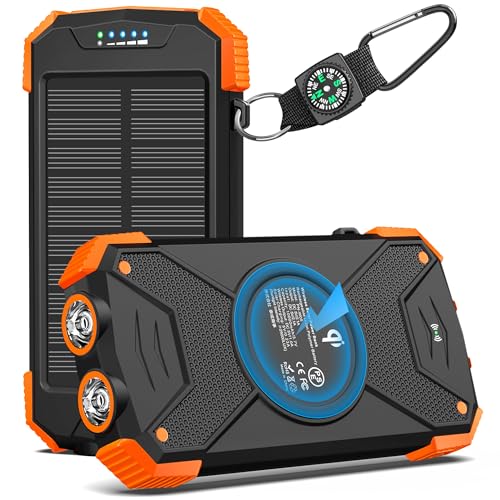
BLAVOR’s 10,000mAh solar charger emphasizes fast USB-C charging, wireless charging, and multi-device compatibility. It supports 20W fast charging via USB-C and can charge multiple devices at once, including wireless charging for compatible smartphones. The compact design makes it easy to bring along during outdoor activities or as a compact home backup for essential devices. The inclusion of wireless charging provides added convenience for day-to-day use, especially when access to outlets is limited.
Home-use considerations: Best for minimal-detector outages, travel, or backup charging for phones, earbuds, and small devices. Suitable as a supplementary power source when a larger generator is not required.
GOODaaa Power Bank 36000mAh

GOODaaa delivers a 36000mAh power bank with built-in cables and wireless charging, designed to power multiple devices for an extended period. It includes four cables and multiple outputs, plus wireless charging for compatible devices. The device is rugged enough for outdoor use and can sustain daily charging cycles for phones, tablets, and small peripherals. Its multi-cable setup reduces cable clutter, making it convenient for campers and home users who want a comprehensive charging hub in one device.
Home-use considerations: Well-suited for longer trips and larger households needing multiple device backups. Its large battery capacity means fewer recharges, useful during multi-day outages or off-grid stays where access to outlets is limited.
Buying Guide: Key Purchase Considerations
- Capacity and load: For home backup, consider you’ll want enough watt-hours to run essential devices during outages. Smaller units (under 100Wh) are portable and rapid for charging phones and small devices, while 100-150Wh models balance portability with basic appliance support. For longer outages, target 200Wh or more with multiple AC outlets or higher peak wattage.
- Output options: Look for a mix of AC outlets for larger appliances, USB-C PD for fast laptop and phone charging, and USB-A/QC for compatibility with a wide range of devices. Some units include DC car outputs, which are handy for car fridges and fans.
- Recharging flexibility: Solar panel compatibility and efficiency matter. Kits with foldable panels increase portability, while MPPT controllers improve charging efficiency under variable sunlight. Consider whether you’ll rely mainly on solar, or prefer wall charging as a primary option.
- Portability vs. resilience: If you plan to transport the unit frequently, prioritize lighter weight and compact form factors. For home backup, a bit more weight can translate into higher capacity and more reliable power for critical devices.
- Durability and safety: Features like BMS protection, IP ratings, and overcurrent/overheat safeguards improve reliability. Outdoor-oriented models often emphasize rugged housing and weather resistance for camping and emergencies.
- Price-to-performance balance: Assess how often you’ll need backup power and which devices matter most. A mid-range unit with both USB-C PD and at least one AC outlet can cover most common needs without paying for underutilized capacity.
- Maintenance and care: Some devices require periodic recharging to maintain battery health. Check manufacturer recommendations for storage and maintenance, especially if the unit will sit unused for long periods.
These considerations help tailor a solar power solution to your home and lifestyle, whether you’re preparing for outages, supporting off-grid living, or enabling flexible outdoor use. The five products featured offer a mix of capacity, output flexibility, and portability to accommodate diverse needs while maintaining practical performance for American homes.