Exploring solar power for a garage or workshop can reduce energy costs, improve reliability during outages, and provide flexible lighting and power options. This guide highlights five practical solar products that fit a garage setting, from all-in-one starter kits to motion-sensor lights and portable power stations. Each option is assessed for ease of use, durability, and suitability for American garages and sheds.
Summary of chosen products:
- ECO-WORTHY 200W Solar Panel Starter Kit (RV/Off-Grid)
- APILAB Solar Shed Light Indoor Outdoor, 2000LM
- hykolity Solar Powered Shop Light with Motion Sensor (2-pack)
- Solar Shed Light Indoor Outdoor 1200LM (INXPHY)
- Aqonsie Solar Shed Light with 5 Lighting Modes
Below, each product is explored with key features, practical considerations for garage use, and a buying guide to help you compare options based on lighting, power needs, and installation requirements.
ECO-WORTHY 200W Solar Starter Kit For Off-Grid Use
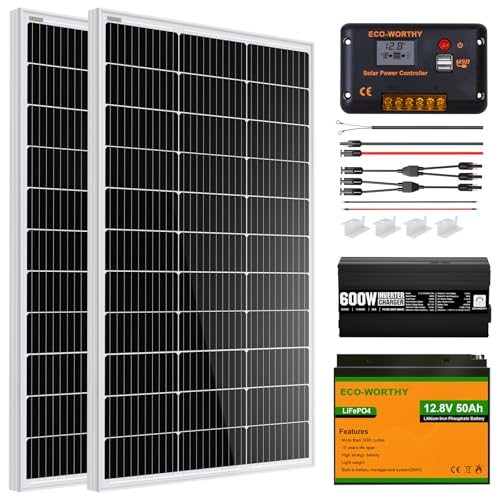
The ECO-WORTHY kit is designed for beginners and versatile enough for a garage setting where portable power is useful. It combines 200W of solar panels with a 30A charge controller, a 50Ah LiFePO4 battery, and a 600W inverter. It’s suitable for RVs, campers, boats, cabins, or workshops needing reliable daytime charging and some AC power at night. The system’s 800Wh daily output depends on sunlight, typically around 4 hours of peak sun. The kit emphasizes durability, with a tempered glass panel and an IP65 rating to resist rain, wind, and snow loads. The LiFePO4 battery is rated for thousands of deep cycles, offering a longer lifecycle than traditional lead-acid options. For a garage, this kit can provide emergency power for lighting, small tools, and charging devices, especially in off-grid situations or during grid outages.
Considerations for garage use: Ensure enough sun exposure or space to position the panels at an optimal angle. The kit’s setup is beginner-friendly, but it requires basic electrical connections and an understanding of safety practices when wiring the controller, battery, and inverter. If your garage is in a shaded area, the daily output may drop, and you may need to expand capacity or supplement with grid power when possible.
APILAB Solar Shed Light Indoor Outdoor, 2000LM
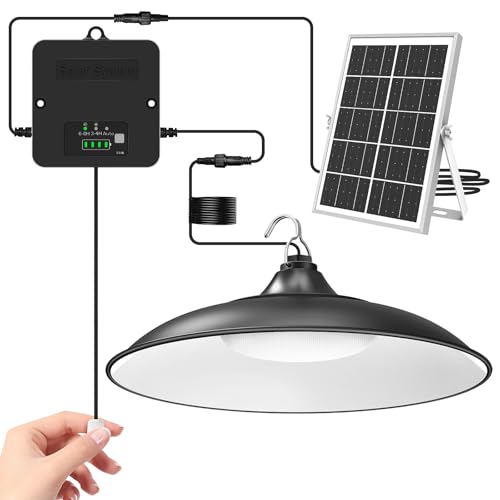
This APILAB model combines strong illumination with a pull-string control and a built-in battery. It’s designed for garages, barns, sheds, and workshops where direct wiring isn’t available or practical. The unit features three lighting modes and a 6000mAh high-capacity battery. A large solar panel provides daytime charging, boasting a 30% solar conversion rate to deliver consistent illumination after daylight hours. The design emphasizes reliability and simplicity, with a pull-string operation that avoids reliance on remote controls—handy when a remote is misplaced or when you’re working in a tight space. The unit’s IP65 rating helps protect against dust and water exposure common in outdoor garage environments.
For garage owners: This light offers a straightforward way to brighten workspaces without running new wiring. It’s particularly useful for tool benches, storage corners, and covered patios adjacent to a garage. If your garage receives ample sunlight during the day, you can expect reliable nighttime lighting without a heavy electrical load on your main panel.
hykolity Solar Powered Shop Light With Motion Sensor

This two-pack of solar shop lights from hykolity is designed for garages and barns that lack reliable access to electrical outlets. Each 17W unit provides 100W equivalence, with an integrated solar panel and a motion sensor. The motion-activated feature turns on when activity is detected, which saves energy and extends the system’s life. The lights can detect movement within roughly 8 feet when mounted around 10 feet high and offer up to six hours of continuous operation after activation, depending on ambient light and battery status. The system is self-contained and designed for straightforward installation, making it a practical option for illuminating workspaces, tool sheds, and carports without wiring.
Garage considerations: Adequate sunlight is key for consistent performance. The motion sensor feature is beneficial for security and efficiency, especially in less-frequented spaces. Note that this is a standalone solar solution, so these lights are best used to augment areas where mains power is unavailable or as a supplementary lighting layer rather than a primary power source for heavy-duty equipment.
Solar Shed Light Indoor Outdoor 1200LM (INXPHY)

The INXPHY solar shed light offers a high-lumen output with 144 integrated LEDs and five lighting modes. The split design includes a separate solar panel, enabling flexible placement for maximum sun exposure while keeping the light fixture within reach for operation. Its multiple modes—ranging from motion-activated to constant-on—provide versatility for garages, workshops, and outdoor storage spaces. The 120° adjustable light head and 1200-lumen brightness help illuminate wide work areas, and the design supports outdoor use with weather-resistant construction. This model is suitable for customers who want bright, even illumination without running electrical wires to the fixture.
Garage-oriented notes: A split system can be beneficial when you want the solar panel mounted on a sunny wall or roof, while the light fixture is placed where you need the light. Consider sun exposure and panel orientation to maximize daily charge and ensure the battery has enough capacity for the desired hours of operation at night.
Aqonsie Solar Shed Light With Five Modes & Remote

The Aqonsie solar shed light offers five lighting modes with a remote control option for easy adjustment. This fixture is designed for sheds, garages, and barns, enabling daytime charging and nighttime operation through a built-in battery. The mode variety allows different brightness levels and timing, making it adaptable to tasks requiring focused light or energy savings. Its motion sensors and auto modes help manage lighting in spaces that are used intermittently or during specific hours. The combination of a separate solar panel and a pendant-style light head provides flexible installation options for garages with limited electrical wiring nearby.
Electricity considerations for garages: When selecting among these five options, you’ll want to weigh the need for high brightness against the availability of sun exposure. For a workshop with power-hungry tools, pairing a robust solar kit with efficient LED lighting and a supplementary grid connection can be a balanced approach. For simple shelving, composting the options toward motion-activated or all-night low-brightness modes can optimize energy use and longevity of the battery bank.
Buying Guide: Key Purchase Considerations for Garage Solar Power
- Power needs: Estimate your typical daytime and nighttime electricity usage. For lighting and small tools, 200–600W of inverter capacity is often sufficient. For larger tools or frequent heavy loads, look for higher-capacity systems and modular expandability.
- System type: All-in-one starter kits are easiest for beginners, while split systems (separate panels and lights) offer placement flexibility and potentially better sun exposure.
- Battery technology: LiFePO4 offers longer lifespans and safer chemistry than traditional lead-acid. Consider depth of discharge and cycle life to determine total long-term cost of ownership.
- Panel durability: Choose panels with tempered glass, IP ratings, and solid mounting options to withstand garage environmental conditions, including dust, moisture, and possible vehicle impacts.
- Lighting quality: For workshops, aim for higher lumens (1000–2000+) and color temperature near 4000K–5000K for bright, daylight-like work conditions. Motion sensors can save energy in seldom-used spaces.
- Installation and safety: Understand local electrical codes and safety standards. If you’re unsure, consider a kit with clearly labeled wiring, or hire a licensed electrician for final connections to prevent hazards.
- Expandability: If future needs grow, choose systems that support adding panels, batteries, or higher-capacity inverters without replacing the entire setup.
- Outdoor exposure: Ensure mounting locations for panels maximize sun exposure and are protected from potential impacts in a garage setting (near car doors, for example).
These options provide a range of approaches—from compact, ready-to-use kits to flexible, modular lighting systems—to support garage lighting, tool charging, and emergency power. Evaluating space, sun exposure, and desired runtime will help you pick the best solar solution for a garage environment without compromising safety or reliability.