Discover reliable solar panels that fit a range of needs—from RV adventures to home off-grid setups. This guide highlights five carefully chosen models, detailing performance, durability, and suitability for different applications. Each entry includes practical specs and real-world considerations to help you compare options and choose the right system for your energy goals.
Summary of Selected Products
| Product | Brand | Type / Key Features | Ideal For |
|---|---|---|---|
| ECO-WORTHY 400W Solar Panels (4 x 100W) | ECO-WORTHY | Monocrystalline, 23% efficiency, IP65 junction box, 25-year durability | Off-grid homes, sheds, RVs, boats, and farms needing higher wattage |
| ECO-WORTHY 200W Kit with PWM Controller | ECO-WORTHY | 200W kit, 21.5%+ efficiency, corrosion-resistant frame, IP65 box | RV, boat, cabin, and small off-grid setups |
| ECO-WORTHY 100W Portable Foldable Panel | ECO-WORTHY | ETFE, 23% efficiency, foldable with kickstand | Camping, emergencies, mobile charging |
| Ring Solar Panel (2nd Gen) 4W | Ring | USB-C compatibility, fast charging, outdoor cam support | Security cameras and compatible Ring devices |
| Callsun N-Type 400W Bifacial (2-Pack 200W each) | Callsun | 25% efficiency, bifacial, anti-shade, 16BB busbars | RVs, marine, rooftop farms and larger off-grid systems |
ECO-WORTHY 400W Solar Panels — 4 x 100W Monocrystalline

The ECO-WORTHY 400W solar array combines four 100W monocrystalline panels designed for off-grid versatility. Benefiting from PERC technology, each panel achieves improved sunlight utilization with up to 23% efficiency, supporting higher daily output under four hours of sun. A waterproof IP65 junction box with pre-installed bypass diodes helps minimize power drops due to shading, while a robust aluminum frame withstands significant wind and snow loads for long-term reliability. The system includes long cables and protective packaging to ensure safe transport and installation in challenging environments, making it suitable for homes, camps, RVs, boats, and sheds. Daily performance will depend on location and sun exposure, but the kit targets strong durability and efficiency in variable conditions.
Key considerations: installation surface, system voltage alignment with storage or inverter setup, and weather exposure. The low-light performance and rain durability are particularly relevant for shaded or coastal environments. For users planning a larger off-grid network, pairing this 400W set with an appropriately rated charge controller and battery bank will maximize daily energy harvest and reliability.
ECO-WORTHY 200W Solar Panel Kit with PWM Controller

This 200W solar panel kit is designed for RVs, campers, and small off-grid projects. It uses high-efficiency monocrystalline cells and provides up to 21.5%+ efficiency under optimal sunlight. The corrosion-resistant aluminum frame and IP65-rated junction box contribute to long service life in diverse climates. At about 800Wh of daily output under four sun hours, this kit supports essential off-grid needs such as lighting, small appliances, and backup power. The included PWM charge controller simplifies setup for users prioritizing straightforward operation and reliable charging for 12V or 24V systems. Weighing and shipping considerations may factor into portability for mobile applications.
Buying tips: ensure compatible battery chemistry (lead-acid, AGM, or Li-ion), wire sizing for loss reduction, and controller compatibility with your chosen inverter or battery bank. The kit’s modular nature allows expansion as energy demands grow.
ECO-WORTHY 100W Portable Foldable Solar Panel
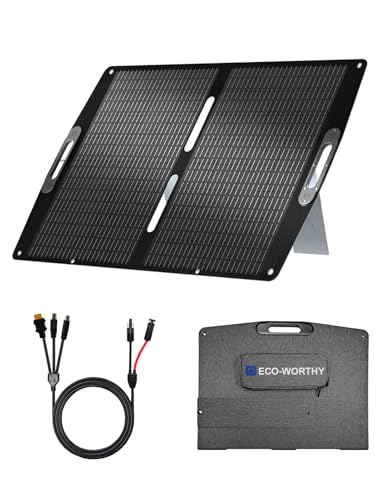
The ECO-WORTHY 100W portable panel emphasizes convenience and reliability for on-the-go charging. With ETFE protection, a foldable design, and a kickstand, this panel is well-suited for camping, power stations, or emergency kits. Its 23% efficiency, driven by A+ mono cells and PERC technology, helps maximize energy capture even in less-than-ideal weather. An integrated cable system (59 inches) facilitates direct connection to many portable power stations, reducing the need for extra adapters and ensuring compatibility with standard DC inputs. The panel’s rigidity and waterproof construction make it resilient for outdoor use, while its compact form supports easy transport in vehicles and backpacks.
Usage notes: ideal for topping off a small power station, maintaining essential devices during outages, or as a supplemental charge for camping electronics. Consider whether you need a robust kickstand for uneven ground or a more rugged, higher-watt option for extended off-grid days.
Ring Solar Panel (2nd Gen) for Outdoor Cameras

The Ring 2nd Generation Solar Panel is designed to optimize charging for outdoor cameras. Providing a compact 4W output, it supports faster charging with upgraded solar technology and includes a USB-C to barrel plug adapter for compatibility with older Ring Outdoor Cams and Stick Up Cams. The panel integrates well with Ring’s ecosystem, delivering a steady trickle charge to extend battery life and reduce maintenance. It’s built for outdoor durability and weather resistance, making it a practical option for homes, porches, or remote monitoring points where cameras require reliable power without frequent battery changes.
Practical considerations: verify compatibility with your specific Ring device model and ensure installation in a location with adequate sun exposure for optimal charging. This panel is best for low-power continuous charging rather than high-demand power needs.
Callsun N-Type 400W Bifacial Panels (2-Pack)

Callsun offers a bifacial 400W solution in a two-pack configuration, delivering up to 25% efficiency with N-type cells and 16BB busbars. Bifacial technology enables energy capture from the rear surface, increasing total output by up to 30% under favorable conditions. The twin-cell anti-shade design helps maintain power even when parts of the panel are shaded, improving reliability for RVs, boats, and rooftop installations. The 16BB busbar arrangement reduces hotspots and enhances durability, while the robust frame design supports extended outdoor use in harsh environments. This option is well-suited for larger off-grid setups where maximum energy harvest is a priority and installation space allows for wider arrays.
Important factors: ensure structural mounting support for heavier panels, check rear-facing sun exposure for bifacial gains, and pair with a compatible inverter/battery system to realize the full performance benefits.
Buying Guide: Key Considerations For Choosing Solar Panels
- Power needs and system size: Assess daily energy requirements and plan a system that meets peak load without excessive oversizing. Off-grid projects may benefit from higher wattage arrays, while portable needs suit foldable panels.
- Panel efficiency and technology: PERC cells boost efficiency, while bifacial designs increase output in sunny locations. Consider monocrystalline panels for higher performance in limited spaces.
- Durability and weather resistance: Look for corrosion-resistant frames, tempered glass, IP ratings for junction boxes, and mounting hardware designed for wind and snow loads relevant to your climate.
- Durability vs. portability: Fixed rooftop systems prioritize durability; portable or foldable panels emphasize lightweight design, quick setup, and easy storage.
- Compatibility: Verify voltage and connector compatibility with your battery bank, charge controller (PWM vs MPPT), and inverter. Some panels include integrated or compatible cables for direct connection to popular power stations.
- Expansion potential: If you anticipate growing energy needs, choose modular panels or kits that allow straightforward scaling without replacing existing hardware.
- Installation considerations: Roof or ground mounting requires structural assessment, while portable panels demand secure supports and weather protection for active use.
Note: This guide highlights products commonly used in consumer and light commercial applications. Availability and specifications vary by seller and over time. When choosing, prioritize reliability, warranty terms, and the alignment of panel performance with your climate and sun exposure. Pairing panels with a suitable charge controller and battery storage will determine real-world energy yields and system resilience in daily use.