Cabin living often hinges on dependable off-grid power. The right solar panels deliver steady daytime energy for lights, refrigeration, fans, and small appliances without frequent maintenance. This guide highlights five top solar panel kits and modules that fit cabin setups, from compact 12V systems to larger 24V configurations suitable for modest off-grid homes. Each option prioritizes durability, efficiency, and install flexibility to handle challenging weather while simplifying future upgrades.
Summary of Selected Products
- DOKIO 800W (2×400W) Mono Solar Panels — DOKIO
- Callsun 400W Solar Panel Pack — Callsun
- Renogy 200W Starter Kit — Renogy
- Renogy 400W 24V Panel — Renogy
- ECO-WORTHY 1200W Off Grid Kit — ECO-WORTHY
DOKIO 800W Mono Panels (2×400W) For Off-Grid Cabins

DOKIO offers a rugged two-panel setup designed for cabins and backyards. Each 400W panel uses tempered glass and an aluminum frame with sealed junction boxes, making it suitable for outdoor, year-round use. The system is compatible with 12/24V batteries and can connect to AGM, Gel, or LiFePO4 chemistries via PWM or MPPT controllers. A notable feature is the 3-meter MC4 lead per panel, which extends reach to a combiner or controller, reducing the need for additional joints and simplifying wiring in larger cabin installations.
Key considerations for cabins include weather resistance, long cable runs, and compatibility with modest battery banks. The DOKIO system supports a stable output when used in parallel or with a single string, depending on your energy needs. For cabins with shaded areas, planning around sun angles and potential partial shading will help maximize daily energy, especially when paired with an appropriate charge controller. This option suits medium-duty cabin setups where space allows for two panels and straightforward wiring.
Callsun N-Type 16BB 400W, 2×200W Panels (Bifacial, 12V)

This Callsun package pairs two 200W panels to deliver 400W total, leveraging N-Type 16BB cells for high efficiency. The bifacial design captures light from both sides, increasing energy production by up to about 30% under optimal conditions. The twin-cell anti-shade technology helps maintain output when portions of the panel are shaded, which is beneficial for cabin installations with surrounding trees or partial shading on winter days. The 12V configuration aligns well with standard off-grid cabins, and the modular 2-panel setup supports flexible mounting on shed roofs or ground mounts.
For cabin applications, bifacial panels can offer a meaningful boost in daily yield, especially in reflective environments like gravel or white-painted rooftops. The key trade-off is potential performance variance due to shading and the extra cost of bifacial-specific hardware. If your cabin sits in a sunny, open spot, these panels can deliver robust daily energy while remaining adaptable for future expansions, such as adding additional panels or upgrading to a higher-capacity controller.
Renogy 200W Starter Kit for Off-Grid Vans and Cabins

The Renogy 200W Starter Kit combines a 200W solar panel with a 30A PWM charge controller and cabling, designed for RVs, boats, trailers, and cabins. With an expected daily yield around 1000Wh under favorable sun (5 hours of direct sun), the panel achieves around 22% efficiency. The kit emphasizes durability through multi-layer encapsulation and heat-dissipating back sheets to sustain performance. The included Wanderer PWM controller supports a variety of battery types, enabling safe charging for sealed, gel, flooded, and lithium chemistries, and offers a four-stage charging profile for stable cycles.
In cabin scenarios, this kit provides a compact, beginner-friendly entry into off-grid power. It suits small to medium energy loads, especially in modest cabins where expandability remains important. When planning, consider whether you’ll scale to more panels or a higher-capacity controller, and ensure proper ventilation and battery rack design to maintain efficiency and safety in enclosed spaces.
Renogy N-Type 400W Panel, 24V System

This Renogy 400W panel is designed for 24V systems and class B installations, typical for compact camper vans and cabins that need more energy in a smaller footprint. The N-Type cells with 25% efficiency help maximize conversion while limiting heat-related losses. The panel’s more compact size compared with older designs makes it easier to fit in tight spaces, such as rooftop decks on tiny cabins or vehicles. It also reduces current across the system, potentially improving overall efficiency when paired with a 24V battery bank.
When integrating a 400W panel into a cabin setup, evaluate roof or wall mounting options, potential shading from nearby trees, and the connection to a compatible 24V controller or converter. This module is well-suited to homeowners who anticipate expanding their system or upgrading to larger off-grid storage, offering a balance between performance, size, and long-term scalability.
Renogy 200W N-Type Panel, 24V 16BB

The 200W N-Type Renogy panel is optimized for 24V systems, offering 25% efficiency with 16BB cell technology. It’s designed for space-constrained cabins where a pair of panels may fit on a shed roof or sloped deck. The 24V configuration minimizes current, helping reduce wiring losses and easing cable runs from a small array into a battery bank. The panel’s lighter weight and compact footprint make it a practical choice for owners who want a scalable solution from a modest start point to larger off-grid setups.
For cabin owners, the decision to deploy a 200W module should align with daily energy use and climate. In load-heavy cabins (refrigeration, heating elements, or water pumps), pairing with a higher-capacity controller and robust storage becomes important. The N-Type design helps with reliability in varied temperatures, aiding long-term system resilience.
ECO-WORTHY 1200W Off-Grid Cabin System
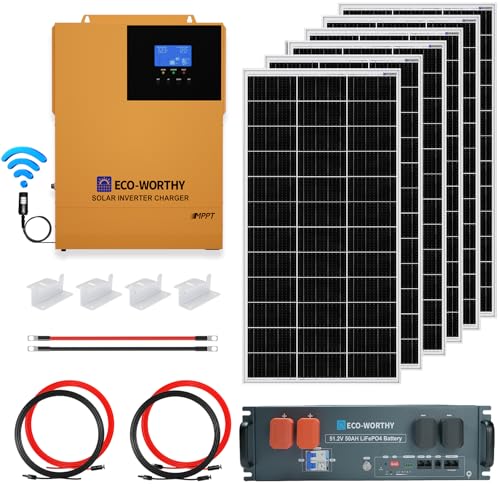
The ECO-WORTHY 1200W kit is a complete off-grid system designed for cabins and tiny homes. It includes six 195W panels, a 48V 50Ah LiFePO4 battery pack, and a 3500W all-in-one inverter with MPPT, plus WiFi monitoring capabilities. This setup supports parallel operation of up to six units, enabling scale to 21kW total with multiple phases. The 80A MPPT controller and 16A-grade LiFePO4 battery cells emphasize safe, efficient energy storage and management. The system also provides a secure protection framework with BMS, breakers, and battery cutoff switches for safety.
For cabin owners seeking significant daytime generation and robust storage, this kit offers a solid path to dependable power. It’s especially suitable for cabins with higher energy demands or those that require stable AC output for climate control, refrigeration, and lighting. Planning should include appropriate space for panel mounting, battery ventilation, and a reliable grounding setup to ensure ongoing safety and performance.
Buying Guide: Key Purchase Considerations for Cabin Solar Systems
- System voltage and battery compatibility: Decide between 12V, 24V, or higher voltage architectures based on your expected load and stored energy. Higher voltage systems reduce current in wires and can improve efficiency with longer cable runs common in cabin layouts.
- Panel type and efficiency: N-Type and bifacial cells offer higher efficiency and shading tolerance but can come at a premium. Glass and frame quality determine durability in harsh weather and seasonal snow or rain.
- Wiring and controllers: PWM controllers are budget-friendly but less efficient at higher currents; MPPT controllers optimize energy harvest, especially in variable sun. Ensure the controller matches your battery chemistry (AGM, Gel, LiFePO4, etc.).
- Expandability: Plan for future growth with modular panels, expandable controllers, and additional battery storage. Cabin power needs can evolve with climate control, appliances, and water systems.
- Durability and mounting options: Look for weatherproof connectors, sealed junction boxes, and vibration-resistant mounts. Roof or ground mounting options should consider wind load and accessibility for maintenance.
- Energy management: Pair solar with energy-efficient devices (LED lighting, low-draw appliances) and consider a small backup generator or microgrid strategy for cloudy periods or high-demand days.
- Monitoring and safety: WiFi or Bluetooth monitoring helps track performance. BMS protection, proper insulation, and safe wiring practices reduce risk in cabins surrounding living spaces.
- Cost and maintenance: Total cost includes panels, controllers, batteries, and potential inverters. Look for durability, warranties, and local service support when choosing brands for long-term cabin use.