Solar panels for doorbells offer maintenance-free charging for battery-powered units and can extend usage between charges. This guide highlights five highly relevant options compatible with common Ring and Google Nest doorbells, plus universal features to weigh when choosing. Each product below links to an Amazon listing for quick review and purchase.
Summary table of selected products:
| Product | Brand | Key Benefit | Port Type |
|---|---|---|---|
| Ring Solar Charger for Battery Doorbells | Ring | Extends battery life up to 35% vs older solar chargers | USB-C / built-in solar panel |
| All-new Ring Solar Charger for Battery Doorbell | Ring | Direct sun charging with secure mounting | USB-C / weather-resistant panel |
| Solar Panel Charger for Ring Doorbell Camera (OuOudoit) | OuOudoit | Waterproof 6W charging for battery models | USB-C style connection |
| Solar Panel for Google Nest Doorbell (Battery) | SANKABA | High efficiency with IP66 protection | U-Shape port |
| Ring Doorbell Solar Panel (4W) | sudenwlis | Low-profile, 7.48″ x 6.57″ panel with year-round charging | Type-C |
Ring Solar Charger for Battery Doorbells

The Ring Solar Charger for Battery Doorbells is designed to extend the life of Ring Video Doorbells and Battery Doorbell models. It uses a weather-resistant solar panel and includes a secure mounting bracket for straightforward installation. This charger is compatible with Video Doorbell 3, Video Doorbell 3 Plus, Video Doorbell 4, Battery Doorbell Plus, and Battery Doorbell Pro. Practical advantages include maintaining charge during daily use and reducing the need for frequent battery changes.
Ring Solar Charger for Battery Doorbells – All-New

This updated Ring solar charger continues the same purpose—keeping Ring Battery Doorbells charged via a solar source. It emphasizes easy installation with a secure mounting bracket and weather-resistant built-in solar panels. With consistent direct sunlight, this charger helps extend daily operation and reduces manual battery interventions, making it a practical option for homes with variable access to replaceable batteries.
QIBOX Solar Charger For Battery Doorbell (USB-C)

Note: This option is specifically tailored for USB-C port Battery Doorbells released in 2025. It delivers up to 2.9W with a 5V DC output and a 19% efficiency rating, combined with a 120° adjustable mounting. The three-panel design seeks to maximize sunlight capture, providing continuous solar power. Before purchasing, verify your doorbell’s charging port to ensure compatibility and avoid port-type mismatches.
Solar Panel for Google Nest Doorbell (Battery)

The SANKABA Nest Solar Panel is designed for battery-powered Google Nest Doorbells. It highlights a 5W output with IP66 weatherproofing and a 9.8-foot charging cable for flexible placement. The panel uses monocrystalline cells to achieve a claimed 21% energy conversion efficiency, supporting continuous operation even during cloudy periods. It’s positioned as a reliable external power source for Nest’s battery-based doorbell models across varied climates.
Ring Doorbell Solar Panel – 4W Charger
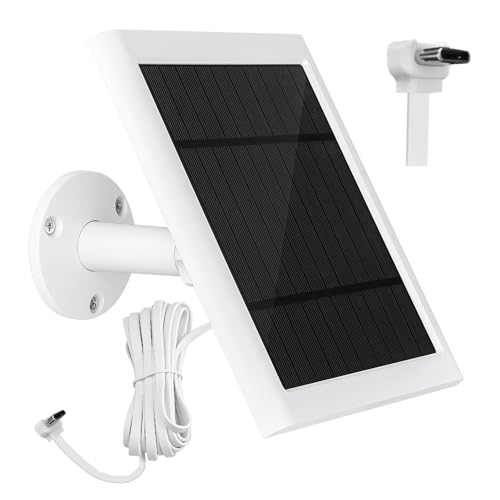
This 4W solar charger is designed specifically for Ring Battery Doorbells with a Type-C charging port. It uses a 7.48 by 6.57-inch panel and a long, 9.84-foot cable to accommodate flexible installation locations. The bracket is 360° adjustable to follow sun exposure across seasons, and the unit is built to withstand wind, snow, and rain. The design emphasizes easy alignment for maximum daytime charging and ongoing doorbell readiness.
Solar Panel for Ring Doorbell (2025) – 6W

The 6W Ring solar panel for battery doorbells uses a high-efficiency monocrystalline circuit and a 13.1-foot charging cable. It is designed for the 2025 Ring doorbell line and offers an ultrathin socket to minimize housing disruption. The unit supports continuous solar charging with a voltage regulator, helping to maintain doorbell readiness around the clock and reduce battery maintenance needs in outdoor settings.
Buying Guide: Key Considerations For Doorbell Solar Chargers
- Doorbell compatibility: Confirm the charging port (USB-C, Type-C, or specific port) and that the panel supports your exact doorbell model and version. Compatibility ensures safe charging and avoids damage to internal electronics.
- Power output and efficiency: Higher wattage panels, like 4W–6W options, typically deliver more consistent charging, especially in low-sun conditions. Efficiency (percentage of sunlight converted to usable electricity) affects performance over cloudy days.
- Weather resistance: Look for IP ratings and weatherproof housing. An IP66 rating (dustproof and water jet resistant) or similar is common for outdoor installations and provides durability against rain, snow, and heat.
- Mounting and cable length: A sturdy mounting bracket with adjustable angles helps maximize sun exposure. Cable length matters for flexible placement; longer cables ease installation away from direct wall contact.
- System integration: Some chargers include a built-in regulator to stabilize voltage and prevent overcharging. This is especially useful for doorbells with varying power demands or sensitive electronics.
- Bundled accessories: Brackets, screws, weather seals, and mounting templates simplify installation. Ensure the kit covers your mounting surface and climate considerations.
- Maintenance and longevity: Solar panels should resist UV degradation and corrosion. Consider panels with durable frames and weatherproof seals for long-term performance.
- Sun exposure and placement: East-, west-, or south-facing placements yield different charging profiles. In areas with limited sun, a larger panel or longer exposure time can compensate for lower intensity.
When selecting a solar charger for a doorbell, weigh how often the doorbell is triggered, the typical sun exposure of your installation, and whether you prefer a dedicated Ring or Nest ecosystem option versus a more universal third-party panel. All options listed emphasize weather resistance and ease of installation, while some provide higher efficiency or longer cables to accommodate specific property layouts.