Power outages can strike without warning. A compact portable power station provides a reliable backup for essential devices during outages, camping trips, or on the road. This guide highlights five compact options that balance capacity, portability, and value. Each product is evaluated for charging speed, output versatility, and safety features to help you choose the right unit for home backup and outdoor use.
| Product | Brand | Capacity | Key Outputs | Approx. Weight |
|---|---|---|---|---|
| MARBERO Portable Power Station 88Wh | MARBERO | 88Wh | AC Outlet, USB, USB-C PD, DC car charger | 3.2 lbs |
| Jackery Portable Power Station Explorer 300 | Jackery | 293Wh | 2x AC, 60W USB-C PD, USB-A, DC car port | 7.1 lbs |
| Takki 88.8Wh Portable Power Station | Takki | 88.8Wh | 2x AC outlets, USB ports | 2.29 lbs |
| Flashfish 200W Portable Power Station 151Wh | FF FLASHFISH | 151Wh | AC, DC, USB ports | ~4.07 lbs |
| VTOMAN FlashSpeed 300 Portable Power Station | VTOMAN | 230Wh | 100W USB-C, AC, USB, DC | ~7.4 lbs |
Note: The table above summarizes representative compact power stations suitable for short-term outages and mobile backup. Capacity, weight, and port mix influence suitability for your specific needs and travel plans.
MARBERO Portable Power Station 88Wh

The MARBERO unit offers efficient charging with an included adapter that can bring the battery from 0 to 80% in about two hours. It supports simultaneous charging of other devices, functioning like a charging strip. It is compatible with MARBERO’s 30W or 60W solar panels for outdoor use and features eight output ports managed by a built-in BMS for safety. Portable design emphasizes a slim profile and a weight around 3.2 pounds, making it suitable for camping, road trips, and home backup in small apartments or RVs.
Jackery Portable Power Station Explorer 300

Powered by a 293Wh lithium-ion battery, the Explorer 300 delivers sturdy, safe power with two Pure Sine Wave AC outlets and a total output capable of supporting up to six devices. Quick recharge is possible via wall outlet in minutes, with 60W USB-C PD input/output, and it remains relatively lightweight at about 7.1 pounds. The unit supports multiple charging options, including car adapter and optional solar panel, for off-grid use and emergency backup in homes and remote locations.
Takki 88.8Wh Portable Power Station

The Takki model emphasizes rapid charging from 0% to 80% in about two hours with AC input. With a capacity of 88.8Wh, it is compact and light, designed for camping, home outages, and travel. It provides eight outputs, including dual AC ports capable of powering small appliances, along with multiple USB options. It’s suitable for charging phones, tablets, small TVs, and other devices during shorter outages or day trips where portability is prioritized.
Flashfish 200W Portable Power Station 151Wh
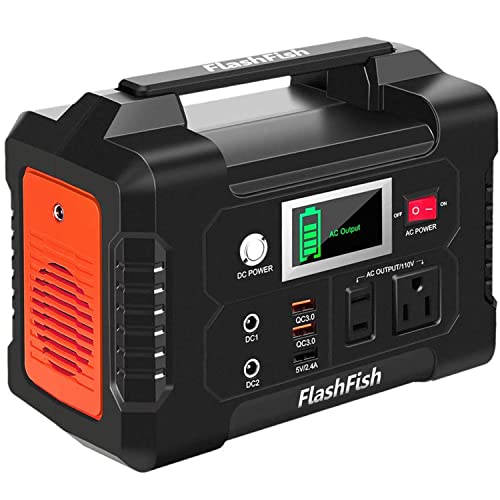
The Flashfish model combines a 151Wh battery with a 200W peak inverter and a suite of outputs, including a 110V AC outlet, DC ports, and multiple USB ports. Its LCD display helps monitor remaining power and output levels, making it straightforward to manage power during camping, travel, or home backup. Weighing around four pounds, it provides a balance of portability and practical capacity for phones, laptops, cameras, and small appliances.
VTOMAN FlashSpeed 300 Portable Power Station

VTOMAN’s FlashSpeed 300 focuses on fast charging with a 100W Type-C PD port and seven total outputs, including AC and USB options. At about 7.4 pounds, it remains fairly portable for a 230Wh capacity device. The unit is designed to support off-grid living, RV use, camping, and home backup with multi-port charging that can accommodate drones, laptops, lights, and essential devices during outages or outdoor activities.
Buying Guide: Key Purchase Considerations
- Capacity and runtime: Choose a unit in the 80–300Wh range for short outages or weekend trips. Higher capacities extend runtime but increase weight and cost.
- Output options: Look for a mix of AC outlets, USB-C PD, USB-A, and car ports to power laptops, phones, cameras, and small appliances simultaneously.
- Recharging options: Favor units with multiple recharge paths—wall, car, and solar—especially for remote use or during extended outages.
- Portability and weight: If portability is a priority, target devices under 8 pounds with compact dimensions and ergonomic handles.
- Safety features: Built-in BMS, overcharge/short-circuit protection, and pure sine wave inverters help protect sensitive electronics.
- Durability and warranties: Check battery chemistry (Li-ion vs LiFePO4), cycle life, and manufacturer warranty for long-term reliability.
- Use case fit: For home backup, prioritize higher-capacity models with multiple AC outlets; for camping and travel, prioritize lighter units with USB-C PD.
When choosing, align the power station’s capacity with your essential devices, such as a router, smartphone, laptop, and a low-wattage fridge or CPAP machine. Consider how often you expect outages, your available recharging options, and whether you’ll rely on solar charging during extended outages. The right balance of capacity, weight, and port selection will provide dependable power for your needs.