Explore top motor kit options to convert standard mountain bikes into capable motorized rides. This guide highlights select kits across belt-drive, chain-drive, and electric hub configurations, focusing on performance, durability, and installation practicality. Each entry includes key specs, notable features, and how it fits different riding goals—from commuting to trail cruising.
Summary of chosen products:
| Product | Brand | Drive Type | Power | Approx. Top Speed |
|---|---|---|---|---|
| Fenjidrop 100cc (Belt Type) | Fenjidrop | Gas Engine, Belt | 3.5 HP, 100cc | ~50 km/h |
| 80cc 2-Stroke Engine Kit | YaggeBike | Gas Engine | 80cc, 2-stroke | Fast acceleration, high output |
| AW Electric Hub Kit 48V | AW | Electric Hub | 1000W | ~45 km/h |
| VEVOR 1000W Front Hub Kit | VEVOR | Electric Hub | 1000W | ~50 km/h |
| BAFANG Mid-Drive Kit 750W | BAFANG | Mid-Drive | 500W/750W/1000W | Up to 45 km/h |
Fenjidrop 100cc Belt Type Engine Kit

The Fenjidrop 100cc Belt Type engine kit is built to endure rugged use on mountain bikes. It features an aluminum alloy engine case, a painted iron fuel tank, a sandblasted steel chain, and nylon engine covers. The design supports a maximum load of 440 lbs, aiming for reliability and longer service life. Power comes from a 3.5HP, 100cc displacement engine, capable of reaching around 50 km/h, with a large 0.52-gallon fuel tank for extended rides. The belt-drive configuration enables smoother operation and accessible maintenance.
Key considerations: belt-drive tends to provide smooth power delivery and quieter operation but may require more belt maintenance and alignment checks. The kit’s durable construction is suited for off-road or mixed-terrain mountain biking, where reliability and load tolerance matter most.
80cc 2-Stroke Engine Kit

The 80cc 2-stroke engine kit from YaggeBike includes a complete set of parts needed for a DIY upgrade, such as a carburetor, ignition coil, fuel tank, muffler, and chain. The kit is designed for mountain, road, cruiser, and other bicycles, emphasizing strong power and fast acceleration. Made from heavy-duty metal with robust heat dissipation, the kit aims for long-lasting performance with stable power output and reduced vibration, contributing to safer, smoother rides on varied terrains.
Key considerations: 2-stroke engines offer high power-to-weight, but may require more frequent fuel/oil mixing and maintenance. Compatibility with your bike’s frame and braking system should be verified before installation to ensure safe operation on mountain trails.
AW Electric Bicycle Motor Kit 48V 1000W
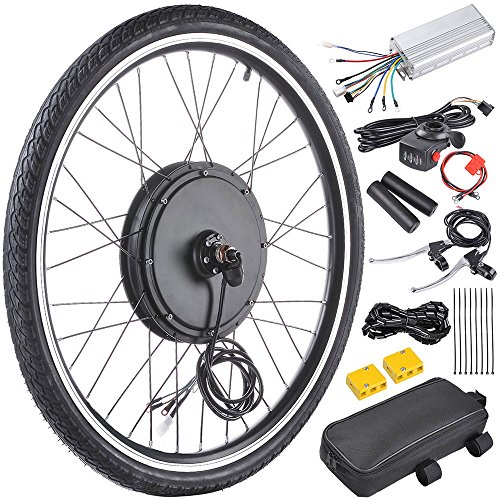
The AW 48V 1000W electric hub motor kit converts a standard bicycle into an electric assist bike. The hub motor delivers efficient, quiet operation and can achieve up to about 45 km/h. The kit features an aluminum alloy frame for durability and supports riders up to 220 pounds. A thumb throttle with battery indicators helps manage power and range, and the design minimizes chain wear by using a gearless drive approach. It is compatible with 26″ wheels and standard disc or V-brakes, enabling straightforward installation on a variety of mountain bikes.
Key considerations: electric hub kits are great for commuting and light trail use, offering smooth torque-friendly acceleration. Verify frame compatibility, wheel size, and brake type before purchase, and plan for battery capacity and charging access for longer rides in rough terrain.
VEVOR 1000W Front Wheel E-Bike Kit

The VEVOR 1000W front-wheel kit features a high-power 1000W motor with 420 rpm and at least 50 N.m torque, suitable for climbing hills and navigating varied terrain. It includes a speed controller, throttle, LCD display, and PAS system, allowing real-time ride data tracking and efficient pedal-assist modes. The motor uses a copper core for improved heat resistance and durability, and the wheel is built for strong grip with a reinforced 26″ tire setup to handle mixed surfaces.
Key considerations: front-hub kits offer strong torque at the wheel, but front hub motors can affect handling on technical off-road sections. Check compatibility with your frame, braking system, and the PAS display options to tailor the ride experience to mountain biking needs.
BAFANG Mid Drive Kit 750W

The BAFANG mid-drive kit provides versatile power options (500W/750W/1000W) and is designed to fit MTBs and other bikes with 68-73mm bottom brackets. This kit includes components like a brake lever, chainwheel, throttle, and display options, with additional battery and display accessories available. The mid-drive system leverages the bike’s drivetrain for efficient torque on hills, enabling hill climbs and varied terrain capability up to around 45 km/h. It is compatible with disc or V-brakes in chain-driven models and supports multiple ride modes, including throttle and pedal assist.
Key considerations: mid-drive systems offer excellent torque and natural-feeling pedal assist, but installation is more complex and may require professional setup. Ensure your bike’s bottom bracket and chainring configurations match the kit, and plan for battery sizing based on ride distance and terrain difficulty.
Buying Guide: Key Purchase Considerations And Comparisons
Motor kits for mountain bikes come in three primary categories: gas-powered, electric hub, and mid-drive. Each has distinct advantages and trade-offs in terms of power delivery, maintenance, weight, and ride feel.
- Power and speed: Gas kits (100cc, 80cc) deliver high peak power and quick acceleration, suitable for aggressive off-road and trail riding. Electric kits offer smooth, controllable torque with silent operation, ideal for commuting and moderate trails. Mid-drive kits balance power with efficiency by leveraging the bike’s gears for climbing efficiency.
- Drive type and handling: Front hub and belt/chain configurations are generally easier to install but can affect steering feel or chain tension. Mid-drive systems provide natural gearing but require precise installation and compatibility checks with bottom brackets and chainlines.
- Weight and handling: Gas engines add notable weight to the frame, impacting balance and handling on steep or technical sections. Electric hub and mid-drive kits add less perceived weight to the front, but overall drivetrain complexity increases with mid-drive systems.
- Maintenance and reliability: Belt-driven gas kits can be smooth but may require belt alignment and occasional replacement. 2-stroke engines require fuel mixing and exhaust maintenance. Electric hubs rely on battery health, motor cooling, and wiring integrity. Mid-drive systems demand drivetrain maintenance (chain, sprockets) but can be highly efficient.
- Battery considerations: For electric kits, battery capacity determines range and ride duration. Consider weight, charging availability, and weather exposure, especially for mountain terrain.
- Frame compatibility: Verify wheel size, brake type, disc protection, and bottom bracket compatibility for mid-drive kits. Ensure clearance for the motor, chain, or belt under pedal stroke and fork area.
- Installation complexity: Gas and mid-drive kits often require more mechanical know-how and space for mounting. Electric hub and some bolt-on kits can be simpler but still need proper alignment and safety checks before riding.
Choosing the right kit depends on riding goals, terrain, and maintenance willingness. For rugged mountain trails, mid-drive systems with robust gearing typically provide the best climbing performance and natural ride feel. For casual sport riding or commuting with minimal maintenance concerns, a high-quality electric hub kit can offer reliable, quiet operation. Gas-powered kits may appeal to users seeking maximum raw power and easier field refueling in remote areas, though they demand more ongoing upkeep.