Finding the right inverter or power converter for an RV involves balancing wattage needs, compatibility with lithium and lead‑acid batteries, and safety features. The following selections cover high‑output pure sine wave inverters and 55‑amp RV power converters designed to keep lights, appliances, and charging systems running smoothly while you travel. Each option emphasizes reliability, efficiency, and wide operating ranges to accommodate diverse rigs and battery setups.
Summary of chosen products:
- WAVLINK 55 Amp RV Power Converter
- RecPro RV Converter 55 Amp
- PowerMax PM3-55 RV Power Converter
- BELTTT 2000W Pure Sine Wave Inverter
- DEECHI 4000W Power Inverter
WAVLINK 55 Amp RV Power Converter

The WAVLINK converter transforms standard 120V AC into a stable 12V DC power source suitable for charging batteries and running essential devices in an RV. It supports multiple battery types, including lead‑acid and lithium options, and includes tailored charging modes for peak performance. With up to 55A output, it is designed for smaller RV batteries while supporting a range of appliances and electronics. The device emphasizes efficiency and adaptability for travel use, helping ensure reliable onboard power without frequent recharges.
Key considerations
- Output current up to 55A suits mid‑range RV systems.
- Lithium and lead‑acid compatibility broadens battery choices.
- Three charging modes optimize different battery chemistries.
RecPro RV Converter 55 Amp

RecPro’s 55‑amp converter converts 120VAC shore power into 12VDC, enabling battery charging and powering low‑voltage lights and appliances. It is available in several capacities, including 55‑amp, supporting a range of RV electrical setups. The three‑ or four‑stage charging configurations help maintain battery health and efficiency, while the 12V output supports standard RV electronics and lighting, making it a straightforward choice for users needing dependable on‑board charging.
Key considerations
- Multiple capacity options for different rigs.
- Smart charging stages aid battery longevity.
- Reliable shore power to 12VDC conversion.
PowerMax PM3-55 RV Power Converter
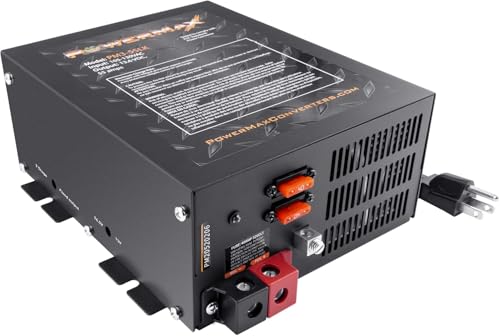
The PowerMax PM3‑55 delivers 55 amps of regulated 12V output with a focus on quiet operation and safety. Its temperature control helps maintain an efficient thermal profile, and an LED indicator communicates status at a glance. The unit supports a wide input range and is designed for consistency across different electrical environments, making it a solid option for RVs that prioritize stable, protected charging in varying conditions.
Key considerations
- Quiet operation with an effective temperature control system.
- Wide voltage compatibility for diverse installations.
- UL/CUL certifications signal safety compliance.
BELTTT 2000W Pure Sine Wave Inverter

This pure sine wave inverter converts 12V DC to 110–120V AC, delivering up to 2000W continuous power with higher peak capacity. It is suitable for RV use where sensitive electronics require clean power, including televisions, home theater components, and computer gear. An intelligent LCD display provides real‑time input/output voltage and load status, while a remote control option extends control range for off‑grid living. Efficiency and low no‑load losses help conserve energy on long trips.
Key considerations
- Pure sine wave output supports sensitive appliances.
- LCD readout and remote control enhance usability.
- Moderate power level fits mid‑range RV needs.
DEECHI 4000W Power Inverter

The DEECHI 4000W inverter offers true continuous output of 4000W with up to 8000W peak capacity, ideal for high‑demand RV setups or off‑grid cabins. It delivers 12V DC to 110/120V AC power, featuring four US outlets, USB and Type‑C ports, and an LCD screen with a 200‑foot remote control for flexible operation. The unit includes comprehensive safety protections, dual temperature‑controlled fans, and a rugged housing designed for outdoor use, making it suitable for heavy use in varying environments.
Key considerations
- High continuous power for demanding appliances.
- Multiple outputs and ports for versatility.
- Integrated cooling and safety features for prolonged operation.
Buying Guide: Key Purchase Considerations For RV Power Inverters And Converters
When choosing between RV power converters and inverters, consider the following factors to align with your setup and usage:
- Power needs: Assess your peak and continuous draw. Inverters should exceed your total appliance wattage by a comfortable margin, while converters should match your battery charging requirements without overheating.
- Battery type and compatibility: Ensure the unit supports your battery chemistry (lead‑acid, AGM, or lithium). Some models offer dedicated lithium charging modes for optimized performance.
- Voltage and frequency ranges: A wide input range improves compatibility with shore power fluctuations and generator outputs commonly found in campsites.
- Output waveform: Pure sine wave inverters are best for electronics and appliances with sensitive electronics. Modified sine wave units may be cheaper but can cause performance issues or inefficiencies.
- Protection features: Look for over‑load, over‑voltage, under‑voltage, short‑circuit, temperature, and reverse polarity protections to safeguard equipment and batteries.
- Efficiency and heat management: Higher efficiency reduces energy waste; well‑equipped cooling solutions extend the life of the device in hot climates or long trips.
- Installation and footprint: Consider mounting space, ventilation requirements, and wiring gauge. Heavier, higher‑wattage units require appropriate supports and cabling.
- Monitoring and control: LCD displays, remote controls, and status indicators aid troubleshooting and battery management on the road.
- Warranty and after‑sales support: A long warranty and responsive customer service can reduce the total cost of ownership when RV travel pushes equipment to its limits.
For RV owners, a combination approach often works best: a reliable 12V battery charger/converter for everyday shore power and a high‑quality pure sine wave inverter for sensitive electronics and appliances when off‑grid. Evaluating warranty terms, supported battery chemistries, and ease of use will help you select a system that aligns with travel patterns, battery capacity, and safety requirements.