Keeping a crawl space dry is essential to prevent mold, wood rot, and structural issues. This guide highlights practical hygrometers and temperature/humidity monitors that work well in low-clearance, limited-access areas. The selected models offer reliable sensing, strong wireless ranges or local data storage, and clear alerts to help you stay ahead of humidity problems in crawl spaces.
| Product | Key Benefit | Connectivity |
|---|---|---|
| ThermoPro TP60 Digital Hygrometer | Long-range wireless readings for indoor/outdoor use with min/max history | 500 ft / 150 m wireless |
| Govee Bluetooth Hygrometer Thermometer | Real-time data in app with on-device storage and CSV export | Bluetooth (262 ft line-of-sight) |
| U UNNI Indoor Outdoor Thermometer | High-accuracy readings with wide range and long transmission | Wireless up to 330 ft radius |
| GoveeLife 2.0 WiFi Hygrometer (3 Pack) | Remote monitoring with app alerts and 2-year data storage | WiFi gateway-ready, 2.4 GHz |
| SensorPush HT.w | Bluetooth sensor with optional WiFi gateway for remote access | Bluetooth (up to ~100 m), gateway optional |
Below are five highly relevant options that perform well in crawl spaces, basements, and other damp spaces. Each product includes a direct link to its Amazon listing, a quick look at its features, and a concise usage note.
ThermoPro TP60 Digital Hygrometer

Brand: ThermoPro
Features include a 500 ft/150 m wireless range for remote readings, a tabletop or wall-mountable design, and dual sensing of indoor and outdoor temperature and humidity. It records max/min values and shows trend arrows to indicate warming or cooling near the remote monitor. Powered by included 3A batteries, it is suitable for crawl spaces where access is limited and durable monitoring is needed.
Govee Bluetooth Hygrometer Thermometer

Brand: Govee
Key advantage is real-time data via a dedicated app with a 262 ft range (line of sight). It features precise readings (±0.54°F and ±3% RH), and on-board data storage with CSV export for long-term trend analysis—handy for crawl spaces where continuous monitoring matters and WiFi may be unavailable.
Indoor Outdoor Thermometer Wireless U UNNI
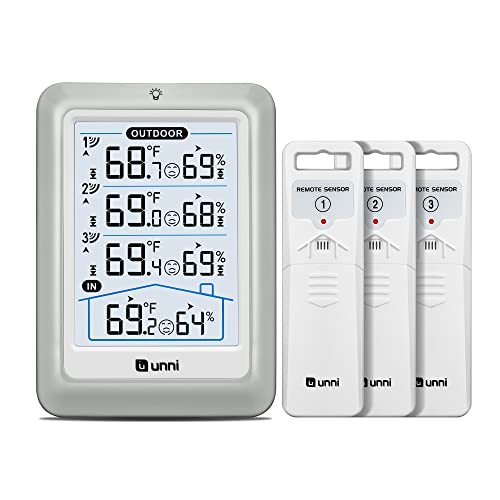
Brand: U UNNI
Offers high-accuracy readings with a wide indoor/outdoor range and a robust wireless link up to about 330 ft. It transmits data every 30 seconds, includes a programmable temperature alert, and supports switching between °C and °F. It is well-suited for crawl spaces where a reliable, real-time sense of climate is essential.
GoveeLife 2.0 WiFi Hygrometer (3 Pack)

Brand: GoveeLife
This three-pack provides scalable coverage for multiple crawl-space zones. It supports WiFi-based remote monitoring, with data storage and export for up to two years. The Swiss-made sensors deliver precise readings (±0.54°F / ±0.3°C; ±3% RH) and a 2-second data refresh, ideal for detecting rapid humidity changes in damp environments.
SensorPush HT.w Smart Sensor
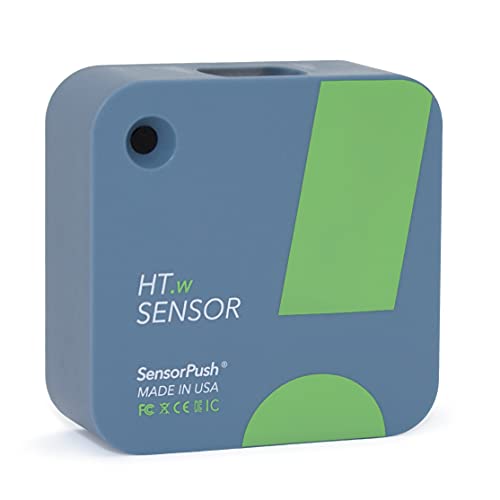
Brand: SensorPush
Uses Bluetooth with a reliable app, and can be paired with a WiFi gateway for remote access. It records temperature, humidity, dew point, and VPD with onboard storage and easy export options. The device emphasizes quick setup and long battery life, making it practical for crawl spaces where you need dependable, low-maintenance monitoring.
Buying Guide
- Connectivity: For crawl spaces, consider whether you prefer Bluetooth (local access), WiFi (remote alerts), or a hybrid system via a gateway. WiFi gateways enable remote monitoring from anywhere, which is useful if the crawl space is hard to access regularly.
- Range and coverage: A longer wireless range can reduce dead zones under floors or in remote corners of a building. If you monitor multiple zones, consider packs or multi-sensor kits.
- Accuracy and calibration: Look for sensors with tight humidity tolerances (±1–3% RH is common) and temperature accuracy within a degree or two. Pre-calibrated units help minimize setup time.
- Data logging and export: Historical data helps identify humidity trends and seasonal patterns. Ensure the device offers on-board storage and easy export (CSV or similar).
- Alerts and notifications: Immediate alerts via app, email, or text are valuable for damp crawl spaces. Ensure alert thresholds are customizable for both humidity and temperature.
- Power and placement: Battery-powered models reduce wiring needs in cramped spaces. Check sensor size and mounting options for installation in tight crawl spaces.
- Multiple sensors vs. a single unit: For larger crawl spaces or areas with irregular humidity, a multi-sensor system or three-pack can provide broader coverage and redundancy.
- Durability: In damp or dusty crawl spaces, choose devices with sealed housings or IP ratings to resist moisture and dust ingress.
- Ease of use: Quick setup, intuitive apps, and clear dashboards help maintain ongoing monitoring without specialized training.
- Cost of ownership: Consider battery life, data storage, and the cost of gateways or multiple sensors when budgeting for comprehensive crawl-space monitoring.