When wiring, hoses, and cables must endure high temperatures, a reliable fire sleeve becomes essential. This guide highlights top fire sleeve options designed to insulate, shield, and extend the life of automotive and electrical lines. Each selection features silicone-coated fiberglass for excellent heat resistance, with sizes ranging from compact 3/8 inch to robust 1 inch diameters. Read on to compare how these sleeves perform under continuous and intermittent heat, plus practical tips for installation and best-use scenarios.
| Product | Brand | Inner Diameter | Length |
|---|---|---|---|
| XINPENGLIU Insulation Heat Shielded Fire Sleeve | XINPENGLIU | 3/4″ (19mm) | 5 ft |
| YAMAKATO 1″ ID Fire Sleeve | YAMAKATO | 1″ (25mm) | 3 ft |
| BSTFLEX 3/4″ ID Fire Sleeve | BSTFLEX | 3/4″ (20mm) | 5 ft |
| BSTFLEX 1/2″ ID Fire Sleeve | BSTFLEX | 1/2″ (12mm) | 5 ft |
| YAMAKATO 3/8″ ID Fire Sleeve | YAMAKATO | 3/8″ (9.5mm) | 5 ft |
XINPENGLIU Insulation Heat Shielded Fire Sleeve

The XINPENGLIU fire sleeve uses silicone rubber coating over fiberglass to deliver robust heat protection for hoses, wires, and fuel lines. Its wide application supports bundling and insulating automotive lines as well as electrical harnesses. The sleeve is designed to withstand up to 800°F of continuous heat and 2200°F of intermittent heat, with VW-1 flammability and a silicone-coated outer layer for abrasion resistance. It is suitable for brake lines, wiring harnesses, and welding cables, and can be cleaned without compromising performance. This option emphasizes durability in automotive and industrial settings where high-temperature exposure is common.
YAMAKATO 1″ ID Fire Sleeve
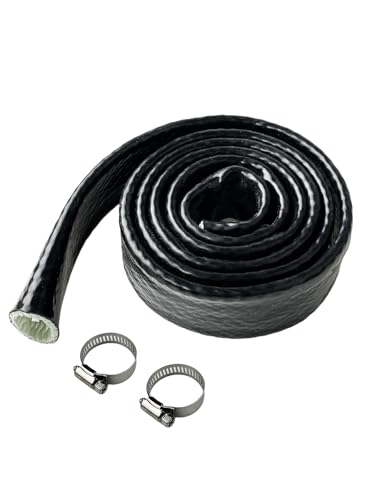
The YAMAKATO 1″ ID sleeve offers substantial protection for larger wiring bundles and hoses. With an internal fiberglass sleeve and a silicone outer coating, this sleeve is designed to handle continuous temperatures down to -65°F and up to 500°F. Intermittent heat can reach 2000°F for brief periods, with short bursts up to 3000°F. It includes clamp compatibility for secure installation and claims VW-1 flammability. This size is ideal for high-heat engine bays and heavy-duty electrical installations where space permits a thicker protective layer.
BSTFLEX 3/4″ ID Fire Sleeve

This BSTFLEX offering uses a silicone-coated fiberglass construction with a 3/4″ inner diameter and a 5-foot length, making it suitable for a range of automotive and industrial lines. It tolerates temperatures from -60°C to 260°C (-76°F to 500°F) for continuous exposure, with VW-1 flammability. The silicone coating provides abrasion resistance and easy cleaning, while the fiberglass inner sleeve ensures structural stability. A practical choice for protecting power cables, fuel lines, and hydraulic hoses in demanding environments.
BSTFLEX 1/2″ ID Fire Sleeve
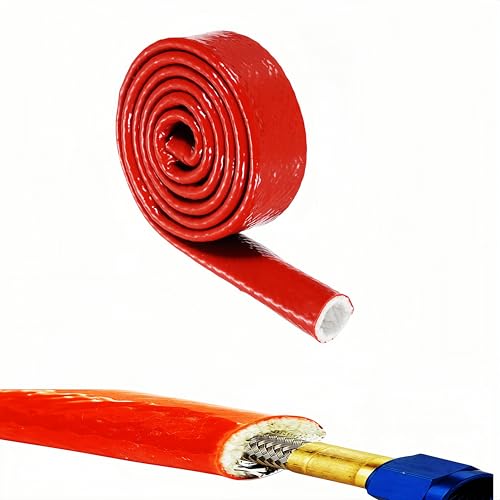
The BSTFLEX 1/2″ ID sleeve provides compact heat protection for tighter installations. Its silicone-coated fiberglass design delivers reliable insulation with good abrasion resistance. Operating temperatures range from -60°C to 260°C, making it suitable for a variety of automotive wiring and hose applications where space is at a premium. The sleeve supports bundling and shielding of electrical harnesses and small-diameter fuel lines in constrained engine bays or machinery compartments.
YAMAKATO 3/8″ ID Fire Sleeve

The 3/8″ YAMAKATO sleeve is designed for smaller-diameter lines where space is limited. It carries a silicone-coated fiberglass construction with a continuous operating range from -65°F to 500°F, and higher brief exposure up to 2000°F for 15-20 minutes, with even shorter bursts up to 3000°F. It includes stainless steel clamps for secure installation and maintains VW-1 flammability. This size is well-suited for tight engine compartments, small electrical harnesses, and accessory lines requiring robust heat protection without bulk.
Buying Guide: Key Considerations For Choosing Fire Sleeve
- Heat tolerance: Consider continuous versus intermittent exposure. If lines run near hot exhausts or engine components, select sleeves rated for higher intermittent spikes (often up to 2000°F or more for short periods).
- Diameter and length: Measure hose, wire, and bundle sizes to choose the correct inner diameter. Longer runs may need multiple sleeves or segments for coverage and ease of installation.
- Material and coating: Silicone-coated fiberglass is common for its heat resistance and abrasion protection. Check for VW-1 flammability certification for fire safety compliance.
- Flexibility and installation: Split sleeves or easy-to-load designs simplify installation, especially around existing wiring. Consider clamp compatibility for secure mounting.
- Environmental tolerance: Temperature range, chemical resistance, and exposure to cleaning products can affect sleeve performance over time. Choose sleeves rated for the expected environment (e.g., automotive, marine, industrial).
- Durability vs. budget: Heavier protections offer longer service life but may come at higher cost. Balance required protection with expected use and maintenance plans.
- Compatibility with accessories: Ensure clamps, tie wraps, and protective coverings can be applied without compromising heat shielding or cable flexibility.
In summary, selecting the right fire sleeve involves matching diameter, length, and heat tolerance to your specific wiring or hose configuration. The options listed here provide a range of sizes and performance specs to cover standard automotive and electrical protection needs, from compact 3/8 inch sleeves to robust 1 inch varieties. For optimal results, plan coverage to shield critical bundles and ensure easy installation with compatible clamps and supports.