People who are deaf or hard of hearing need fire safety devices that rely on more than sound. Visual strobes, bright alarms, wireless alerts, and bed shakers can provide early, reliable warnings across the home. Below is a curated guide to five top options that emphasize visual or tactile alerts, helping you compare features, installation needs, and performance. Each product combines reliable fire detection with accommodations for hearing-impaired users, supporting safer living environments.
| Product | Brand | Key Feature | Type |
|---|---|---|---|
| First Alert BRK 7020BSL Hardwired Smoke Detector with LED Strobe | First Alert | LED strobe, integrated power with 10-year battery backup | Hardwired with visual alert |
| First Alert SM110LED-AC, Hardwire Smoke Alarm with LED Strobe | First Alert | LED strobe, 10-year backup, integrated smoke and strobe | Hardwired with visual alert |
| Bellman & Symfon Smoke and Fire Alarm Transmitter | Bellman & Symfon | Wireless alert to receivers, FM/Radio signal range, visual and audible cues | Wireless fire alert transmitter |
| Bellman & Symfon Safe Fire Alerting Solution | Bellman & Symfon | Wireless detector, bed shaker, alarm clock receiver, night light | Wireless safety system |
| VAUNO Extra Loud Vibrating Alarm Clock with Bed Shaker | VAUNO | Bed shaker, extra loud alarm, flashing wake-up light | Bedside alarm with visual/tactile alerts |
First Alert BRK 7020BSL Hardwired Smoke Detector With LED Strobe

The BRK 7020BSL combines a smoke detector with an integrated LED strobe in a single, hardwired unit. Its design supports continuous protection through a 10-year sealed battery backup, ensuring operation during power outages. The front-cover variations do not affect core functionality, so installation remains straightforward in standard junction boxes. The LED strobe provides a bright, visible cue that complements audible alerts, making it well-suited for bedrooms or living areas where visual notification is critical for safety.
First Alert SLED177 Hardwired Hearing Impaired Led Strobe Light

The SLED177 is a compact, hardwired LED strobe designed specifically for hearing-impaired residents. A 177 candela strobe provides high-visibility warning across rooms, and the device includes trouble-signal synchronization to ensure strobes flash in unison on multiple units. Its slim, ceiling- or wall-mountable profile helps maintain a discreet look while delivering strong visual alerts—ideal for multi-room homes or small apartments where coordinated signaling improves response times.
First Alert SM110LED-AC Hardwire Smoke Alarm With LED Strobe
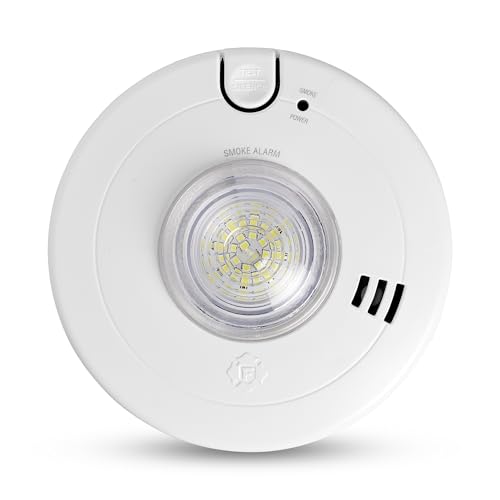
The SM110LED-AC builds on First Alert’s reputation for reliable detection with a powerful LED strobe. Its 10-year battery backup ensures lasting protection without frequent battery changes. This model emphasizes precision detection to reduce nuisance alarms and delivers a clear visual cue when smoke is detected. With integrated strobe and audible alarms, it offers a balanced approach for bedrooms or living spaces where both sight and sound alerts can aid quick evacuation decisions.
Bellman & Symfon Smoke and Fire Alarm Transmitter

This wireless transmitter is part of a visit Smart Home safety ecosystem designed for deaf and hard-of-hearing users. It detects smoke and fires and sends instant alerts to receivers around the home without relying on WiFi. The system supports a 520-foot range, making it suitable for larger houses or split-level layouts. Alerts come through loud audio, vibration, and visual cues, offering redundancy across different sensory channels for reliable early warnings.
Bellman & Symfon Safe Fire Alerting Solution

This system combines a wireless smoke detector, alarm clock receiver, and bed shaker to provide total home safety for hard-of-hearing users. It delivers alert signals through sound, vibration, and bright flashing lights. The wireless coverage up to 650 feet ensures comprehensive signaling across multiple rooms, making it useful in homes with bedrooms far from the kitchen or living areas. The bed shaker offers a tactile alert that accompanies the visual and audible components for early, unmistakable notification.
VAUNO Extra Loud Vibrating Alarm Clock With Bed Shaker
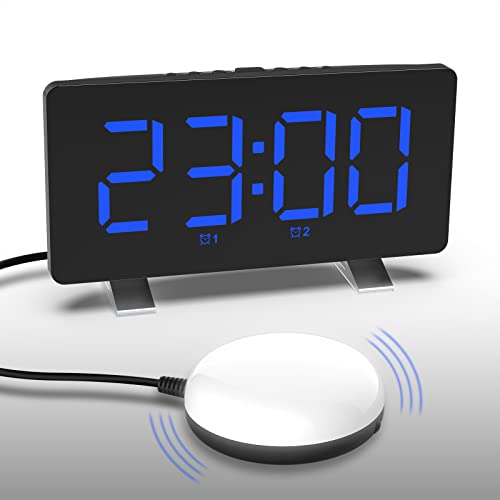
The VAUNO alarm clock is designed for heavy sleepers and individuals with hearing loss. It features a powerful bed shaker, a loud buzzer, and a flashing wake-up light. With multiple modes and adjustable volume, it ensures waking alerts without relying on auditory cues alone. This device complements other fire safety equipment by providing an essential bedside alert mechanism during emergencies when power or other notification methods may be unavailable.
Buying Guide: Key Considerations for Fire Alarms for Deaf and Hard of Hearing Users
- Alert modalities: Look for products offering visual (LED strobes or flashing lights), tactile (bed shakers), and audible alerts. Multi-modal alerts improve recognition in different room layouts and sleep stages.
- Power and reliability: Hardwired units with battery backups ensure operation during outages. For wireless systems, confirm signal range and compatibility with receivers used across the home.
- Synchronization: If you have multiple devices, synchronization features help strobes flash together, reducing confusion during an emergency.
- Ease of installation: Consider whether the device fits standard junction boxes and ceilings/walls. A straightforward install minimizes the risk of skipped setup steps.
- Maintenance: Check battery life or sealed battery warranties (often around 10 years). Long-term maintenance reduces the risk of inactive alarms during critical moments.
- System integration: Wireless alert systems (transmitters and receivers) can integrate with other smart home devices, enabling broader alerts without relying solely on one device.
- Placement strategy: Install detectors in bedrooms, living rooms, and near kitchens or entryways. Ensure line-of-sight for visual alerts and place bed shakers for easy reach at night.
- Certification and standards: Look for UL217-9th Listed or equivalent certifications to ensure smoke detection reliability and safety compliance.
- False alarms: Choose sensors with features to minimize nuisance alarms, and consider placement away from cooking zones to reduce false positives.
- Cost versus coverage: Assess total coverage needs in terms of rooms and levels. A combination of hardwired detectors and wireless alert devices can balance cost and safety.
In summary, selecting an effective fire alarm system for deaf or hard-of-hearing users involves balancing visual and tactile alerts with reliable detection and seamless home integration. The options listed here emphasize strong visual cues, bed-shaker technology, and wireless alerting to create a comprehensive safety net across living spaces.