Protecting families and property starts with early detection of combustible gases. The following five detectors offer rapid alarms, versatile sensing, and practical features for homes, RVs, and small spaces. Each product below highlights reliability, ease of use, and how they handle various gases like methane, propane, and butane. Use this guide to compare options and choose a detector that best fits your environment and safety goals.
Summary of chosen products:
- PT199 Natural Gas Leak Detector by TOPTES — quick visual and audible alerts, portable design.
- PT520A Natural Gas Detector by TOPTES — 17-inch gooseneck for hard-to-reach spots, strong alarm.
- 4-in-1 Upgraded Gas and CO Detector by NICGOL — plug-in, dual sensors, temperature and humidity readouts.
- Klein Tools ET120 Gas Leak Detector — wide range detection, adjustable sensitivity, robust alerts.
- PT177 Gas Leak Detector by TOPTES — pocket-sized, fast auto-calibration, multiple LEDs and alarm.
TopTes PT199 Natural Gas Leak Detector
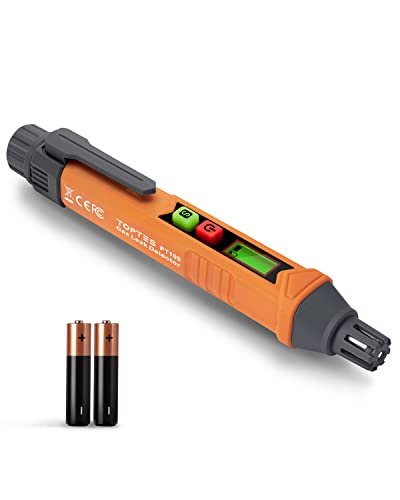
The PT199 from TopTes detects natural gas, methane, propane, butane, LPG, and related gases, helping pinpoint leaks to reduce explosion risk. It is a portable device with a quick response, triggering visual and audible alarms within 0.5 seconds of detection. The LCD screen turns red at higher gas levels, providing clear, immediate feedback. The unit ships with two AAA batteries and a simple 30-second warm-up, with a low-battery indicator and an auto-off feature after five minutes of inactivity or no detection. This model emphasizes ease of use for homeowners checking grills, stoves, or gas appliances.
Key considerations:
- Portability vs. fixed installations — PT199 is ideal for quick checks or interim screening in kitchens, basements, or RVs.
- Sensitivity and range — suitable for identifying common household gas leaks, particularly methane and propane.
- Power and maintenance — battery-powered; verify battery life and keep spare cells on hand.
TopTes PT520A Gas Detector With Gooseneck

The PT520A provides rapid detection of methane, propane, natural gas, LPG, and butane, with a 17-inch gooseneck that reaches tight spaces such as pipelines, storage areas, gas fireplaces, and basements. It responds in 0.5 seconds and uses a 75dB alarm with seven colored bars that intensify with gas concentration. Detection range covers 50-10,000 ppm (Methane). The device is suitable for both indoor and outdoor leak detection, with guidance for precise source localization due to the extended probe length.
Key considerations:
- Probing reach — long gooseneck assists in locating leaks behind appliances or in enclosed spaces.
- Alarm system — audible and visual cues help ensure alerts are noticed in various environments.
- Power options — typically battery-powered; plan for replacement batteries during extended use.
NICGOL 4-in-1 Gas And CO Detector

This NICGOL device combines natural gas and carbon monoxide detection with temperature and humidity sensing in a plug-in format. It features dual sensors and dual alarms to deliver fast, accurate alerts. The detector is designed for home and RV use, signaling CO and gas leaks with audible alarms and visual indicators. Its emphasis on energy efficiency stems from the plug-in architecture, reducing the need for frequent battery changes while offering continuous monitoring. It detects a range of gases and helps assess overall indoor air quality.
Key considerations:
- 4-in-1 capability — gas, CO, temperature, humidity in one unit, useful for comprehensive safety monitoring.
- Plug-in design — continuous monitoring with lower maintenance than battery-operated models.
- Alarm specifics — dual alarms provide redundancy for urgent alerts.
Klein Tools ET120 Gas Leak Detector

The Klein Tools ET120 offers a wide detection range from 50 to 10,000 ppm (based on methane) with adjustable sensitivity: High (50–1000 ppm) or Low (1000–10,000 ppm). Five red LEDs provide a clear visual cue, and an 85dB audible alert intensifies with gas concentration. Its design emphasizes practical accuracy across different environments, including kitchens, garages, and RVs. The ET120 ships with a pouch and batteries for immediate use, making it a solid choice for technicians and homeowners alike.
Key considerations:
- Adjustable sensitivity — helps tailor detection for different spaces and risk levels.
- Clear indicators — combination of LED lights and loud alarms improves visibility in dim areas.
- Portability — compact design is suitable for on-the-go inspections or tool kits.
TopTes PT177 Portable Gas Leak Detector

The PT177 is a pocket-sized gas detector designed for quick checks around gas appliances and RV setups. It features a 30-second auto-calibration after powering on and can trigger an alarm within 0.5 to 3 seconds. Five red LEDs and a 75 dB audible alarm increase in intensity as gas concentration grows. Its compact form factor, plus a storage bag, makes it easy to carry and store for travel or on-site inspections.
Key considerations:
- Portability — ideal for occasional checks and on-the-go use.
- Response speed — rapid rise in alarms aids quick decision-making during potential leaks.
- Visual cues — multiple LEDs provide intuitive gas level feedback.
Buying Guide: Key Purchase Considerations For Gas Leak Detectors
Selecting the right gas leak detector involves evaluating several factors to match your environment and risk profile. The following considerations help compare options across the market:
-
<liGas types detected
- Response time and alarm methods
- Form factor and portability
- Sensing range and sensitivity settings
- Power source and energy efficiency
- Display clarity and user interface
- Maintenance needs and battery life
- Environment suitability (indoor, outdoor, RV, kitchen, garage)
Gas types detected: Look for detectors that cover methane, propane, butane, LPG, and natural gas. Some models also monitor CO, humidity, or temperature, which can be valuable for overall air quality and safety planning.
Response time and alarms: Faster response times improve safety, especially in confined spaces. Alarms should include audible alerts and visible indicators; higher gas concentrations typically trigger stronger alarms and red LCD indications.
Form factor: Portable units are useful for quick checks around appliances, while plug-in detectors provide continuous monitoring for fixed installations. Consider storage and ease of use when choosing a form factor.
Sensitivity settings: Adjustable sensitivity helps avoid false alarms in busy or kenned spaces while maintaining reliability in higher-risk areas. Ensure the device offers clear guidance on calibration and maintenance.
Power and maintenance: Battery-powered devices are flexible but require regular replacement or recharging. Plug-in detectors often consume less energy and provide steady monitoring but require access to an outlet and may have ongoing electrical considerations.
Environment: Choose models designed for kitchens, basements, RVs, or garages, depending on where leaks are most likely to occur. Look for robust housings and safety certifications that align with your usage scenario.
Finally, compare total cost of ownership, including battery replacements (where applicable), calibration needs, and warranty terms. A detector with reliable alarms, durable construction, and clear indicators will typically offer the best value over time by reducing risk and improving response times in the event of a leak.