Choosing the right deep cycle battery is essential for campers who rely on off-grid power, RV adventures, or boat trips. This guide highlights five dependable options that balance capacity, safety, and longevity for camper use. We compare AGM and LiFePO4 chemistries, explain key trade-offs, and offer purchasing tips to help you pick a battery that suits your setup, whether you run lights, refrigeration, or a small inverter. The picks below are organized to help you find a reliable, maintenance-free power source for extended trips.
Summary of chosen products
| Product | Chemistry | Approx. Capacity | Best For |
|---|---|---|---|
| Weize Deep Cycle AGM 12V 100Ah | AGM | 100Ah | RV, solar, and off-grid storage |
| Renogy Deep Cycle AGM 12V 100Ah | AGM | 100Ah | RV, cabin, marine, and off-grid |
| GRNOE 2-Pack 12V 100Ah LiFePO4 | LiFePO4 | 100Ah per unit | Cold weather, long life, high cycles |
| CHITOLI 12V 100Ah LiFePO4 Group 24 | LiFePO4 | 100Ah | Lightweight, long-cycle energy storage |
| Interstate Batteries Marine Deep Cycle 12V 100Ah | AGM | 100Ah | Marine and dual-use deep cycling |
Weize Deep Cycle AGM 100Ah For RV And Off-Grid

The Weize Deep Cycle AGM 12V 100Ah battery uses absorbed glass mat technology to provide maintenance-free operation with a compact, sealed design. With a stated self-discharge rate of 1-3% per month, this model offers reliable storage for RV setups, solar arrays, and boat trundles. It supports a high maximum discharge current for short bursts and is designed to operate within a wide temperature range, making it suitable for camping trips where weather varies. The left/right terminal arrangement keeps wiring straightforward for many standard builds. A long service life is aided by the sealed AGM construction that minimizes leakage and maintenance needs.
Key considerations: AGM chemistry favors safety and lower maintenance, but capacity and cycle life can be lower than LiFePO4. The 12V system integrates easily with many RV and solar configurations, though you’ll want to size your bank to meet expected daily draws. For campers, this battery is a solid all-around fit when weight is manageable and you don’t require ultra-long cycles per charge.
Renogy Deep Cycle AGM 12V 100Ah Battery

Renogy’s 12V 100Ah AGM battery is built for reliability with a focus on safety and compatibility. It supports series and parallel configurations (No limitation on series, up to 4P parallel), expanding the potential capacity for larger campers or off-grid cabins. Renogy emphasizes a sealed, maintenance-free design and a robust internal structure that helps minimize troubleshooting compared to some flooded lead-acid options. The battery is widely trusted, with a strong track record in RV, marine, and off-grid applications, making it a common choice for adventurous campers seeking steady power for essential devices, refrigeration, and lighting.
Considerations include safe charging practices and proper ventilation in enclosed spaces, as with most AGM models. While not as lightweight as LiFePO4, Renogy’s 100Ah unit balances cost, availability, and performance for campers who prioritize proven performance and broad compatibility.
GRNOE 2-Pack 12V 100Ah LiFePO4 Batteries

This GRNOE pair uses LiFePO4 chemistry, offering high energy density, long cycle life (reportedly up to 10 years or more, depending on depth of discharge). Each unit measures 12.9×6.7×8.6 inches and weighs about 22.5 pounds, presenting a significant weight reduction compared with traditional lead-acid alternatives. Built-in BMS provides protection against over-charge, over-discharge, over-current, and short circuits, and supports cold-weather operation with a cutoff function at very low temperatures. A key advantage for campers is excellent cycle life and deep cycling capability, which translates into fewer replacements over time and better long-term value for extended trips in remote areas.
When using LiFePO4 for campers, consider the charge source compatibility, because the charging voltage window is different from that of AGM lead-acid batteries. A Lithium-aware charger or BMS-compatible charger helps optimize performance and battery longevity. If you anticipate long dry camping periods, LiFePO4 is a compelling option due to its stability and weight advantages.
CHITOLI 12V 100Ah LiFePO4 Group 24 Battery

CHITOLI’s 12V 100Ah LiFePO4 Group 24 battery targets lightweight reliability for campers transitioning from lead-acid. With a built-in 100A BMS, this battery is designed to prevent over-charging, over-discharging, and short circuits, supporting safe operation in varied environments. The LiFePO4 chemistry promises a long cycle life and stable performance across many charge-discharge cycles, with the benefit of lower weight and higher energy density compared with traditional lead-acid equivalents. Note that LiFePO4 systems require compatible charging voltage and battery management to realize their full potential in RV and off-grid setups.
For campers choosing LiFePO4, this option provides a balance of weight reduction, safety, and extended life while remaining adaptable to standard 12V systems used in small to mid-size RVs and boats. It’s particularly attractive for users planning frequent trips or long seasons away from typical charging infrastructure.
Interstate Batteries Marine Deep Cycle 12V 100Ah
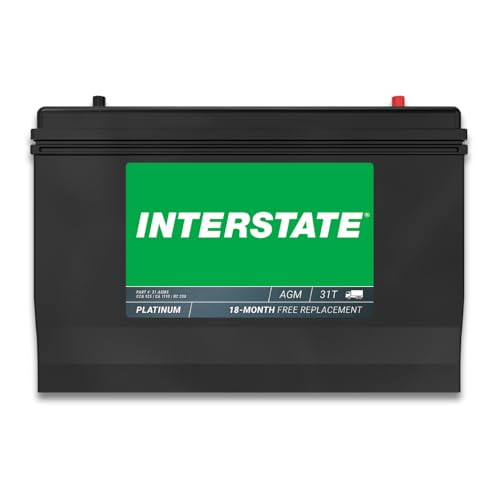
Interstate Batteries offers a pure lead AGM marine deep-cycle option designed for heavy-duty use. This battery emphasizes long cycle life and high-cranking performance, highlighting its suitability for powering boat motors, trolling motors, and cabin appliances in offshore or lakeside camping setups. The design prioritizes durability and reliable discharge characteristics, making it a strong option for users who need a rugged battery for extended periods of use on or near water. As with all AGM products, ensure proper ventilation and charging practices to maximize life and performance in RV or marine configurations.
In sum, these five selections cover a spectrum of camper-friendly power options, from traditional AGM batteries to modern LiFePO4 cells. Each offers its own strengths in weight, longevity, and safety. Your final choice should reflect your expected daily power needs, travel patterns, charging sources, and whether you prioritize higher cycle life or lower weight for easier transport and installation.
Buying Guide: Key Considerations For Camper Batteries
- Battery chemistry: AGM offers maintenance-free operation with solid safety and lower upfront cost. LiFePO4 provides longer cycle life, lighter weight, and better depth of discharge, but at a higher initial price and with charger compatibility considerations.
- Capacity and depth of discharge: For full-time campers or extended trips, LiFePO4 often yields more usable capacity per amp-hour due to higher usable DoD. AGM batteries typically offer robust performance, but you may need larger banks to meet the same daily load.
- Cycle life and longevity: If you expect frequent cycles (daily use over many years), prioritize higher cycle counts. LiFePO4 typically excels here, while AGM life depends on maintenance and temperature.
- Weight and size: LiFePO4 cells are lighter perAh, which matters for portable or rooftop installations. AGM batteries are heavier but often cheaper and easier to source.
- Charging compatibility: Check your charger and solar controller voltage specifications. LiFePO4 cells require appropriate charging voltages and may need a dedicated BMS-aware charger. AGM systems work with standard lead-acid charging profiles.
- Temperature performance: Extreme cold or heat affects battery efficiency and life. LiFePO4 generally performs well across temperature ranges, but charging conditions are crucial. AGM also tolerates cold better than some lithium chemistries, but may require conditioning in very hot climates.
- Maintenance and safety: AGM is maintenance-free with minimal risk of leakage due to sealed construction. LiFePO4 requires proper BMS and charging practices but offers greater resilience to deep discharge and physical durability.
- System integration: Ensure 12V systems, inverters, and parallel/series configurations are compatible with your chosen battery. For RVs and boats, a well-matched battery bank with a reliable charging source is essential for consistent performance.
- Replacement cycle and total cost of ownership: While LiFePO4 has a higher upfront cost, longer lifespans can reduce total cost over time. AGM batteries may be more economical initial purchases but may require more frequent replacement in heavy use scenarios.
Bottom line: For campers who prioritize longevity and payload efficiency, LiFePO4 options like the GRNOE and CHITOLI models offer compelling value. For those seeking established, budget-friendly options with broad compatibility and straightforward maintenance, AGM choices such as Weize, Renogy, and Interstate Batteries provide dependable performance. When selecting a battery, align capacity, weight, charging compatibility, and vehicle or vessel installation constraints with your typical camping or traveling routine.