Traveling in campers and RVs requires reliable safety gear, especially for carbon monoxide (CO) exposure. The following picks are battery-powered or 12V systems designed for mobile living spaces, offering clear alerts and easy installation. This guide highlights five top options with distinct features to help you compare performance, power sources, and alarm options for on-the-road peace of mind.
| Product | Power Source | Key Benefit |
|---|---|---|
| Kidde Carbon Monoxide Detector | Battery Powered | No wiring; detects during power failure |
| FIRST ALERT BRK CO250 | Battery Operated | Two silence features; end-of-life chirp |
| Safe T Alert 20 Series Mini LP Gas Alarm | 12V DC | RV rugged design; propane detection |
| briidea RV Dual LP/CO Alarm | 12V DC | Separate indicator lights; UL-listed sensors |
| NICGOL 4-in-1 Detector | Plug-in 110V–220V | 4-in-1 with dual alarms |
Kidde Carbon Monoxide Detector
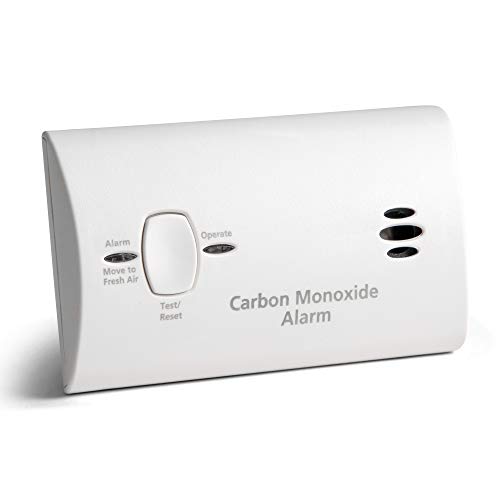
The Kidde CO detector uses electrochemical sensor technology to detect CO gas. It is easy to install without wiring and operates on 2-AA batteries, including the ones provided. A green LED shows power, while the 85-decibel alarm and red LED indicate CO presence. This model is suitable for mounting on walls or placing on a tabletop, supporting both permanent and temporary camper setups. Its battery operation ensures functionality during power outages, a valuable feature for RV camping and travel scenarios.
FIRST ALERT BRK CO250 Battery Operated Alarm

This battery-operated CO alarm emphasizes high-quality electrochemical sensor technology for reliable detection. It features an end-of-life chirp, a straightforward test and silence workflow, and dual silence features to silenceboth the alarm and the low-battery chirp. Its compact design makes it suitable for tight camper spaces where clear audible alerts are essential for occupant safety during overnight travel or extended stops.
Safe T Alert 20 Series Mini LP Gas Alarm

Designed for RV use, this 12V DC detector provides robust protection against propane leaks with a compact surface-mount form factor. It includes an alarm mute button to facilitate ventilation when propane levels are elevated and a rapid-recovery sensor that reactivates after safe ventilation. The 12V power makes it a dependable option for campers without relying on frequent battery changes, ideal for long trips and full-hookup sites.
RV Gas Alarm Briidea Dual LP/CO Detector

The Briidea 2-in-1 detector provides separate LED indicators for propane and CO, with UL-listed Figaro sensors for precise detection. Designed for RV safety, it uses a 12 VDC supply and delivers a loud 100 dB-level alarm to alert occupants. This dual-indicator setup helps travelers quickly assess which gas danger is present, supporting immediate safety actions in confined RV environments.
Leakbee RV Dual LP/CO Alarm (R502 Black)

Leakbee’s 2-in-1 RV carbon monoxide and propane detector uses two independent sensors and a digital LED display. It provides an 85 dB alarm, aiding quick awareness of gas leaks. The device’s 12V DC operation and easy wiring with lever-nut connectors simplify installation, making it a practical option for motorhomes and trailers needing reliable dual-gas detection during adventures on the road.
NICGOL 4-in-1 Upgraded Gas Detector

The NICGOL device combines detection for natural gas, CO, temperature, and humidity in a single unit with dual alarms. It features a plug-in design supporting 110V–220V AC and emphasizes quick alert with a loud alarm and a flashing light. This 4-in-1 approach is helpful for campers seeking a single comprehensive detector that covers multiple environmental factors in one compact unit, reducing clutter and simplifying maintenance.
Buying Guide
- Power source and installation: Decide between battery-powered or hardwired 12V systems. Battery models offer portability and outage resilience, while 12V units suit consistently powered RV sites.
- Sensor technology: Electrochemical sensors provide robust CO detection. Compare detection speed, accuracy, and end-of-life indicators. Some models mix propane/LP detection for broader coverage in RVs.
- Alerts and usability: Consider loudness (dB level), ease of testing, and silence options. Separate indicator lights for different gases help quick identification in busy living spaces.
- Maintenance: Look for low-battery indicators, replaceable batteries, and extendable power options. End-of-life chirps help plan replacements before failures.
- Installation considerations: Wall mounting vs. tabletop placement, reachability for testing, and space constraints in compact campers. Ensure the device complies with UL or equivalent safety standards for reliability.
- Multi-gas vs single-gas detectors: If your travels include propane-fueled appliances, a dual LP/CO detector reduces the number of devices. Multi-sensor units offer broader protection but may come at a higher cost.
In choosing a detector for a camper, weigh the balance between power reliability, sensor quality, and ease of use. A detector with clear audible alerts, visible indicators, and straightforward maintenance offers the most dependable protection for RV travelers across varied environments.