Home wind power systems offer a practical option for customers seeking to reduce grid dependency and lower energy costs. This guide highlights five reliable wind turbine kits and generators suited for residential use, covering different power ranges, installation environments, and control features. Each product is evaluated on durability, ease of setup, and efficiency to help homeowners compare options for rural, suburban, or off-grid locations.
| Product | Brand | Power Range | |
|---|---|---|---|
| Wind Turbine Generator Kit, 1200W | Generic | 1200W | High power with automatic shut-off for battery charge management. |
| VEVOR 500W Wind Turbine | VEVOR Store | 500W | MCU-controlled MPPT optimization for varied winds. |
| Power Equipment 4400 Watts Inverter Generator | Oxseryn Store | 4400W (gas) | Open-frame portability with multiple outlets and Eco mode. |
| Pikasola Wind Turbine Kit 400W | Pikasola Store | 400W | 5 blades, low vibration, suitable for hybrids with solar. |
| 10000W/12000W Vertical Axis Turbine | Generic | 10000W-12000W | Vertical-axis design with MPPT for robust, high-output wind power. |
Wind Turbine Generator Kit, 1200W for Home

The Wind Turbine Generator Kit uses a three-phase permanent magnet synchronous motor for efficient AC generation. It employs NdFeB permanent magnets for high performance and includes a fully integrated voltage regulator that automatically shuts down when the battery is full. Its rotating aluminum alloy body with a yaw-adjustment system helps capture maximum wind energy, while the tail fin follows aerodynamic principles for stable operation. The design emphasizes waterproofing, corrosion resistance, heat tolerance, and UV resistance to promote a longer lifespan, even in harsh weather. This kit is aimed at residential wind projects integrated with solar or other power sources.
VEVOR 500W Wind Turbine Generator with MPPT

VEVOR’s 500W wind turbine is designed for versatile power needs in homes, farms, RVs, boats, and more. It starts producing power at around 2.5 m/s and reaches its rated performance at 12 m/s, with a wide operating range (3-25 m/s). The system is powered by a 12V three-phase PMG and is managed by an MPPT controller that optimizes current and voltage for diverse loads. The generator operates quietly (about 55 dB), balancing efficiency with a compact form factor that suits small to medium installations while maintaining durable, weather-resistant construction.
Power Equipment 4400 Watts Inverter Generator

This gasoline-powered inverter generator delivers 4400 peak watts and 3400 running watts, making it a strong option for RV camping or as an emergency home backup. It provides multiple outlets, including two 120V AC ports, a 12V DC port, and an RV outlet. The unit features a long runtime—up to 14 hours at 25% load with ECO mode—and a two-gallon fuel tank with a transparent fuel gauge for quick checks. It emphasizes portability, readiness for outdoor use, and steady, clean power suitable for essential appliances.
Pikasola Wind Turbine Kit 400W

The Pikasola wind turbine kit offers a practical 400W solution for marine, RV, or home applications within hybrid solar Wind systems. It starts at winds as low as 2.5 m/s and minimizes vibration during operation. The 23.8-inch blades are made from nylon carbon fiber, providing waterproofing and corrosion resistance while remaining lightweight. The three-phase PMG ensures efficient power generation, with a focus on reliability for off-grid or remote locations where wind is a primary resource.
Vertical Axis Wind Turbine Kit 10000W/12000W
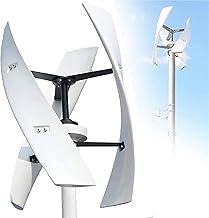
The 10kW to 12kW vertical-axis wind turbine uses FRP blades and a maglev generator to reduce start torque and extend service life. Its spiral, aerodynamically designed blades promote smooth operation, enabling effective energy capture even with variable wind. The system claims a service life of 10–15 years and provides maximum RPM protection, limiting rotation to a safe level. An integrated MPPT controller enhances wind energy utilization and annual power generation, making it a strong option for larger residential or small commercial off-grid setups where wind is consistently available.
Buying Guide: Key Purchase Considerations
- Wind resource and site assessment: Evaluate average wind speeds, turbulence, and available space. Higher-wattage systems require steadier wind and stronger mounting structures.
- System type and integration: Decide between standalone wind turbines, hybrid systems with solar, or full-grid-tied configurations. MPPT controllers improve efficiency in variable winds.
- Inverter and electrical integration: Look for three-phase PMG generators for smoother power delivery, and ensure compatibility with your battery bank or grid connection.
- Durability and weather resistance: Prioritize materials with UV resistance, corrosion resistance, and waterproofing for long-term operation in outdoor environments.
- Noise and vibration: Consider models with quiet operation and balanced blade design to minimize disturbance in residential areas.
- Maintenance and lifespan: Assess gear quality, rotor design, and expected service life. Vertical-axis designs offer unique installation benefits in constrained spaces but may require different maintenance protocols.
- Installation and safety: Verify installation requirements, zoning regulations, and safety features like automatic shutdown to protect battery systems and electrical components.
- Cost of ownership: Include initial purchase, mounting hardware, inverters, controllers, and routine maintenance when evaluating total cost of ownership over the system’s life.
- Warranty and support: Check warranty length and availability of replacement parts or service networks, especially for off-grid applications.
- Backup and energy storage: Plan for battery storage capacity and charge/discharge efficiency to maximize collected wind energy during low-wind periods.