Choosing a well water level sensor means balancing accuracy, connectivity, and ease of use. The right system can send timely alerts, help prevent pump damage, and provide remote visibility from a smartphone. This guide highlights five top options, spanning WiFi, LoRa, and battery-powered designs, to help you pick a solution that fits your well, climate, and maintenance preferences. Each product includes practical setups, alert options, and real-world applicability for American homes.
| Product | Brand | Key Benefit |
|---|---|---|
| Risinglink Smart Water Level Monitor | Risinglink | |
| PTLevel Wireless Tank Level Monitor | PTLevel | |
| YoLink LoRa Smart Water Level Monitoring Sensor | YoLink | |
| Daytech Water Level Sensor | Daytech | |
| MySpool Water Level Alert | MySpool |
Risinglink Smart Water Level Monitor

The Risinglink device is WiFi-enabled and designed for indoor or outdoor use with a stainless steel float sensor. It connects directly to a 2.4 GHz WiFi network, without the need for a separate hub or subscription. Notifications include high and low level alerts via email and text, plus alerts when the water level returns to normal, low battery, or device offline. The system supports two phone numbers and four email addresses per device, enabling quick coordination with family members or a property manager. This makes it suitable for small wells or storage tanks where centralized monitoring is desired.
PTLevel Wireless Tank Level Monitor

PTLevel offers dual alerts for high and low levels, with email and SMS options. It is designed for broader environments, boasting weatherproof construction and operation across a wide temperature range (-40 to 85 Celsius). The device is powered by four AA batteries, promoting long-term use with minimal maintenance. Its sharing feature allows a water level company or multiple stakeholders to access the device, which is helpful for rural wells, cisterns, or remote storage tanks where remote oversight is beneficial.
YoLink LoRa Smart Water Level Monitoring Sensor

The YoLink solution adopts LoRa technology for extended range, enabling long-distance wireless monitoring without relying on WiFi. It is battery-powered and supports a variety of applications, including sump pumps, condensate overflow, toilets, and storage tanks. A 105 dB siren adds an onboard alert option, and the system can integrate with a YoLink hub for broader automation. This option is ideal for larger properties or installations where WiFi coverage is inconsistent but LoRa connectivity is available.
Daytech Water Level Sensor

Daytech provides a high-sensitivity 100 dB alarm with a 78-inch detector cable, designed for basements and other flood-prone areas. The dual high/low detector capability helps prevent both overflows and dry runs. The audible alert can be paused manually or continue until the level returns to normal. This makes it a practical choice for immediate, loud alerts in environments where water leakage, sump pumps, or tank overflows pose risks.
MySpool Water Level Alert
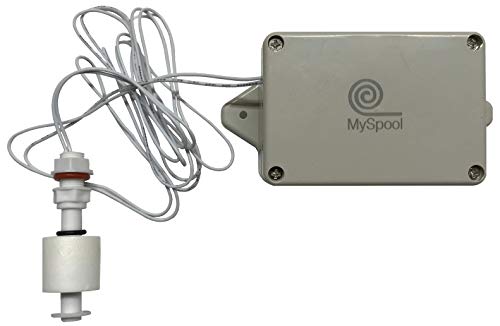
MySpool emphasizes simplicity with battery-powered, wireless operation and a float sensor connected by a 5-foot cable. No app installation or hub is required, making it a standalone high or low water alarm. Email and text alerts are included without extra costs. The rugged enclosure protects electronics in damp environments, and the float can be configured to detect high water or can be flipped to monitor low water in aquariums, ponds, or storage tanks. It is well-suited for straightforward, maintenance-free monitoring.
Buying Guide
Key considerations when selecting a well water level sensor include connectivity, alert channels, power source, and installation environment. Here are angles to compare:
- Connectivity: Choose WiFi if you want cloud alerts and easy remote access, or LoRa for long-range, rural setups with limited WiFi. Some devices offer multi-network compatibility or optional hubs.
- Alerts and notifications: Look for multiple notification methods (email, SMS, push/app) and, if possible, alerts when the level returns to normal. Battery-powered units reduce wiring work but may require battery replacements.
- Sensor type and durability: Float sensors are common for wells and tanks, while ultrasonic or other non-contact methods suit opaque liquids. Outdoor or damp environments benefit from weatherproof enclosures.
- Power and maintenance: Consider battery life, solar options, or mains power, depending on location. Systems with documentation for battery replacement ease save time.
- App and data access: Some devices provide detailed dashboards, logging history, or exportable data. If you need historical trends, ensure the app supports easy access to logs.
- Compatibility and sharing: If multiple stakeholders manage the well, devices that support multiple contacts or roles help coordinate responses.
- Installation complexity: Some units are plug-and-play, while others may require mounting brackets, calibrations, or wiring. Assess DIY comfort and potential professional installation needs.
Each of the featured products provides a distinct balance of alerts, power options, and connectivity. For small, residential wells, a WiFi-enabled monitor with clear email/SMS alerts (like Risinglink or MySpool) can deliver straightforward, instant notifications. For larger properties or remote locations, LoRa-based options (YoLink) or robust weatherproof designs (PTLevel) offer resilience and extended coverage. Daytech focuses on high-volume audible alerts for quick on-site detection, while PTLevel’s multi-user sharing supports professional oversight. Consider your property size, network availability, and maintenance expectations to select the best fit.