When outages strike, a reliable uninterruptible power supply (UPS) keeps essential devices running long enough to save work, shut down safely, or maintain network connectivity. This guide highlights top UPS models designed for home offices, small businesses, and media setups, focusing on solid battery backup performance, multiple outlets, and user-friendly features. Read on to compare units from APC, Amazon Basics, and CyberPower, and use the buying guide to match a model to your needs.
| Product | Brand | Capacity (VA / W) | Outlets | Notable Feature |
|---|---|---|---|---|
| BE600M1 Back-UPS | APC | 600 VA / 330 W | 7 (5 Battery Backup, 2 Surge Only) | USB Charger Port |
| BX1500M | APC | 1500 VA / 900 W | 10 | Powerchute management, high-power devices |
| Amazon Basics 600VA | Amazon Basics | 600 VA / 360 W | 8 | Compact standby UPS |
| BE650G1 | APC | 650 VA / 390 W | 8 | Dataline protection |
| CP1500PFCLCD | CyberPower | 1500 VA / 1000 W | 12 | Colored LCD, AVR, USB ports |
Introduction highlights five highly relevant models known for dependable backup time, practical outlet layouts, and management features that help keep modern work setups online during outages.
APC BE600M1 Back-UPS With USB Charger
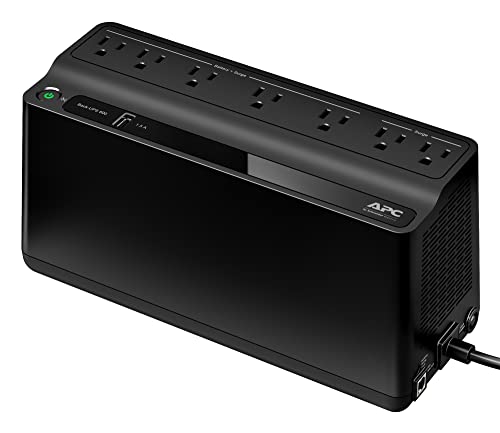
APC’s BE600M1 provides essential battery backup with a compact footprint. It offers 600 VA / 330 W of runtime, enough to keep a modem, router, and a few low-power devices running through short outages. Seven outlets include five with battery backup and two surge-protected-only outlets, plus a USB charger port for phones or small electronics. This model is a practical choice for home office setups where space is at a premium and a few devices require uninterrupted power for brief periods.
APC BX1500M Back-UPS Pro

The BX1500M model addresses larger setups with 1500 VA / 900 W and a total of 10 outlets. It supports multiple devices, including a PC with monitors, router, and peripherals, while providing both battery backup and surge protection. PowerChute software integration via a dedicated data port helps monitor power conditions, including Windows and Mac OS compatibility through native energy-saving settings. This UPS balances higher runtime and device capacity for more demanding home office or small business environments.
Amazon Basics 600VA UPS Backup & Surge Protector

Amazon Basics delivers a compact standby UPS with 600 VA / 360 W capacity and eight outlets. The unit is suited for home networks, IoT devices, and entertainment gear, offering approximately nine minutes of backup at half load and about two minutes at full load. Four outlets provide battery backup and four offer surge protection. This model emphasizes basic protection and cost-efficiency for small, power-sensitive setups where extended uptime is not required.
APC BE650G1 Battery Backup Surge Protector

The BE650G1 offers 650 VA / 390 W with eight outlets, combining battery-backed outlets and surge-protected-only outlets. It also includes dataline protection for network devices via Ethernet RJ45 ports. This model is well-suited for protecting a small network, modem, and a few peripherals during outages, while safeguarding connected equipment against surges and power anomalies.
CyberPower CP1500PFCLCD PFC Sinewave UPS
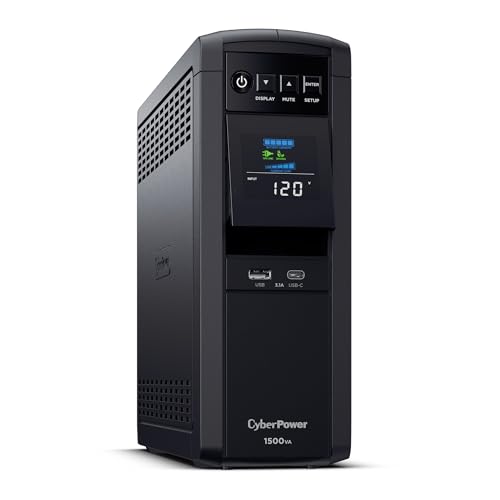
The CP1500PFCLCD provides robust power protection with 1500 VA / 1000 W and 12 outlets, including six battery backup and surge-protected outlets and six surge-protected outlets. Designed to handle active PFC and conventional power supplies, it includes a multifunction color LCD panel, AVR, and two USB ports for charging devices. With PowerPanel software compatibility, this unit offers comprehensive power management suitable for workstations, network gear, and gaming rigs that demand reliable uptime and clear system status visibility.
Buying Guide: Key Purchase Considerations
- Capacity and runtime: Choose VA/W ratings that match your load. Higher VA models like 1500 VA can back up PCs, monitors, routers, and peripherals, while 600 VA units are best for modest setups.
- Outlet layout: Ensure enough battery-backed outlets for your critical devices and consider surge-only outlets for nonessential gear.
- Backup duration needs: For brief outages to safely shut down systems, shorter runtimes may suffice; for longer outages, prioritize larger capacities or additional battery options.
- Management features: Look for software integration (PowerChute, PowerPanel), data line protection, LCD indicators, and USB charging ports, which improve monitoring and convenience.
- Waveform and efficiency: Sinewave or true sinewave outputs better support modern PCs and sensitive electronics; PFC-aware models reduce strain on power supplies.
- Noise and cooling: LiFePO4-based lithium UPS units claim long lifespans and quieter operation, though cooling fans may activate during heavy use.
- Form factor and placement: Tower or compact designs suit home offices with limited space; wall-mountable or right-angle plugs can improve setup flexibility.
- Protection scope: Beyond battery backup, consider MDF-like protections (dataline Ethernet protection) and surge protection quality, especially for networking gear.
- Cost of ownership: Lithium-based UPS units offer longer lifespans and lower total cost of ownership, but initial cost is typically higher than lead-acid models.
In selecting a UPS, assess the critical devices you need to keep powered during outages, the expected duration of outages in your area, and how much budget you are willing to allocate for reliable, long-term protection. The models listed above balance capacity, number of outlets, and management features to support a range of home and small-business power needs.