Uninterruptible power supplies (UPS) protect critical electronics from outages, surges, and voltage fluctuations. This guide reviews five reliable options from well-known brands, highlighting capacity, outlets, management features, and suitability for common setups like home offices, gaming rigs, and small workstations. Each option balances battery backup with surge protection to keep essential devices running and to provide time for graceful shutdowns during outages.
Summary of selected products
| Product | Brand | Capacity | Key Features | Outlets |
|---|---|---|---|---|
| BE600M1 Back-UPS | APC | 600 VA / 330 W | USB charger port, mixed battery backup and surge-only outlets | 7 |
| BX1500M Back-UPS Pro | APC | 1500 VA / 900 W | Power management, 1 GB dataline protection, multiple devices | 10 |
| CP1500PFCLCD Sinewave | CyberPower | 1500 VA / 1000 W | Pure sine wave, 12 outlets, USB-C & USB-A | 12 |
| UPS Battery Backup 400VA | Amazon Basics | 400 VA / 255 W | Compact standby UPS, 6 outlets, basic surge protection | 6 |
| CP1500AVRLCD3 Intelligent LCD | CyberPower | 1500 VA / 900 W | LCD status panel, AVR, 12 outlets, USB-C/USB-A | 12 |
APC BE600M1 Back-UPS

The APC BE600M1 is a compact, entry-level UPS designed for home networks and small electronics. It provides 600 VA / 330 W of battery backup power and a mix of five battery-backed outlets plus two surge-only outlets. A dedicated USB charger port (1.5 A) supports charging mobile devices during outages. This configuration is well-suited for a modem, router, a small PC, or gaming consoles that require short-term power during a brief outage or brownout.
APC Back-UPS Pro 1500VA (BX1500M)

The BX1500M delivers higher capacity for more demanding setups. With 1500 VA / 900 W, it supports multiple devices such as a PC with dual monitors, router, and external peripherals. It features ten outlets—five with battery backup and surge protection, five with surge protection only—and a 6-foot power cord. PowerChute UPS management provides integrated shutdown control on Windows and macOS. This unit is ideal for mid-size home offices and watts-heavy devices requiring reliable runtime and protection.
CyberPower CP1500PFCLCD Sinewave UPS
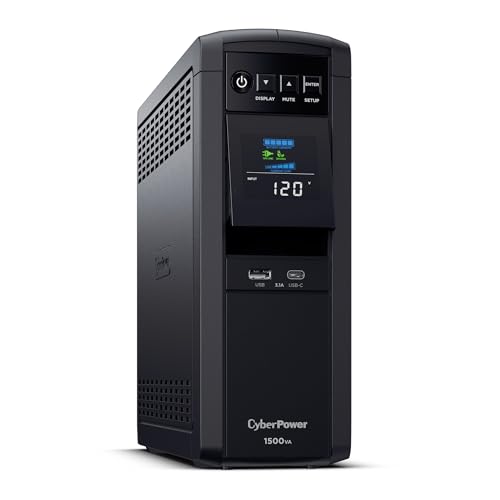
This 1500 VA / 1000 W model uses a true sine wave output and provides robust protection for active PFC power supplies, servers, and gaming rigs. It offers 12 outlets—six battery-backed and surge protected, six surge protected-only—and dual USB charge ports (Type-A and Type-C). A multifunction LCD panel displays real-time battery status, load, and potential issues, facilitating proactive maintenance and minimizing downtime during outages.
Amazon Basics UPS 400VA

The Amazon Basics 400VA UPS provides compact, standby power suitable for home networks, IoT devices, and small entertainment centers. It includes six outlets, with a mix of battery backup and surge protection. Runtime is dependent on connected devices; at half load, backup time extends to several minutes, and at full load, it shortens accordingly. This option emphasizes affordability and basic protection for essential gear during brief outages.
CyberPower CP1500AVRLCD3 Intelligent LCD

The CP1500AVRLCD3 combines advanced protection with user-friendly management. It provides 1500 VA / 900 W, a full 12-outlet array, and an intuitive LCD panel that records battery status, load level, and fault warnings. It supports AVR (automatic voltage regulation) to stabilize voltage during sags and surges. USB-C and USB-A ports offer convenient device charging, while the AVR helps keep connected equipment operating smoothly during unstable power conditions.
Buying Guide: Key Considerations For Choosing A UPS
- Capacity and load: Match VA/W ratings to your devices. A higher VA/W rating supports more devices and longer runtimes during outages.
- Outlet mix and placement: Determine how many outlets require battery backup versus surge protection only, and consider the physical layout behind your desk or media center.
- Battery chemistry and lifespan: Lead-acid units are common and affordable; lithium-based models offer longer lifespans and lighter weight for compact setups but can be pricier.
- Output waveform: True sine wave or simulated sine wave matters for sensitive equipment like high-end PCs and network gear; true sine wave offers smoother power.
- Management features: LCD displays, data port connectivity, and software (such as PowerChute) help monitor status and automate graceful shutdowns.
- Connectivity: USB and network protection enhancements (dataline protection) help shield wired connections from surges.
- Size and form factor: Mini towers fit under desks; larger towers support more outlets and higher capacities for gaming rigs or small office networks.
- Noise and cooling: Some higher-capacity units include cooling fans; consider noise tolerance for quiet office environments.
- Battery replacement and maintenance: Check replacement battery availability and expected service life to plan long-term cost of ownership.
Overall, the right UPS balances capacity, protection, and manageability for your specific setup. For home offices with multiple devices and PCs, higher-VA models with LCD interfaces provide clearer status information and longer runtimes. For compact spaces or basic protection, smaller units with essential features deliver reliable backup during short outages without taking up valuable space. Always verify compatibility with your devices and operating system, and consider future expansion when selecting a UPS.