Whether you’re a professional electrician or a DIY homeowner, having a reliable voltage tester is essential for safe electrical work. This guide highlights five trusted tools to check AC voltage, detect live wires, and locate faults with clear indicators. Each product blends safety features, ease of use, and accurate readings to help you pick the right tester for your projects.
| Product | Brand | Key Feature | Voltage Range |
|---|---|---|---|
| Klein NCVT1P Voltage Tester | KLEIN TOOLS | Non-contact detection with audible/LED alerts | 50–1000V |
| KAIWEETS Voltage Tester | KAIWEETS | Dual range, live/neutral indication, LCD display | 12–1000V |
| Klein RT250 GFCI Outlet Tester | KLEIN TOOLS | LCD readout and GFCI testing | 120V |
| AstroAI Digital Multimeter | AstroAI | Volt-amp-resistance testing with backlit display | AC/DC |
| Neoteck Non-Contact Tester | Neoteck | NCV 12–1000V with light and buzzer | 12–1000V |
Klein Tools NCVT1P Voltage Tester

The Klein NCVT1P is a compact non-contact voltage tester designed to detect AC voltage from 50 to 1000 volts. It provides a bright green LED when the tester is on and emits a red flash with audible alerts when voltage is detected. Its pocket clip keeps it handy on job sites, while non-contact detection reduces the need to touch wiring. This model is suitable for cables, outlets, switches, and lighting fixtures in everyday electrical tasks.
KAIWEETS Voltage Tester with Dual Range

This KAIWEETS tester emphasizes safety and clarity, using both red and green indicators plus audible alerts. It features dual voltage ranges (12–1000V and 70–1000V) to cover sensitive electronics and standard electrical work. The LCD display shows a bar graph with a percentage value that conveys signal intensity, while the probe detects live or neutral wires without contact. It’s a versatile choice for residential and light commercial tasks.
Klein Tools RT250 GFCI Outlet Tester

The RT250 combines a clear LCD readout with fault detection for standard and GFCI receptacles. It shows the time required to trip a device, aiding quick troubleshooting. By identifying common wiring faults, it supports safe testing of outlets and helps confirm proper GFCI operation in residential systems.
AstroAI Digital Multimeter Tester

This multi-function tester measures AC/DC voltage, current, resistance, and diode continuity. It features a backlit 3 ½ digit display for readability and is suitable for household outlets, automotive testing, and electronics troubleshooting. Careful use of test leads and correct socket insertion are advised to ensure accurate readings.
Neoteck Non-Contact AC Voltage Tester

The Neoteck tester covers 12–1000V AC, delivering a non-contact voltage indication through LEDs and sound alerts. It helps distinguish live from null wires and reduces exposure risk during inspections of outlets, switches, or fixtures. It is designed for quick checks and routine electrical tasks in homes or small business settings.
AstroAI VTS1000H Voltage Tester with Screwdriver

This dual-function tool integrates a non-contact voltage tester with a small screwdriver at the end. It detects live wires with audible and visual alerts and provides a red/green display to indicate voltage status. It supports a dual sensitivity range (12–1000V and 70–1000V), and is CAT IV 600V, CAT III 1000V rated for safer field use.
Klein Tools RT210 Outlet Tester
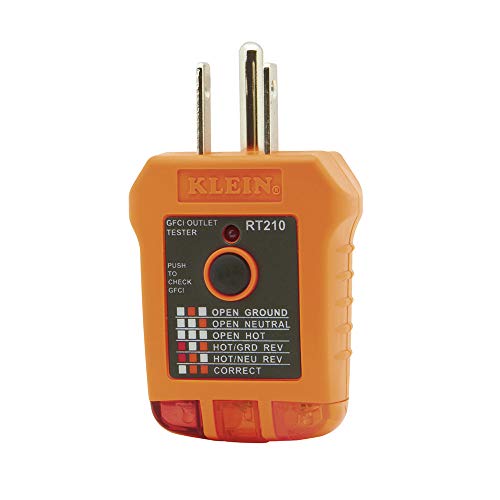
The RT210 is designed to detect common wiring problems in standard and GFCI outlets. It helps verify the correct operation of grounding and the protective device, and its durable build makes it practical for workplace floors and job sites. It assists electricians in quick fault identification during receptacle testing.
Buying Guide: Key Purchase Considerations
- Voltage range and sensitivity: Choose a tester that covers your typical voltage levels (12–1000V is common for many residential and light commercial tasks). Dual-range models offer flexibility for both low- and high-voltage work.
- Contact method: Non-contact (NCV) testers minimize shock risk and are ideal for quick checks, while contact testers provide definitive readings and can measure continuity and resistance when needed.
- Indication method: Look for clear visual indicators (LEDs, LCD readouts) and audible alarms. A bar-graph display or percentage readout helps gauge voltage strength intuitively.
- Safety ratings: For professional use, verify CAT ratings appropriate to your environment (CAT IV 600V, CAT III 1000V are common for electrical work). This affects protection against transient voltages.
- Additional features: Some models include built-in screwdrivers, memory or data hold, auto shut-off, or compatibility with GFCI testing. Consider which extras save you time on the job.
- Durability and form factor: Choose pocket-friendly designs with sturdy casings and convenient belts or clips for field use. A robust tester reduces the risk of damage on busy sites.
- Noise considerations: If you work in loud environments, rely more on visual indicators like LCD/readouts in addition to audible alerts to avoid missed warnings.
- Ease of use: Basic testers should be straightforward with minimal setup. More advanced meters add features but should remain intuitive to operate after a brief familiarization period.
When selecting a tool to check electricity, align the features with your typical tasks, whether routine receptacle checks, automotive electrical work, or general home maintenance. Safety compliance, ease of interpretation, and durability are the core factors driving reliable performance on the job.