Attic heat can drive up cooling costs and shorten your roof’s lifespan. Solar power attic fans offer a renewable solution that reduces heat buildup, lowers HVAC strain, and improves indoor comfort. This guide reviews five top solar attic fans suitable for American homes, spanning smart thermostats, off-grid operation, and rugged weather resistance. Explore options that fit different attic sizes, climates, and budget considerations to help you choose the best fit for your space.
| Product | Brand | Features | Approximate Coverage |
|---|---|---|---|
| iLiving Hybrid Ready Smart Thermostat Solar Roof Attic Exhaust Fan | iLiving | Smart thermostat control; IP68 motor; adjustable solar panel; 40W; 1150 CFM; up to 2900 sq ft | Up to 2900 sq ft |
| Solar Attic Fan 32W 1600CFM High Airflow | DC HOUSE | Monocrystalline panels; off-grid; auto sunrise/sunset; windproof; 1600 CFM | Large attics/garages |
| GROWNEER Solar Powered Exhaust Fan | GROWNEER | 3200mAh battery; 1200 CFM; 40–60 dBA; rust-resistant; up to 1400 sq ft | Medium spaces |
| Remington Solar 30 Watt Roof Mount | Remington Solar | Hybrid night run option; humidistat & thermostat; solar-powered | Up to moderate attic sizes |
| OmniPV Solar Attic Fan | OmniPV | 40 W solar panel; 1600 CFM; built-in thermostat; DC motor | Large spaces |
iLiving Hybrid Ready Smart Thermostat Solar Roof Attic Exhaust Fan

The iLiving unit combines a solar-powered attic exhaust fan with a smart thermostat system that operates in a temperature range of 50°F to 122°F. The brushless motor is IP68 rated for water resistance and comes with a lengthy 15-year warranty, ensuring long-term reliability. An adjustable solar panel supports multiple angles (0°, 15°, 30°, 45°) to optimize sun exposure. At 40 watts, the fan delivers up to 1150 CFM, cooling spaces up to about 2900 square feet, depending on attic layout and climate. This model is designed for homeowners seeking a high-capacity, remote-controlled solution that reduces attic heat while staying energy-efficient.
Key considerations:
– Pros: Integrated smart thermostat, strong CFM for large spaces, robust weatherproofing, extended warranty.
– Cons: Higher upfront cost; installation may require electrical integration for thermostat controls.
Solar Attic Fan 32W 1600CFM High Airflow
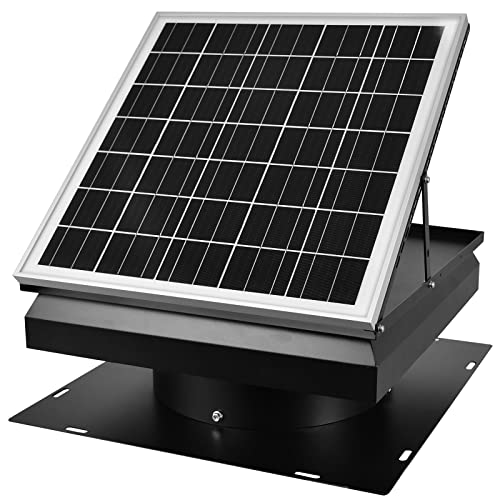
From DC House, this 32W solar attic fan is designed for off-grid operation with a powerful 1600 CFM. It activates at sunrise and deactivates at dusk, relying on premium monocrystalline solar panels to deliver cooling without wiring to the grid. The fan claims to reduce attic temperatures by up to 30°F, helping protect roof sheathing and reduce AC load. Its aerodynamically optimized blades perform well in high winds, and the design supports pairing with existing vents to maximize whole-house airflow. Suitable for homes with sunny climates and moderate attic sizes.
Key considerations:
– Pros: Off-grid operation, high airflow, weather-ready design, simple wiring.
– Cons: Requires sufficient sun exposure; performance can vary with roof orientation and shading.
GROWNEER Solar Powered Exhaust Fan
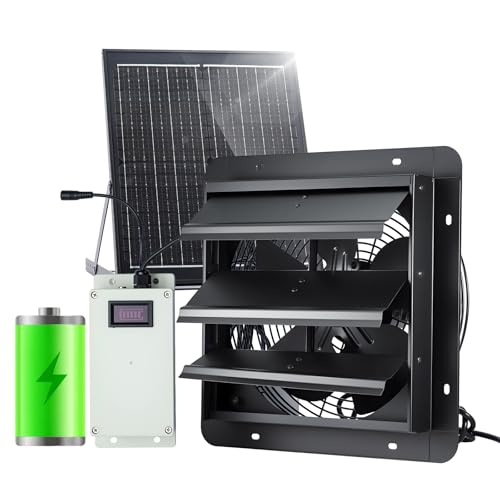
GROWNEER offers a solar-powered exhaust fan with a built-in 3200mAh battery for continued operation on cloudy days or at night. It provides up to 1200 CFM and runs at 1200 RPM, making it capable of ventilating spaces up to about 1400 square feet. A durable metal housing resists rust and corrosion, while the device operates quietly in the 40–60 dBA range. An automatic louver ensures dust protection when the fan stops. This option suits smaller-to-medium spaces where independent, battery-assisted operation is valuable.
Key considerations:
– Pros: Battery backup for continuous operation, robust build, adjustable speeds.
– Cons: Lower maximum CFM than some 1600 CFM models; may require more frequent maintenance in dusty areas.
Remington Solar Builder Series 40 Watt Solar Attic Fan

The Remington Solar Builder Series emphasizes a night-run option via a hybrid adapter that enables operation after daylight hours. The system includes a humidistat and thermostat to dynamically adjust airflow based on attic conditions, reducing moisture-related risks. The 40-watt solar panel powers the unit to cool attics and support HVAC efficiency by taking some load off furnaces and air conditioners. This model is well-suited for homeowners seeking automated moisture control and day-night cycling for consistent attic comfort.
Key considerations:
– Pros: Night-time operation option, built-in humidity and temperature control, solar-powered.
– Cons: Night-run adapter sold separately; performance depends on sun availability for daytime cooling.
OmniPV Solar Attic Fan

OmniPV’s model features a 40 W solar panel delivering up to 1600 CFM with a brushless DC motor for energy efficiency and long life. The unit includes a built-in thermostat to automatically turn off the fan when temperatures drop below 77°F and turn on when they rise, helping maintain comfortable attic conditions with less energy use. The design emphasizes weather resistance and a compact footprint, making it suitable for larger homes with exposed southern roofs or limited electrical access.
Key considerations:
– Pros: Integrated thermostat, DC motor efficiency, weatherproof and quiet operation.
– Cons: Initial investment can be higher; performance tied to sun exposure and attic air routing.
Buying Guide
When selecting a solar attic fan, consider attic size, climate, and desired features. Key purchase considerations include:
- Airflow and coverage: Choose a model with sufficient CFM to match your attic volume and climate. Oversized spaces benefit from higher airflow (e.g., 1600 CFM) for quicker cooling, while smaller spaces may suffice with 1000–1200 CFM.
- Solar vs. hybrid operation: Pure solar models save energy but depend on sun; hybrid options can provide continuous operation using AC adapters or back-up power for night use or overcast days.
- Thermostat and control features: Built-in thermostats help automate cooling; smart controls enable programmable schedules and remote management.
- Durability and weather resistance: Look for IP ratings, brushless DC motors, and weatherproof housings to withstand heat, rain, and wind, especially in exposed rooftops.
- Installation considerations: Verify mounting compatibility with your roof type, the presence of existing vents, and whether professional installation is advisable to ensure optimal performance and warranty.
- Maintenance and warranty: A longer warranty and accessible service support reduce long-term ownership costs; check for filterless designs and rust-resistant materials.