Switching to solar with an integrated inverter can simplify power management for RV trips, cabins, or home backup. The following selections emphasize complete kits that pair high-quality solar panels with reliable inverters and battery options. These picks cover off-grid portability and home resilience, offering clear installation paths and robust performance in typical American sunlight conditions.
Summary of Selected Products
| Product | Brand | Key Features | Inverter Power | Notes |
|---|---|---|---|---|
| ECO-WORTHY 7.168KWH 800W Kit | ECO-WORTHY | 4x200W bifacial panels, 12V 3000W inverter charger, UPS, Bluetooth MPPT | 3000W | Suitable for RV off-grid with fast source switching |
| ECO-WORTHY 4.68KWH Pro Kit | ECO-WORTHY | 195W N-Type bifacial panels, 48V system, 3500W inverter, WiFi monitoring | 3500W | Home and shed use with real-time control |
| ECO-WORTHY 200W RV Starter Kit | ECO-WORTHY | 200W panels, 100Ah Li battery, 600W inverter, beginner-friendly | 600W | Great for portable RV setups |
| SUMRY 3600W Inverter Charger | SRGFTS | Inverter + 120A MPPT, 24V to 110V, battery capable | 3600W | All-in-one for battery-supported or battery-less systems |
| SUMRY 4000W Hybrid Inverter | SRGFTS | Glass top LCD, 140A MPPT, supports battery-less or AGM/Li options | 4000W | Solid, high-capacity hybrid for diverse shelves |
ECO-WORTHY 7.168KWH 800W Kit For RV Off-Grid

The ECO-WORTHY 7.168KWH kit combines four 200W bifacial solar panels with a 12V 3000W inverter charger and integrated UPS functionality. The system supports simultaneous solar charging and mains input, enabling fast transition between energy sources for RV or off-grid use. It emphasizes user-friendly installation, durability in outdoor environments, and broad compatibility with RV appliances, from refrigerators to water heaters. The 800W panel output translates to several kilowatt-hours of daily generation under typical sun conditions, helping keep essential devices powered during trips or remote stays.
Key advantages include its all-black aesthetic, multi-source power capability, and a design that aims to minimize DIY complexity. Assembly and wiring are guided through a streamlined process intended for novice installers, while technical support provides ongoing assistance. The system’s storage capacity supports extended RV seasons and off-grid adventures.
Considerations: this is a larger, more integrated package that suits frequent travelers or people seeking a comprehensive off-grid solution rather than a small, temporary setup. Availability of spare parts and remote monitoring features enhance reliability on extended excursions.
ECO-WORTHY 4.68KWH Pro Kit For Home

The ECO-WORTHY 4.68KWH Pro Kit provides a 3500W inverter with an 80A MPPT controller and WiFi monitoring, designed for home or cabin use. The configuration centers on 195W N-type bifacial panels offering strong efficiency and resilience against heat-related losses. The system is positioned to support common 110V/120V appliances and can handle daily loads such as air conditioning, refrigerators, and small electronics, especially when used with a reliable battery bank and remote monitoring.
Highlights include real-time remote monitoring, robust surge capacity for start-up loads, and a compact footprint that fits typical residential or shed spaces. The inverter’s 48V DC input and high-efficiency conversion provide stable performance, while the monitoring app lets users track production and consumption on the go. The kit is particularly suitable for semi-permanent installations where continuous daytime charging is expected to offset evening usage.
Key considerations: ensure adequate space for the panels, assess existing electrical loads to match the 3500W inverter, and plan for battery storage capacity if you aim to run high-draw devices at night. The built-in MPPT controller helps maximize harvest during variable sun conditions.
ECO-WORTHY 200W RV Starter Kit
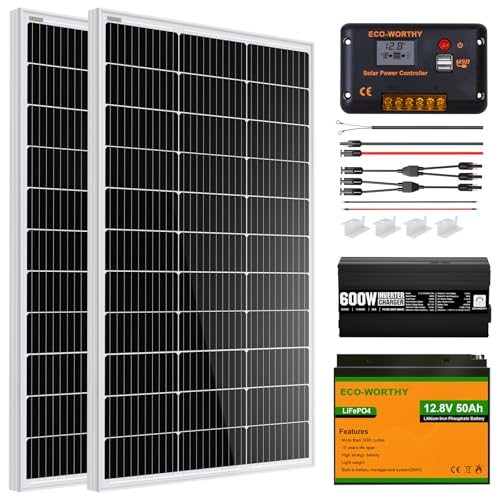
This starter kit from ECO-WORTHY includes 200W solar panels with a 12V system, a 100Ah Li battery, and a 600W inverter. It is designed for RV applications and aims to be beginner-friendly, providing a complete setup that is easy to transport and deploy. With approximately 800Wh of energy output per day under four hours of sun, the kit supports essential RV loads like lighting, water pumps, and small appliances, enhancing remote camping experiences.
Key strengths include the simplicity of installation, a durable aluminum frame, and the LiFePO4 battery’s long cycle life. The system’s modular approach makes it straightforward to expand or upgrade as power needs grow. The inverter’s 600W rating suits typical RV devices but may limit heavy-duty appliances during peak demand.
Purchase considerations involve verifying daily energy needs, ensuring panel placement for maximum sun exposure, and planning for future expansions to add more solar capacity or battery storage. The LiFePO4 chemistry offers reliable performance with balanced charge/discharge efficiency and safety features.
SUMRY 3600W Inverter Charger

The SUMRY 3600W Inverter Charger combines a 3600W DC-to-AC inverter with a built-in 120A MPPT solar charger and a 100A AC battery charger. It supports a wide PV input range and can operate with various battery chemistries, including AGM and Li-ion, or even in a battery-less configuration when solar input is sufficient. This all-in-one unit is designed to deliver consistent, grid-like AC output for a range of household appliances while offering flexible charging options from solar or utility power.
Strengths include robust protection features, a generous PV input capacity of up to 4200W, and a capable MPPT controller that optimizes charging under varying solar conditions. The unit’s ability to operate without a battery provides practical benefits for certain off-grid scenarios where loads can be sustained directly from solar power during the day. Monitoring capabilities and a compact form factor further enhance usability for RVs, cabins, or backup systems.
Purchase considerations: ensure the inverter’s continuous and peak power align with your load profile, confirm compatibility with your battery bank (voltage and chemistry), and plan for proper ventilation given the unit’s heat output in hot climates. A backup fuse strategy and proper grounding are essential for safety and reliability.
SUMRY Hybrid Inverter, 4000W

The SUMRY Hybrid Solar Inverter offers 4000W continuous power with a pure sine wave output and a built-in 140A MPPT charge controller. It supports both battery-less setups and AGM/Li battery configurations, providing flexibility for different installation scenarios. The glass top cover and a large LCD display offer an at-a-glance view of system status and real-time data, enhancing user interaction and management of energy resources.
Key advantages include versatile charging modes, high MPPT efficiency, and wide PV input capacity (up to 5600W). The unit’s design emphasizes reliability in home energy systems, cabins, or off-grid shelters. The integrated MPPT controller helps maximize solar harvest, while the ability to work with various battery types broadens compatibility for different users and budgets.
Purchase considerations: evaluate your load profile to ensure 4000W coverage for peak usage, verify battery compatibility and storage goals, and consider the space and cooling needs for the inverter. The glass-top aesthetic is a plus for some installations, but performance should remain the priority in critical power setups.
Buying Guide: Key Purchase Considerations And Comparisons
- System scale and intended use: RVs, cabins, and homes require different total power and storage. Choose a kit whose inverter rating matches peak loads and whose panel count aligns with daily energy needs in your climate.
- Battery strategy: decide between battery-less setups, LiFePO4 modules, or AGM/Li systems. LiFePO4 offers longer cycle life and safer chemistry, but may add upfront cost.
- Inverter features: look for pure sine wave output, adequate surge capacity, and multiple charging modes (solar, utility, or hybrid). MPPT controllers with higher amperage improve efficiency under fluctuating sun.
- Monitoring and control: WiFi or app-based monitoring helps track production, usage, and battery health, enabling proactive maintenance and better energy management.
- Durability and installation: coastal or rural environments may demand corrosion resistance and robust frames. Ensure weatherproofing and proper mounting for wind and snow loads.
- Expandability: consider future expansion—adding panels, batteries, or upgrading to higher-efficiency inverters as needs grow.
- Safety and compliance: verify wiring, grounding, fusing, and compliance with local electrical codes. Read manuals for proper ventilation and thermal management.
These products collectively illustrate a spectrum from compact RV-oriented kits to more robust home and cabin configurations. Each option emphasizes inverter integration, with varying capacities to suit different energy profiles, climate conditions, and installation preferences. When evaluating, users should map daily energy consumption to solar generation potential, and couple that with reliable storage to maintain power during non-sun periods.