When space is at a premium, a compact electric water heater can deliver on-demand hot water without the bulk of traditional tanks. This guide highlights five compact, energy-efficient options ideal for under-sink, kitchenette, RV, or small bathroom setups. Each unit offers quick hot water, safety features, and easy installation, helping you pick a reliable point-of-use system.
The following summary table provides a quick snapshot of the five products featured in this article.
| Product | Brand | Type | Key Benefit | SKU Notes |
|---|---|---|---|---|
| DDAYBF Tankless Water Heater | DDAYBF | Instant hot water in seconds; compact and portable | 3000W, 110V | |
| Bosch Tronic 3000 | Bosch | Under-sink reliability with high thermal efficiency | 2.5-Gallon, 120V | |
| Rheem 3.5kW Point-of-Use | Rheem | Compact, space-saving for small spaces | 120V, 30A circuit required | |
| ThermoMate Tankless 3500W | thermomate | On-demand heating with temperature display | 3500W, 120V | |
| EcoSmart ECO 11 | EcoSmart | Self-modulating technology; energy efficient | 13 kW (at 240V) |
DDAYBF Tankless Water Heater Electric 110V

DDAYBF’s compact model delivers hot water in 3–5 seconds without preheating. It reaches a maximum of 55°C (131°F), making it suitable for sinks, dishwashing, and handwashing tasks. Safety is a priority with IPX4 waterproofing, leakage protection, dry-burn prevention, and auto-shutoff when idle. An LCD display provides real-time status, and the unit meets North American electrical safety standards. Its space-saving design is ideal for under-sink installs, apartments, RVs, and camping trips.
Bosch Tronic 3000 ES2.5 Mini-Tank Water Heater
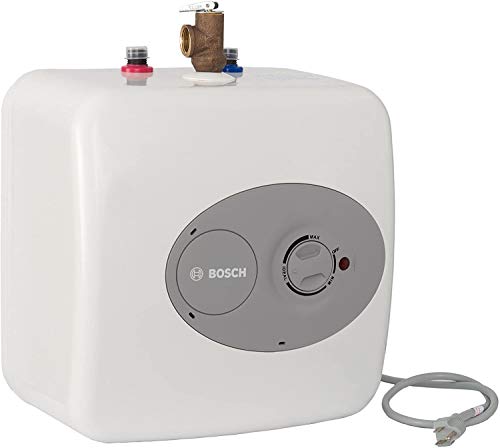
Bosch Tronic 3000 ES2.5 provides instant hot water from a 2.5-gallon point-of-use mini-tank installed under the sink. It offers high thermal efficiency (98%) and simple independent installation with a 36–37 inch cord ready for a standard 120V outlet. The compact footprint makes it suitable for under-sink applications in kitchens, bathrooms, or offices, delivering dependable hot water with minimal footprint.
Rheem 3.5kW 120V Point-of-Use Thermostatic Heater

This Rheem model is designed for point-of-use applications with a compact footprint. It requires a 1 x 30A double-pole breaker and 120V wiring. The thermostatic controls offer adjustable temperature in precise increments (80–140°F), delivering on-demand hot water while conserving energy. Its durable components and compact size make it suitable for bathrooms, small offices, or garages where space is limited.
ThermoMate 3500W Tankless Electric Heater

The ThermoMate on-demand heater provides rapid hot water at 3500W, with a temperature range from 86°F to 131°F. It requires hard wiring (no plug) and operates on 110–120V. The unit features self-modulating power to adjust energy use based on flow, helping lower consumption. A durable construction with a SUS 304 stainless steel water tube reduces mineral buildup and extends service life, making it suitable for kitchen and bathroom sinks or compact utility areas.
EcoSmart ECO 11 Electric Tankless Water Heater

The EcoSmart ECO 11 uses patented self-modulating technology to heat water only when needed, delivering consistent hot water up to the chosen temperature. It’s compact—about 90% smaller than traditional tank heaters—and can be mounted on a wall or placed at the point of use. With a 54 A draw at 240V and highly efficient operation, this model is designed for higher-demand small setups and can be a good fit where space savings and energy efficiency are priorities.
Buying Guide: Key Purchase Considerations
- Application and flow rate: Assess your hot water needs by considering the intended use (sink, shower, RV, or kitchenette) and the expected flow rate. Point-of-use units are typically best for low-flow tasks, while some tankless models can support modest household use if properly sized.
- Voltage and electrical capacity: Most compact electric water heaters run on 120V, but higher-demand units may require 240V and dedicated circuits. Verify your existing electrical panel has the necessary capacity and breaker size (common values include 15A, 20A, or 30A) before installation.
- Storage vs. tankless: Decide between mini-tank models (smaller storage tanks) and true tankless units. Tankless devices provide endless hot water at the point of use but can be sensitive to water flow and temperature changes, depending on the model.
- Safety features: Look for IP ratings (waterproofing), overload protection, dry-burn protection, auto-shutoff, and temperature control accuracy. An LCD or digital display helps monitor status and temperature.
- Installation considerations: Some units are wall-mounted and designed for under-sink use, while others may require hard wiring. Check for compatibility with cold water lines, venting needs (if any), and the space available where the unit will be installed.
- Durability and materials: Stainless steel components and high-quality heating elements reduce mineral buildup and extend service life. Consider units with protective insulation and corrosion-resistant tubes.
- Energy efficiency: Tankless models with self-modulating technology adjust power usage based on demand, which can reduce energy bills. Compare thermal efficiency ratings and manufacturer claims for real-world performance.
- Maintenance needs: Some systems require periodic flushing or mineral buildup prevention. Review maintenance requirements to avoid scale and extend the unit’s life.
- Warranty and support: A solid warranty and responsive customer support help mitigate issues after installation. Check terms for parts, labor, and any service coverage.