Finding the right self-regulating heat tape can prevent costly pipe freezes and keep water flowing during freezing temperatures. This guide highlights five top-rated options, comparing length, wattage, safety certifications, and practical features to help American homeowners and contractors choose confidently.
style=”display:none;”>Summary table of chosen products:
| Product | Brand | Length | Key Feature | Certifications |
|---|---|---|---|---|
| HEATIT 30ft Self-Regulating Pipe Heating Cable | HEATIT | 30 ft | Freeze protection to -40°F | ETL Listed |
| HeatTapePro | Radiant Solutions Company | 24 ft + 10 ft cord | GlowCap end-verification, heavy-duty | UL Listed |
| MAXKOSKO 6 ft Heating Cable | MAXKOSKO | 6 ft | Energy-saving self-regulating design | CE-approved, IP68 |
| VEVOR Self-Regulating 60 ft | VEVOR | 60 ft | 5 W/ft, built-in thermostat | CE, IP68 |
| HEATIT 9 ft Self-Regulating Cable | HEATIT | 9 ft | ETL Listed, -40°F protection | ETL Listed |
HEATIT 30ft Self-Regulating Pipe Heating Cable

The HEATIT 30ft self-regulating pipe heating cable provides reliable freeze protection for water pipes, maintaining flow down to -40°F. It comes with a 2-foot power cord and a range of cable lengths from 3 to 160 feet. The product is fully ETL certified from end to end, and the plug is UL certified, underscoring safety and compliance. With 3 W/ft energy-efficient heating, this heat tape is suitable for both metal and plastic pipes, including copper, PVC, and stainless steel. A liability-insurance backing of up to USD 2 million adds purchase security.
Radiant Solutions HeatTapePro

HeatTapePro blends commercial-grade durability with the GlowCap technology, which enables end-to-end verification of operation. Its self-regulating design reduces the risk of overheating, while the outer construction uses injection-molded connections for enhanced reliability. It carries a Best-in-Industry 10-year warranty and UL listing. The system is versatile for flat, metal, asphalt, wood, and rubber roofs, and it remains reliable even if portions of the tape are overlapped.
MAXKOSKO 6 Ft. Heating Cable

MAXKOSKO’s 6-foot heating cable offers a compact solution for shorter pipe runs. It delivers 5 W/ft and rapidly warms, protecting water flow down to -40°F. The package typically includes a 3-foot power cord. It supports installation strategies such as straight tracing, spiraling, or overlapping. Built-in safety features include self-regulation to prevent overheating and a 3-foot power cord to bridge the gap between thermostat and outlet.
VEVOR Self-Regulating Pipe Heating Cable
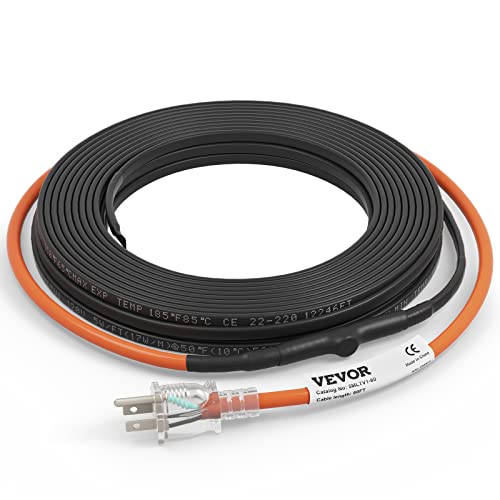
VEVOR’s 60-foot heat tape uses a 5 W/ft self-regulating core designed for broad freeze protection. It warms to prevent freezing in mild to severe winters and supports plastic hose and metal pipes alike. A built-in thermostat activates around 43°F and deactivates near 55°F, with IP68 waterproof rating and CE certification for durability. It’s positioned as a robust option for longer exterior runs or larger piping networks.
HEATIT 9ft Self-Regulating Heating Cable
This 9-foot HEATIT option provides effective protection for shorter pipe runs with the same ETL safety standard. It delivers 3 W/ft of self-regulating heat to maintain water flow in temperatures down to -40°F. The design emphasizes end-to-end certification and comprehensive safety, reinforcing reliable performance for both metal and plastic home pipes. The included 2-foot cord ensures practical installation, with the same warranty and liability assurances.
Buying Guide: Key Purchase Considerations
- Length and coverage: Measure pipe length to determine how many feet of heat tape you need. Longer runs require higher wattage and may need multiple segments or a single extended length.
- Wattage and heat output: Typical self-regulating tapes operate around 3–6 W/ft. Higher wattage increases heat output but also electricity usage; balance energy savings with protection needs.
- Self-regulating technology: Self-regulating cables adjust power based on pipe temperature, reducing the risk of overheating and extending cable life. Look for models with proven end-to-end self-regulation.
- Safety certifications: ETL/UL listings indicate adherence to safety standards. Verify that the entire cable is certified, not just the plug.
- Thermostat and control: Some cables include built-in thermostats that activate at a specific temperature range (e.g., 43°F to 55°F). Understand whether a thermostat is included or if external controls are required.
- Materials compatibility: Ensure the product is compatible with your pipe material (copper, PVC, CPVC, PEX, etc.) and suitable for exterior or interior use as specified by the manufacturer.
- Durability and warranty: A longer warranty (such as 10 years) signals strong confidence in the product’s durability, especially for commercial or security-critical applications.
- Safety and insurance: Some products offer liability coverage as part of the package. Review the terms to understand the level of security provided with your purchase.
- Installation considerations: Power cord length, ease of setup, and whether you plan straight tracing, spiraling, or overlapping on irregular pipes will influence the choice.
Usage Scenarios and Perspectives
Residential: Light- to mid-duty heat tapes offer dependable protection for exterior faucets, basement pipes, and crawlspace lines. They are usually easier to install and cost-effective for smaller homes.
Commercial or multi-family: Longer runs, durable construction, and longer warranties matter. A 60 ft or longer cable with a robust thermostat and easy-to-verify operation is beneficial in apartments or warehouses where freeze risk is persistent.
Industrial or rural areas: In areas with extreme cold or unpredictable weather, higher wattage and longer lengths can ensure uninterrupted water flow, albeit with higher energy usage. Certified safety and long warranties are particularly valuable here.
Maintenance and safety: Always test a heat tape installation before winter onset by checking conductivity and verifying that the thermostat responds to ambient changes. Avoid placing the cable in areas with potential chemical exposure or mechanical damage.
In summary, the five options above offer a spectrum of lengths, wattage, and features. When selecting, prioritize full safety certification, compatibility with your pipe materials, and the presence of a built-in or easily verifiable thermostat. This approach helps ensure reliable freeze protection while maintaining energy efficiency and peace of mind through strong warranties and liability protections.