Whether you’re planning a full-time off-grid setup or seeking reliable emergency power, these off-grid solar systems with generators offer scalable options. This guide reviews five top kits, focusing on capacity, modularity, and ease of integration with existing home electricals. Each choice supports 120V/240V loads, rapid recharging, and safe battery management, helping you compare systems that fit cabins, farms, or remote homes. The summary table below highlights key specs to aid quick comparison.
| Product | Brand | Key Capacity | Panel / Inverter Notes | Best For |
|---|---|---|---|---|
| OUPES Guardian 6000 Solar Generator Kit | OUPES | 4608Wh | Two 240W panels; 6000W output; 120V/240V | Whole-house backup |
| ECO-WORTHY 10KW Off-Grid Kit | ECO-WORTHY | 9.36KWh daily, 10KW max | 12 panels × 195W; 10KW inverter; UL1741 | High-demand loads |
| ECO-WORTHY Home Off-Grid Solar Power System | ECO-WORTHY | 10KW inverter, 15.36kWh | 12×410W panels; UL1973/UL9540A | Compact energy storage |
| OUPES 2000W Mega 1 Solar Generator Kit | OUPES | 1024Wh (expandable) | 240W panel; 2000W output; expandable | Portable/off-grid trips |
| Jackery Solar Generator 1000 v2 | Jackery | 1070Wh | 200W panel; 1500W AC, fast charge | Outdoor and emergencies |
id=”product-oupes-guardian-6000″> OUPES Guardian 6000 Solar Generator Kit
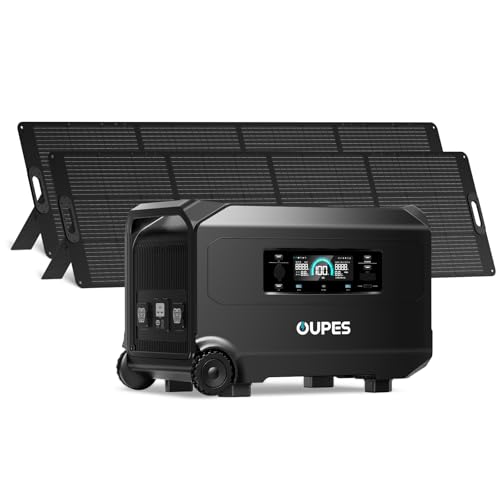
The Guardian 6000 power station (4608Wh) is bundled with two 240W solar panels to provide an integrated off-grid capability. It is designed for rapid home integration, connecting to standard transfer switches or inlet boxes, enabling whole-house backup with no electrician required. The unit delivers dual voltage output, powering both 120V and 240V appliances, including refrigerators, medical equipment, well pumps, and select HVAC systems.
Key features include a complete solar power system in one kit, immediate off-grid readiness, and seamless integration with existing home electricals. The dual-voltage output supports essential appliances across different circuits, while the included solar panels offer straightforward recharging during sunny days. This setup is suitable for backup power, emergency readiness, or partial off-grid living where utility reliability is limited.
id=”product-eco-worthy-10kw-off-grid”> ECO-WORTHY 10KW Output 9.36KWH Off Grid System

This kit provides a robust 9.36KWh daily output with a 10KW continuous inverter and 120V/240V AC output. It supports parallel operation up to six units for a potential 60KW system, enhancing scalability for larger homes or remote sites. Real-time battery monitoring is included via a CAN/RS485 interface and mobile app connectivity (Bluetooth/WiFi). The setup is UL1741-certified for safety and is designed for dependable energy storage and high-demand loads.
The package emphasizes safety certifications and integrated monitoring, enabling homeowners to track battery health and performance in real time. It’s well-suited for operating high-usage appliances such as air conditioning, refrigerators, and electric cooking devices during outages or off-grid living. The system’s modularity allows future expansion to meet growing energy needs while preserving a compact footprint.
id=”product-eco-worthy-home-off-grid”> ECO-WORTHY Home Off-Grid Solar Power System

This kit combines a 10KW inverter with 410W solar panels in a 12×410W array, delivering strong performance with a single-phase and split-phase output option. It emphasizes plug-and-play compatibility with a UL1973 and UL9540A-compliant 48V LiFePO4 battery bank, designed for easy integration into home systems and server rack-style storage. The 48V battery design focuses on safety, thermal management, and space efficiency, suitable for compact energy storage projects.
Designed for seamless compatibility, the system supports CAN/RS485 communication for easy integration with popular inverters. With a space-efficient LiFePO4 battery and robust solar panels, the kit targets homes seeking reliable off-grid energy with straightforward expansion and strong safety certifications.
id=”product-oupes-2000w-mega-1″> OUPES 2000W Mega 1 Solar Generator Kit

The Mega 1 kit centers on a 1024Wh LiFePO4 battery with a 2000WAC output, making it a compact but capable off-grid solution for road trips, RVs, and emergencies. A 240W solar panel is included to support frequent recharges, and the system is expandable with additional B2 batteries to reach higher total capacities. This setup is well-suited for users who prioritize portability while retaining the option to scale up for longer outages.
Key considerations include recharge time under sun, battery chemistry and safety standards, and the balance between portability and total usable energy. The included app and UPS features offer enhanced reliability for devices like fridges, CPAP machines, and essential electronics, making it a practical choice for flexible off-grid use and temporary residences.
id=”product-jackery-solar-generator-1000-v2″> Jackery Solar Generator 1000 v2

The Jackery 1000 v2 combines a 1070Wh LiFePO4 battery with a 1500W AC output and a 100W USB-C/USB-A interface. It supports fast charging—one-hour emergency charging via the Jackery app—and a 10-year lifespan with durable battery cells. Its portability, lightweight design (about 23.8 lbs), and a foldable handle make it an ideal companion for outdoor activities, road trips, and emergency use, while still delivering substantial power for multiple appliances during outages.
Considerations for this unit include its balance of portability and sustained output, as well as charging options and lifecycle costs. The 3000W surge capability provides some headroom for dynamic loads, though larger home backup needs may require a larger system. It remains a strong option for those prioritizing mobility and quick deployment in varied environments.
Buying Guide: Key Considerations For Off-Grid Systems With Generators
- Power needs and scalability: Assess your daily energy consumption and peak loads. Choose systems that can scale with additional batteries or parallel inverters if future demand grows.
- Battery chemistry and safety: LiFePO4 chemistry offers stability and longer cycle life. Check safety certifications (UL 1973, UL 9540A) and thermal management features.
- Inverter capacity and voltage: Ensure the inverter supports both 120V and 240V where needed, with sufficient continuous and surge power for your appliances.
- Solar panel compatibility: Look for panel wattage and count that align with your recharging targets, shading tolerance, and overall system efficiency.
- System integration: For home backups, verify compatibility with transfer switches, inlet boxes, and existing electrical panels. Safety and permit considerations may apply.
- Portability vs. storage: Portable units suit travel and emergencies; larger kits prioritize long-term off-grid living but require dedicated space.
- Monitoring and connectivity: Real-time battery monitoring via mobile apps or CAN/RS485 improves maintenance, efficiency, and fault detection.
- Maintenance and lifespan: Consider battery replacement intervals, warranty terms, and service support when budgeting for total cost of ownership.