Choosing a high efficiency water heater can reduce energy use while delivering reliable hot water. This guide highlights five top options and compares their performance, installation style, and control features. Each product is evaluated for home needs such as multiple bathrooms, outdoor use, or indoor efficiency, helping you select a model that fits your household demand and energy goals.
| Product | Brand | Type | Approx. Max GPM | Notes |
|---|---|---|---|---|
| RX199iN | Rinnai | Condensing Tankless (Indoor/Outdoor) | 11.1 | Smart Sense control; Versa Vent |
| APUS 190k BTU | APUS | Outdoor Tankless | 8.1 | WiFi & Remote |
| RTG-70DVLN-3 | Rheem | Indoor Non-Condensing | 7.0 | Compact indoor unit |
| RTG-70XLN-3 | Rheem | Outdoor Non-Condensing | 7.0 | Outdoor installation |
| RTGH-95DVELN-3 | Rheem | Indoor Condensing | 9.5 | WiFi enabled |
Rinnai RX199iN Condensing Tankless Water Heater

The Rinnai RX199iN is a compact, high-efficiency condensing tankless unit designed for indoor or outdoor installation. Powered by natural gas or propane, its Smart Sense gas control adapts to fuel type and demand. It delivers up to 11.1 GPM, supporting multiple fixtures simultaneously, with a design optimized for space-constrained setups. A Versa Vent option enables flexible venting, and its interface supports an efficient control experience. The unit is noted for a high energy efficiency factor (UEF 0.98) and features Quick Flush for easier maintenance. A control module enables WiFi control when paired with the appropriate hardware.
Key attributes include versatile placement, strong hot water flow for larger homes, and a focus on energy efficiency. For households prioritizing modern controls and compact design, this model offers a robust balance of performance and efficiency. Note: outdoor installation requires the RX-OVC vent cap for proper venting.
APUS 190,000 BTU Outdoor Tankless Water Heater

APUS offers a high-efficiency outdoor tankless water heater with 190,000 BTU input and 8.1 GPM output. Its design supports whole-home use by delivering instant hot water to multiple fixtures, including showers and sinks. A notable feature is remote operation via an app or wired controller, enabling temperature range control from 95°F to 149°F with precise ±1°F accuracy. The unit’s compact footprint (about 22.5 by 15.5 by 6.5 inches) makes outdoor installation feasible without crowding indoor spaces. It connects to standard 3/4″ water lines and gas lines and runs on a 120V supply for straightforward setup.
Smart control, reliable on-demand performance, and an emphasis on consistent temperatures contribute to its appeal in homes seeking energy-aware, remotely adjustable hot water without sacrificing efficiency.
Rheem RTG-70DVLN-3 Indoor Non-Condensing Tankless

This indoor unit from Rheem provides up to 7.0 GPM with a 160,000 BTU input, designed for compact spaces while meeting the needs of 2–3 bathrooms. It is a non-condensing, natural gas-powered system optimized for indoor installation and wall mounting by a qualified installer. The model targets steady hot water delivery during peak household usage and is built with a durable cabinet suitable for indoor environments. It serves as a solid option for homes prioritizing efficient performance in a smaller footprint.
Considerations include the balance between installation location, venting, and overall energy performance. For buyers who need reliable hot water with straightforward indoor setup, this unit offers a practical, value-conscious choice.
Rheem RTG-70XLN-3 Outdoor Non-Condensing Tankless
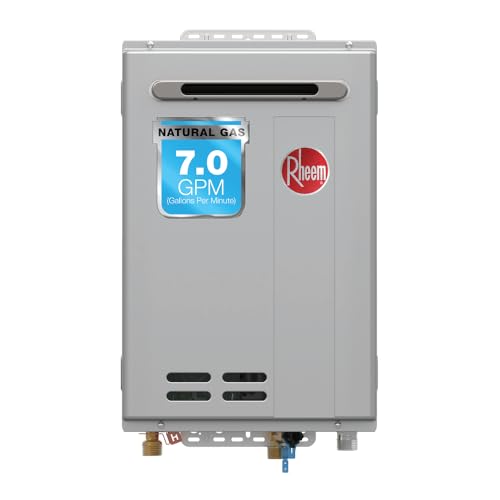
Rheem’s outdoor version of the 70XLN-3 delivers 7.0 GPM with a 160,000 BTU input in a rugged outdoor cabinet. Its design enables direct outdoor installation without occupying indoor space, with easy wall mounting by a qualified installer. As a non-condensing unit, it emphasizes straightforward hot water delivery for households that favor outdoor equipment or limited indoor access. It pairs well with homes that require reliable performance in exterior installations while keeping a compact overall footprint.
When assessing options, consider climate, venting needs, and proximity to main fixtures. This model suits homes needing outdoor-ready capacity with less emphasis on condensate management or WiFi controls.
Rheem Natural Gas Condensing Tankless Indoor Water Heater

This indoor condensing model delivers up to 9 GPM with a 180,000 BTU input and is designed for higher efficiency. Condensing operation typically improves energy use compared to non-condensing designs. It is suitable for homes where indoor installation is preferred and where high simultaneous hot water needs are anticipated, such as multiple bathrooms or running appliances concurrently. Availability of a broader flow range (0.4–9 GPM) provides flexibility for different household water demands.
Key considerations include ensuring proper venting, electrical requirements, and compatibility with existing gas lines. The unit’s condensing design and wide flow range position it as a versatile option for energy-conscious households seeking robust hot water performance.
ThermoMate CZ422NG, 102,000 BTU 4.7 GPM

The ThermoMate CZ422NG offers 4.7 GPM at 102,000 BTU, ideal for smaller homes or limited hot water demand. It emphasizes on-demand heating with quick response and temperature stability to within about ±1°F, using advanced flow sensing to adjust heating power rapidly. Safety features include protections against boil-dry conditions and freeze risks, along with multiple protective mechanisms. The device boasts an energy efficiency profile designed to reduce waste relative to traditional storage heaters.
Rheem RTGH-95DVELN-3 Condensing Indoor Tankless
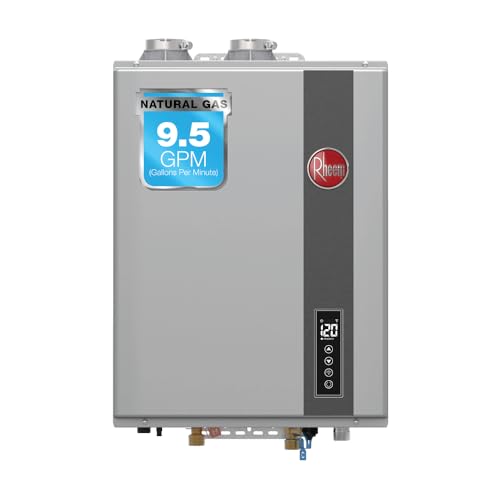
Rheem’s RTGH-95DVELN-3 provides up to 9.5 GPM with a high-efficiency condensing design and WiFi connectivity for remote monitoring and control. With 199,900 BTU input, it supports large homes with multiple bathrooms, enabling simultaneous showers and appliance use without compromising hot water availability. The unit’s condensing operation yields a lower energy footprint compared to non-condensing equivalents, contributing to ongoing energy savings while maintaining strong performance under peak demand.
Buying Guide: Key Purchase Considerations and Comparisons
Types and installation: Tankless models come in condensing and non-condensing variants. Condensing units are typically more energy-efficient but may require more complex venting. Indoor vs outdoor placement depends on space, local climate, and venting options.
Flow and fixture demand: Estimate your peak GPM needs by listing simultaneous hot water fixtures (showers, sinks, laundry). Choose a model with a higher GPM rating than your calculated peak to avoid shortfalls.
Fuel type and compatibility: Most units run on natural gas, with some supporting propane. Ensure your gas supply and line sizing match the unit’s BTU rating. An indoor unit may require venting upgrades or dedicated venting hardware.
Controls and smart features: WiFi or app-based controls enable remote temperature adjustments and monitoring. Consider whether these features align with your home automation goals and whether a separate control module is required.
Maintenance and efficiency: Look for units with easy flush or service features to keep efficiency high and extend lifespan. Condensing designs tend to deliver higher energy efficiency (UEF) but may include condensate management considerations.
Budget and installation costs: While advanced features and higher GPM capabilities offer benefits, initial installation and venting requirements influence total cost. Compare energy savings over time to assess long-term value.
Compatibility and warranties: Check for warranty terms, labor coverage, and service support in your region. Ensure the model is compatible with your existing plumbing and electrical standards.