Grid-tie inverters are essential for turning solar panel energy into grid-ready electricity. This guide highlights five top options, optimized for American homes and small businesses. Each selection emphasizes MPPT efficiency, safety features, and real-time monitoring to help you maximize solar gains while staying compliant with grid requirements.
| Product | Brand | Approximate Output | MPPT Range |
|---|---|---|---|
| Y&H 1000W Grid Tie Inverter Stackable MPPT Pure Sine Wave | Y&H | 1000W | 26V–36V |
| Y&H 600W Solar Grid Tie Micro Inverter | Y&H | 600W | DC28–50V |
| Solar Micro Grid Tie Inverter, WVC-1200W MPPT Grid Tie | MHBXYZ | 1200W | DC varies per model |
| Y&H 1400W Grid Tie Inverter Stackable MPPT Pure Sine Wave | Y&H | 1400W | 30V–39V |
| Y&H Grid Tie Inverter 600W Stackable DCDC15-28V | Y&H | 600W | 15V–22V |
Y&H 1000W Grid Tie Inverter Stackable MPPT Pure Sine Wave
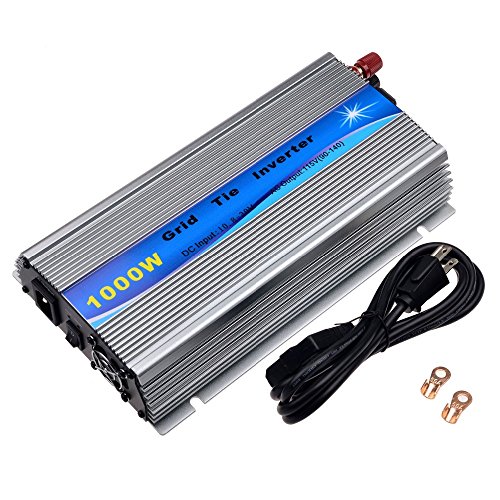
The Y&H 1000W Grid Tie Inverter offers MPPT operation within a 26V–36V window for efficient PV energy capture. It features a pure sine wave output and a stackable design that supports scalable systems. Note that the MPPT range is critical for maintaining high output efficiency, and users should ensure their PV array Voc remains within the specified limits (36V typical). An emphasis is placed on avoiding use of solar controller load ports to connect to the inverter and ensuring the DC input panel voltage aligns with MPPT requirements.
Y&H 600W Solar Grid Tie Micro Inverter

This micro inverter from Y&H converts solar energy directly at the module level, providing a safer, modular approach for residential installations. It supports IP65 waterproofing and real-time monitoring through a connected AC digital meter that records voltage, current, active power, energy, frequency, and power factor. The unit uses a low DC input (up to 50V) to reduce fire risk and improve safety during installation, with MC4 input compatibility to prevent miswiring and polarity issues.
Solar Micro Grid Tie Inverter, WVC-1200W MPPT

The WVC-1200W MPPT Grid Tie inverter emphasizes efficient MPPT tracking and a robust aluminum alloy housing. It utilizes a high-precision MPPT algorithm to optimize panel output and increase overall energy generation. The product highlights an LCD display to monitor system status and power metrics, with emphasis on reducing risk of fire and enabling precise PV-to-grid conversions in a simple, reliable package.
Y&H 1400W Grid Tie Inverter Stackable MPPT Pure Sine Wave

This 1400W model from Y&H features a stackable design with a wide MPPT range and a pure sine wave output. It is designed for higher output setups, ensuring efficient MPPT operation (e.g., MPPT range around 30V–39V) and improved response in varying solar conditions. The aluminum housing adds durability and helps dissipate heat, contributing to reliable performance in moderate to heavy solar applications.
Y&H Grid Tie Inverter 600W Stackable DCDC15-28V

This 600W stackable model covers mid-range grid-tie needs with a DC input range of 15–28V. It supports MPPT operation to maximize efficiency and provides an auto-switching feature suitable for mixed solar configurations. The product highlights caution about MPPT alignment and notes the importance of maintaining proper input voltage and panel specifications for optimal operation.
Buying Guide: Key Purchase Considerations
- MPPT Range and Panel Compatibility: Ensure the inverter’s MPPT window matches your PV array’s Vmp and Voc. Mismatches reduce efficiency and can cause underdelivery or damage.
- Output Power and System Scale: Choose an inverter that fits your peak load plus a safety margin. For multi-panel systems, stackable models can simplify expansion.
- Grid Connection Standards: Verify the inverter’s compliance with local grid regulations and safety features, including anti-islanding protections and proper grounding.
- Safety and Build Quality: Aluminum housings help with heat dissipation. IP ratings (for outdoor use) and waterproofing reduce weather-related failures.
- Monitoring Capabilities: Real-time LCD or digital meters, and data logging, enable proactive maintenance and performance tracking.
- Installation Considerations: Ventilation, heat mitigation, cable routing, and distance to the main breaker impact performance and safety.
- Warranty and Support: Look for manufacturers offering solid warranties and accessible technical support for troubleshooting MPPT or integration issues.
- Panel Range and Voltage Limits: Adhere to specified Voc and Vmp ranges; avoid overloading inputs or exceeding panel voltage ratings to protect the inverter.
When selecting a grid tie inverter, balance the need for high efficiency with practical installation considerations such as climate, space, and future expansion plans. The listed options provide a range of power levels, enclosure designs, and monitoring features to suit typical residential and small commercial solar installations.