Exploring reliable generator transfer switch panels helps you safely power essential circuits during outages. This guide covers five top options, highlighting capacity, installation ease, and compatibility with common generators. Each product section includes official links and key features to help you compare at a glance. Use this overview to determine which transfer switch panel best fits your home or small business backup plan.
| Product | Brand | Circuits | Power Type | Notes |
|---|---|---|---|---|
| Reliance Controls 31406CWK | Reliance Controls | 6 | 12V/120V depending on config | 6-circuit Pro/Tran with 7500W rating |
| Nature’s Generator Transfer Switch 12 Circuits | Nature’s Generator | 12 | 120/240V | Non-automatic; 50A inlet |
| Nature’s Generator Transfer Switch 6 Circuits | Nature’s Generator | 6 | 120V, 30A | Indoor kit with easy setup |
| Reliance Controls 306CRK | Reliance Controls | 6 | Single/Double Pole options | Includes necessary components |
| Connecticut Electric EmerGen 50 Amp, 10-Circuit | Connecticut Electric | 10 | 240V/120V, 12500W | Includes CS6375 inlet and 25 ft cord |
Reliance Controls 31406CWK Transfer Switch Kit
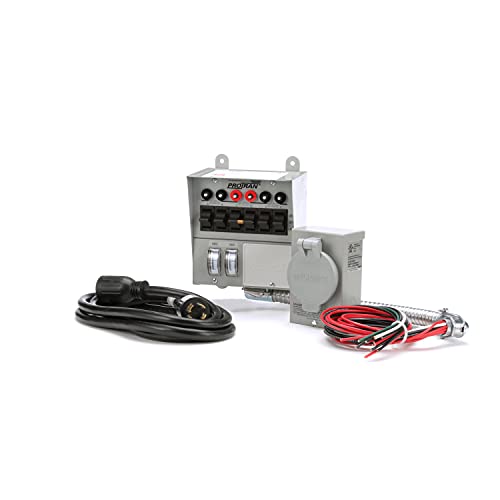
The 31406CWK kit provides a 6-circuit Pro/Tran transfer switch for generators up to 7500 watts. It supports portable power during outages with a hose length of 10 feet and uses a corded-electric power source. The unit is designed for adjacent installation to the main panel, simplifying integration for many residential setups. This kit emphasizes dependable, code-compliant operation with straightforward wiring for basic backup needs.
Nature’s Generator Transfer Switch 12-Circuit Kit

This 12-circuit, 120/240V transfer switch kit is built for robust performance. It handles up to 12,000 watts and uses a 50A CS6375 inlet to connect a generator. The steel construction adds durability for long-term use, making it a solid option for larger systems that require more simultaneous circuits during emergencies.
Nature’s Generator 6-Circuit Transfer Switch

Designed for 120V operation at 30A, this kit provides a compact 6-circuit transfer solution with multiple mounting options. It’s intended for indoor use and aims for simple, quick setup, enabling reliable power transfer for essential loads in smaller homes or apartments during a power outage.
Reliance Controls 306CRK Generator Transfer Switch

The 306CRK is a 6-circuit transfer switch kit designed to power up to six single-pole or one double-pole and four single-pole circuits from a portable generator during outages. It installs adjacent to an existing load center, offering a practical upgrade path for homes that need reliable, flexible backup power without a full panel replacement.
A510C Pro/Tran2 50-Amp 10-Circuit Switch

This 50A, 10-circuit transfer switch offers substantial capacity for homes with larger critical loads. The kit includes the necessary components and is backed by a manufacturer warranty, simplifying procurement and support for installation and ongoing operation.
Connecticut Electric EmerGen 30 Amp Kit
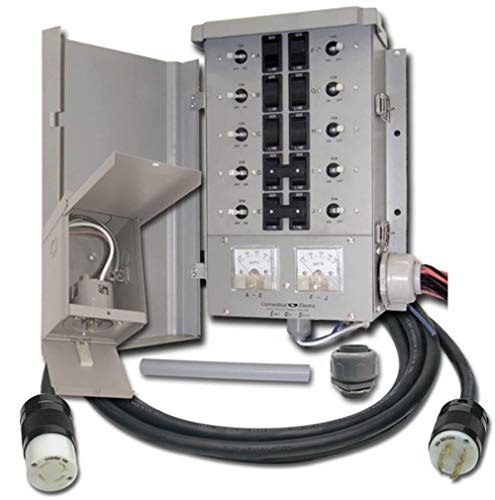
Designed for portable generators up to 30 amps, this 10-circuit kit supports four 240-volt circuits and up to ten total branches. Versatile for indoor or outdoor use with a NEMA 3R rainproof rating, it accommodates a range of well pumps, sump pumps, and essential household loads for reliable outages.
Connecticut Electric EmerGen 50-Amp 10-Circuit

For higher power needs, this 50A, 10-circuit EmerGen model distributes up to 12,500 watts across ten circuits. It emphasizes versatility for both 240V circuits and standard household loads and includes a ready-to-use installation kit with a CS6375 inlet and long connecting cord to position the generator conveniently.
Nature’s Generator 12-Circuit Transfer Switch 30A Kit
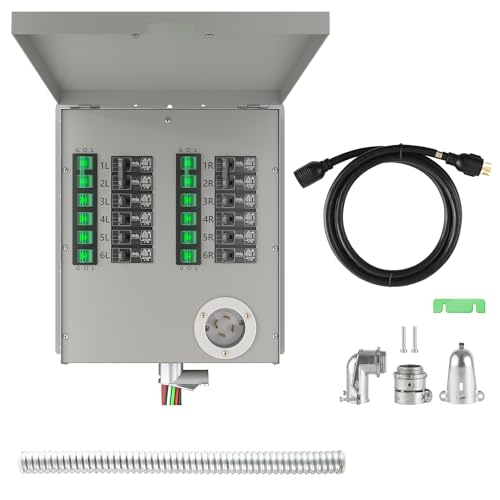
This 12-circuit kit operates at 120/240V and 30A, providing a robust option for larger homes needing broader power distribution during outages. It’s compatible with generators that use a NEMA L14-30R receptacle and includes all necessary components to facilitate safe, reliable power transfer.
Buying Guide: Key Considerations And Comparisons
- Power needs and circuit count: Start by listing essential circuits you must run during an outage. Choose a panel with enough circuits and appropriate amperage to support those loads without overloading the system.
- Voltage and inlet compatibility: Ensure the transfer switch matches your generator’s outlet configuration (commonly 120V or 240V and specific inlet types like CS6375 or NEMA 14-50 equivalents).
- Installation location and mounting: Some kits install adjacent to your main panel; others offer standalone or wall-mount options. Consider indoor vs outdoor use and weather resistance (NEMA ratings) when placing the unit.
- Wiring complexity and code compliance: Look for kits with clear wiring diagrams and components that meet local electrical codes. If in doubt, hire a licensed electrician for installation to ensure safety and compliance.
- Portability and generator distance: Cord length and inlet position influence where you can place the generator relative to the transfer switch. Longer cords provide flexibility but can introduce voltage drop or tripping risks if not rated for the load.
- Warranty and support: A solid manufacturer warranty helps with long-term reliability. Check what is covered and the process for support or replacement parts.
- Future expansion: If you anticipate adding more loads, consider a panel with room for additional circuits or an upgrade path to higher-capacity systems without a full panel replacement.
- Indoor vs outdoor suitability: Outdoor-rated models with weather protection are important if you plan to place the kit outside or in a damp environment.
In evaluating options, balance total wattage capacity, the number of circuits and the type of loads you want to support. Consider compatibility with existing panels and whether the kit supports future generator upgrades. Safety features, such as proper isolation between utility and generator power, are essential to prevent backfeeding and ensure code-compliant operation. By comparing the five options above, you can identify a transfer switch panel that aligns with your power resilience goals while staying within installation constraints and budget expectations.