Residents across the United States and Canada are increasingly evaluating options to reduce exposure to electromagnetic fields (EMF) from smart meters. This article highlights practical Faraday cage-inspired covers designed to shield or attenuate RF emissions from residential electric meters. The selections below focus on durability, compatibility, and shielding performance, presenting objective product details to help readers compare approaches.
| Product | Brand | Key Feature | Compatibility |
|---|---|---|---|
| OMPERIO Smart Meter Cover RF-Radiation Shield Guard EMF Protection | OMPERIO | 316 stainless steel construction; universal US/Canada fit | Most US/Canadian meters |
| Smart Meter Cover, Electric Meter Shield, Faraday Cage Protection | VEJESIME | 99% RF reduction; adjustable nylon fastening | Most smart meters |
| Smart Meter Cover Made With Faraday Cage Technology | Beendou | 316 stainless steel; durable against heat and humidity | US/Canada meters |
| Smart Meter Cover WiFi Blocker E MF Blocker for Home | Arilaca | 304 stainless steel; visible Faraday design | Most smart meters |
| Mission Darkness Smart Meter Cloak | Mission Darkness | Dual-layer stainless steel mesh with lid; easy access | All round meters in US/Canada |
OMPERIO Smart Meter Cover RF-Radiation Shield Guard

The OMPERIO shield is designed as a physical enclosure using 316 stainless steel mesh to act as a Faraday cage for smart meters. The product emphasizes corrosion resistance and stability in varying temperatures and humidity, aligning with a long-lasting protective approach. It targets universal fit for most meters used in the US and Canada, with dimensions around 7-1/4 inches base and 4-3/4 inches depth. The package includes installation aids, such as adhesive foam strips and a guide, to assist consumers during setup. This option prioritizes a robust metallic barrier to help contain emitted signals within the enclosure.
Smart Meter Cover for 99% RF Reduction

This VEJESIME cover touts aggressive RF shielding claims, including blocking up to 99% of harmful radio frequency emissions and reducing electromagnetic field levels. The design uses a combination of conductive materials and adjustable nylon fixtures to ensure a secure seal. The description highlights potential benefits such as reducing EMF-related symptoms and blocking dust intrusion. While performance can vary by meter model, the product positions itself as a practical protective layer with a focus on ease of use and flexible installation for households concerned about EMF exposure.
Beendou Faraday Cage Power Shield Cover

Beendou presents a Faraday Cage-style meter cover crafted from 316 stainless steel. It emphasizes compatibility with a broad range of typical meters in the US and Canada, supplemented by two extra adhesive foam strips for a tidy seal. The product underscores durability against temperatures, moisture, and corrosion, aiming to provide lasting protection. Installation is described as straightforward, with emphasis on fitting variations across meter models while maintaining a solid shield against RF leakage.
Arilaca Faraday Cage EMF Shield
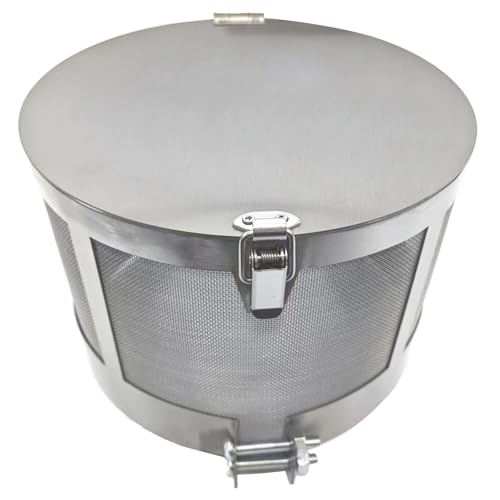
Arilaca markets a visible Faraday cage-style shield designed to reduce EMF and RF radiation from smart meters. The design uses 304 stainless steel to resist corrosion and temperature changes, aiming to deliver high durability. The product promotes ease of installation and a noticeable reduction in radiation when measured with appropriate meters. It highlights a design that balances visibility with shielding capability, offering a practical option for homeowners who want a clear barrier around their meter.
Mission Darkness Smart Meter Cloak

Mission Darkness offers a dedicated smart meter cloak featuring a dual-layer stainless steel mesh and a reinforced frame. The lid includes latches and Faraday compression gaskets to ensure a tight RF shield seal while allowing technicians to view meter information through the top mesh without removing the cloak. The universal sizing claims to fit round meters in the US and Canada, with foam strips included to adapt to rim protrusions and achieve a secure fit. This product emphasizes a balance between shielding performance and accessible meter visibility when needed.
Buying Guide: Key Considerations For Faraday Cage Meter Covers
- Meter compatibility and fit: Most products cite compatibility with common US/Canada meter dimensions (approximately 7-1/4 inches base and 4-3/4 inches depth). Measure your meter to confirm a snug seal and prevent gaps where RF could escape.
- Shielding effectiveness: Claims range from partial to near-complete RF reduction. Look for materials (316 or 304 stainless steel) and cage design (mesh density, closure integrity) that support durable shielding across a broad frequency range (RF and EMF within 10 kHz–3 GHz and higher).
- Durability and environmental resistance: Products emphasize corrosion resistance, temperature stability, and humidity tolerance. Stainless steel builds tend to offer longer lifespans in varied climates.
- Ease of installation: Adhesive strips, adjustable fittings, and bottom plates can streamline setup. A cloak that allows meter visibility without removal can be valuable for occasional checks.
- Visual impact and aesthetics: Some options present a visible cage, while others emphasize a low-profile shield. Consider whether you prefer a discreet appearance or a clearly constructed barrier.
- Maintenance and access: Some designs permit occasional access to meter displays, while others require lifting or removal to read the meter. Plan for maintenance needs and potential service calls.
- Health and safety considerations: Shields aim to reduce RF exposure but should not impede meter functionality or violate utility company rules. Verify local regulations and utility policies before installation.
- Quality control and warranties: Check product warranties and user reviews for real-world performance and long-term reliability. Look for corrosion resistance and structural integrity assurances.
How Faraday Cage Meters Work: A Quick Primer
Faraday cage covers create a conductive enclosure that redistributes electromagnetic waves around the outside of the shield. By providing a continuous conductive path, they reduce the amount of RF energy that can pass through to the interior behind the shield. For residential meters, the goal is to lower the exposed RF field without interfering with essential meter functions or utility signals that do not require full attenuation.
Practical Adoption Considerations
Before selecting a shield, homeowners should assess comfort with installation, meter visibility needs, and climate exposure. While many products claim substantial RF reduction, the actual effectiveness depends on fit quality, the presence of gaps, and variations in meter design. Additionally, ongoing monitoring with at-home RF meters can help verify performance after installation. For readers with sensitive health concerns, coordinating with a healthcare professional while considering shield options may be prudent.
Maintenance And Post-Installation checks
Periodically inspect the shield for loosening fasteners, corrosion, or deformities that could compromise shielding. Ensure bottom edges remain sealed, and replace adhesive strips if they lose grip. If utility service is required, ensure the shield can be temporarily adjusted or removed without significant effort to facilitate access.
Environmental And Regulatory Context
Shield choices should be compatible with local codes and utility policies. While shields aim to reduce EMF exposure, meters must still operate correctly and comply with regulatory standards. Consumers should verify any guidelines provided by their utility company to avoid inadvertently affecting meter readings or service.
This collection provides a spectrum of Faraday cage-inspired covers for smart meters. Readers can compare material composition, fit, and installation ease to determine which option aligns with their home’s needs and local conditions, all while maintaining safe and compliant use.