This article surveys reliable EV charger testing tools commonly used by professionals, technicians, and installers. It highlights essential features for evaluating Level 1 and Level 2 charging stations, safety compliance, and quick Go/NoGo checks. The selected products cover basic socket inspection, electrical safety verification, and interoperability testing for J1772, Type 1, Type 2, CCS, and NACS charging interfaces. Use these tools to verify proper wiring, grounding, and control signals before and after installation, helping ensure safe and compliant EV charging infrastructure for homes and businesses alike.
| Product | Brand | Key Use | Features Note |
|---|---|---|---|
| Triplett TEV300 Electric Vehicle Charger Test Kit | Triplett | Basic wiring test and socket status | LED GO/NO GO, EMC/Low Voltage Directive compliance, PP state simulation |
| EVSE LLC 3840 Electrician Vehicle Charger Tester | EVSE LLC | Level 1 & 2 charger verification | Commercial grade, measures amps/voltage, self-powered |
| FLIR EV45-NACS EV Charger Test Adapter | FLIR | NACS compatibility testing | Includes Type 1 converter, assesses PE, CCID, and safety |
| Denash EVSE Test Adapter | Denash | European Type 2 testing | Type 2 plug with LED indicators, universal 4mm socket |
| EVDoctor EVSE Repair Tool MAXI | EVDoctor | Go/NoGo quick test for all chargers | PILOT and 1 kHz LEDs, compact carrying case |
Triplett TEV300 Electric Vehicle Charger Test Kit
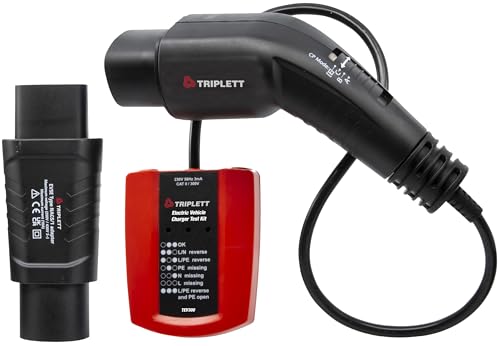
The Triplett TEV300 is a fundamental testing tool designed for basic wiring checks on EV charging systems. It provides LED GO/NO GO indications to quickly confirm electrical paths and charger output socket status. Compliance notes include EMC Directive (2014/30/EU) and Low Voltage Directive (2014/35/EU), with EN61010-1 safety context. The kit also simulates the Proximity Pilot state to emulate a 20A current capability between PP and PE conductors, aiding inspectors in assessing cable readiness and basic installation safety.
Key testing capabilities include socket inspection conditions via LED indicators and charts, offering a straightforward method to verify foundational safety elements during or after installation. The compact design suits field technicians who need a portable, rules-aligned tool. While not a full diagnostic device, the TEV300 helps confirm that essential lines, ground, and control signals align with expected values.
EVSE LLC 3840 Electrician Vehicle Charger Tester
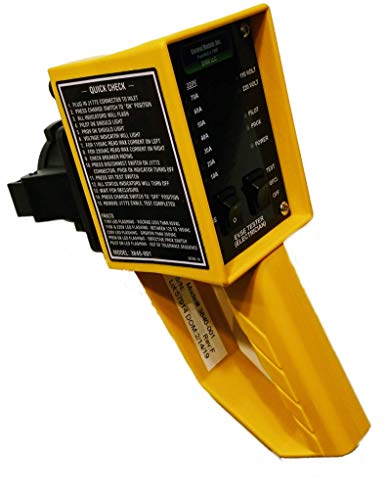
The EVSE LLC 3840 is a commercial-grade, weatherproof handheld tester suitable for Level 1 and Level 2 installations. It verifies a range of power and safety requirements after installation, including actual current and voltage measurements, signal levels, and pulse widths. High-intensity LEDs display results clearly, enabling quick interpretation in field environments. The device is self-powered, eliminating the need for external batteries and reducing gear clutter on service calls.
With its focused test suite, technicians can validate primary electrical safety and performance before invoking a full diagnostic workflow. Its rugged build supports repetitive use in outdoor or warehouse settings, where EV charging components may be exposed to weather. While compact, it provides substantive insight into the integrity of the charging pathway and overall readiness of the EVSE system.
FLIR EV45-NACS EV Charger Test Adapter
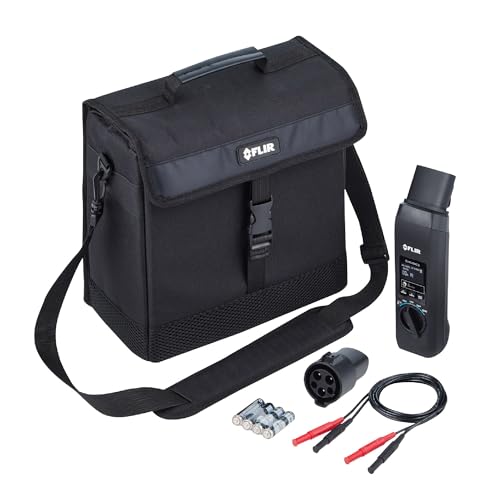
The FLIR EV45-NACS kit is designed for total compatibility with NACS and Type 1 systems (Type 1 converter included). It emphasizes safety testing for EV charging stations operating at residential or commercial sites. The kit enables checking protective Earth wiring, general electrical wiring integrity, and the Charge Current Interrupt Device (CCID) status, ensuring that critical safety mechanisms engage correctly. This adapter supports common EVSE configurations and helps engineers verify cross-compatibility across networked charging setups.
Designed for both Level 1 and Level 2 AC charging stations, the EV45-NACS is a practical option for installers who require a single, comprehensive testing solution capable of handling multiple plug types and standards. It helps maintain safety margins during ongoing maintenance or retrofit projects and reduces the risk of noncompliant installations.
Denash EVSE Test Adapter

The Denash EVSE Test Adapter focuses on Type 2 plug testing with a European standard approach. It combines a European Type 2 plug presence with a LED indicator system to support quick visual verification. The kit also includes a 4mm universal socket to facilitate compatibility with testers, multimeters, or oscilloscopes for checking CP signal output and load voltage. This adapter is useful when assessing European charging infrastructure or cross-border installations where Type 2 connections are prevalent.
Users can perform basic voltage checks and simulate vehicle presence, enabling a straightforward pre-use or post-installation verification. Its compact design and standard European plug compatibility make it a practical addition to a toolkit for technicians who service international EV charging stations, as well as domestic settings requiring Type 2 compatibility checks.
EVDoctor EVSE Repair Tool MAXI

The EVDoctor EVSE Repair Tool MAXI is a quick Go/NoGo tester capable of handling all EV chargers, including J1772, Type 1, Tesla, CSS, and Type 2 configurations. It provides a straightforward, portable testing workflow that requires minimal additional equipment. The device displays charger status via two LEDs: PILOT (green) and 1 kHz (blue). A carrying case is included for field transport. The MAXI is designed for installation or repair scenarios where speed and clarity are essential for confirming that an EVSE output is functioning before powering an EV or a charging station.
Step-by-step operation emphasizes safe handling: insert tester leads into ground and pilot pins, ensure Connect and Charge are Off, plug into AC power, then enable Connect and finally Charge to observe the LED indicators and power-on cues. This workflow provides a practical quick-check that helps verify basic electrical viability and reduces guesswork during repair or commissioning tasks.
Buying Guide
- Compatibility: Ensure the tester supports the charging standards used in your area (J1772, SAE J1772, Type 1, Type 2, NACS) and the specific EVSE configurations you service.
- Safety Compliance: Look for devices aligned with applicable standards and directives (such as EN61010-1 and EU directives) to ensure proper safety monitoring during tests.
- Test Scope: Choose tools with a mix of basic wiring checks (GO/NO GO), voltage/current measurements, and CCID/PE checks to cover both installation and maintenance tasks.
- Portability: Field technicians benefit from compact, battery-free (self-powered) units or lightweight adapters that fit easily in a tool bag.
- Indicators and Display: LED-based or small display readouts should be clear and unambiguous in daylight or warehouse lighting conditions.
- Ease of Use: Prefer devices with straightforward setup procedures and documented test steps to minimize training time and reduce human error.
- Durability: For outdoor or industrial settings, select weather-resistant housings and rugged construction to withstand frequent use.
- Maintenance and Support: Consider brands offering documentation, troubleshooting resources, and customer support to assist with complex test scenarios.
- Cost vs. Coverage: Balance price against the breadth of standards supported and the depth of testing provided; more comprehensive kits may deliver long-term value in multi-site deployments.
- Future-proofing: If you anticipate expanding to new plug types (like updated CCS or emerging standards), verify compatibility or upgrade options.