As cold weather arrives, electric snow melting mats offer a practical, maintenance-friendly way to keep paths, driveways, and entrances clear of ice and snow. These mats heat the surface to melt snow at a steady rate, reducing the need for shoveling or chemical de-icers. This article highlights top-rated options, comparing features, installation, and efficiency to help American homeowners choose the right system for their space and budget.
Summary of selected products:
- HeatTrak Heated Snow Melting Mat with Power Unit (30” x 60”)
- 4 Pcs Heated Snow Melting Mats (10 x 30 Inch Each)
- HeatTrak Heated Snow Melting Mats for Entrances (30” x 48”)
- SECIVLOT Heated Snow Melting Mats 3 Pack (10″ x 30″ Each)
- funomo 3 Pack Heated Snow Melting Mats (10” x 30″ Each)
HeatTrak Heated Snow Melting Mat With Power Unit

This mat is the first in a HeatTrak system, including a Power Unit that connects to an outdoor outlet. Ready to plug in and start melting snow out of the box, it promises straightforward installation and minimal maintenance. The surface heats to about 40 degrees Fahrenheit above ambient, effective down to -8 degrees Fahrenheit, and melts snow at roughly 2 inches per hour. The design focuses on energy efficiency compared with traditional systems, delivering reliable performance for walkways, decks, and driveways.
4 Pcs Heated Snow Melting Mats – 10 x 30 Inch Kit

This 4-pack provides multiple mats with a 6.5-foot power cord per unit and a 45-inch connection cable. It includes an earth leakage switch, a waterproof cover, and simple layout flexibility, enabling easy daisy-chaining for larger coverage. The mats are built from durable rubber with anti-slip texture to maintain traction on wet or icy surfaces. They melt snow at about 2 inches per hour, and can operate effectively in temperatures well below freezing, up to about 149°F heating capability.
HeatTrak Heated Snow Melting Mats For Entrances

Designed for entryways, these mats combine durability with ease of installation. They are built to weather winter storms and stay out all season, offering reliable snow removal with energy efficiency. Snow mass is melted at a consistent rate, helping to minimize hazardous buildup on doorways and thresholds while reducing the need for salt or manual shoveling.
SECIVLOT Heated Snow Melting Mats 3 Pack

SECIVLOT offers a three-pack of 10″ x 30″ mats with a 6.56-foot power cord and a leakage switch. The mats feature a robust rubber construction with a double-sided non-slip texture and an IP68 waterproof rating. They automatically melt snow at about 2 inches per hour and maintain surface temperatures between 131°F and 149°F. The system supports daisy-chaining multiple units for larger footprints, making it suitable for stairs, sidewalks, and entryways.
funomo 3 Pack Heated Snow Melting Mats
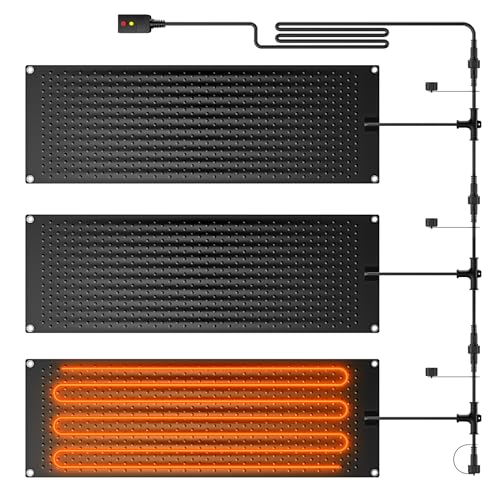
funomo’s 3-pack provides 10″ x 30″ mats with a 45-inch connection cable per mat and an earth leakage switch for safety. The mats are made from durable rubber with anti-slip texture to prevent slips on wet surfaces. They melt snow at about 2 inches per hour and can operate in temperatures as low as -8°F, reaching up to 149°F. The package includes a waterproof cover and installation instructions for straightforward setup and flexible layout options.
style=”margin-top:20px;”>Buying Guide: Key Purchase Considerations
When selecting electric snow melting mats, consider placement, coverage, power requirements, safety features, and energy efficiency. Proper sizing ensures you cover high-traffic areas without overextending the system. Look for mats designed to daisy-chain to a single Power Unit for a cleaner setup. Compare surface temperatures and melting speed to ensure the system meets your climate and average snowfall. Safety features like leakage switches, IP ratings, and anti-slip textures reduce potential hazards in winter conditions.
- Coverage and layout: Map the area to be heated and choose mats that can be joined to reach the desired footprint. Longer cords or flexible daisy-chaining simplify installation.
- Power and energy: Check required outlets and amperage. Mats designed to melt at 2 inches per hour are common and balance speed with energy use.
- Durability and weather resistance: IP68 ratings and rugged rubber construction help mats endure salt, moisture, and freezing temperatures.
- Traction and safety: Non-slip textures reduce slip risk when surfaces are wet or icy.
- Maintenance and installation: Look for ready-to-use kits with connection cables, leakage switches, and waterproof covers for easy upkeep.
- Placement strategy: For entryways, prioritize higher-traffic zones. For walkways or decks, plan a path that minimizes the number of joints to reduce potential leaks.
- Noise and heat considerations: Most mats operate quietly, with heat output calibrated to melt snow efficiently without excessive energy use.
- Compatibility: If integrating with an existing heating system, verify compatibility and daisy-chain options to avoid overloading outlets.
In summary, these electric snow melting mats offer scalable solutions for urban and suburban homes. By assessing area, climate, and electrical setup, American households can select a system that provides safer, easier snow management with energy-conscious operation.