Looking for a reliable way to regulate inline duct or ceiling fan speed? A duct fan speed controller offers precise adjustment, energy savings, and quieter operation by letting you tailor airflow to your needs. This guide highlights five well-regarded options, summarizes their core features, and provides practical buying considerations to help American homeowners and hobbyists choose the right model for hydroponics setups, bathrooms, or general ventilation.
| Product | Brand | Key Benefit | Voltage & Current |
|---|---|---|---|
| CDMALL AC Motor Speed Controller 120V 15A Max | CDMALL | High power handling with precise LED readout | 110-120V, up to 15A |
| BN-LINK Variable Fan Speed Controller | BN-LINK | Simple 3-speed knob with safe plug-in design | 125V, 4.8A |
| CDMALL AC Motor Speed Controller 120V 15A Max (Long Cord) | CDMALL | Longer reach with six-foot cord, robust protection | 110-120V, up to 15A |
| VIVOSUN Variable Speed Controller | VIVOSUN | Three-speed control with safe operation | Standard AC voltages, compatible |
| DEWENWILS Variable Speed Controller | DEWENWILS | Multi-socket convenience for multiple fans | 100-125V |
CDMALL AC Motor Speed Controller 120V 15A Max
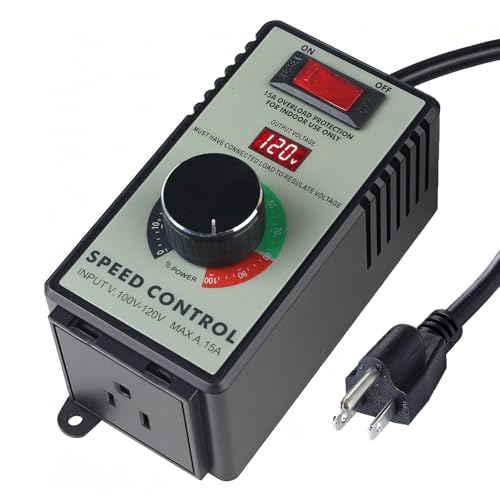
This model provides robust control for inline or ceiling fans used in ventilation or hydroponics systems. It supports resistive loads up to 2000W and inductive loads up to 1500W, with a rated current of 10A and a maximum of 15A. A dedicated overload protection switch helps prevent damage from electrical faults, and the built-in LED voltage meter offers a quick readout of operating voltage. Note that it is intended for AC brushed motors, not brushless motors, ensuring compatibility with common duct fans.
BN-LINK Variable Fan Speed Controller

BN-LINK’s controller offers a straightforward three-speed option via a single knob, ideal for reducing noise and saving energy in duct or inline fans. The plug-in design reduces wiring complexity and enhances safety with a grounded outlet. This model is suitable for various exhaust fans, high-velocity inline fans, and small blowers, making it a versatile choice for hobby setups and home ventilation projects.
CDMALL AC Motor Speed Controller 120V 15A Max (Long Cord)

This unit adds a six-foot cord for greater reach in larger installations or multi-fan configurations. It features independent fuse protection with overload and short-circuit safeguards. The controller supports a three-position switch (Low, Mid, Full) to dial in speed without sacrificing safety. Like other models, it is designed for AC brushed motors and should not be used with brushless motors, ensuring predictable performance in conventional duct fans.
VIVOSUN Variable Speed Controller

This three-speed controller uses a single knob to adjust the inline duct fan’s performance, balancing airflow and noise for different scenarios. It emphasizes energy efficiency by avoiding full-speed operation when unnecessary and provides a grounded plug to support safe use with various inline fans. It’s a practical choice for users seeking simple, reliable speed control without complex wiring.
DEWENWILS Variable Speed Controller
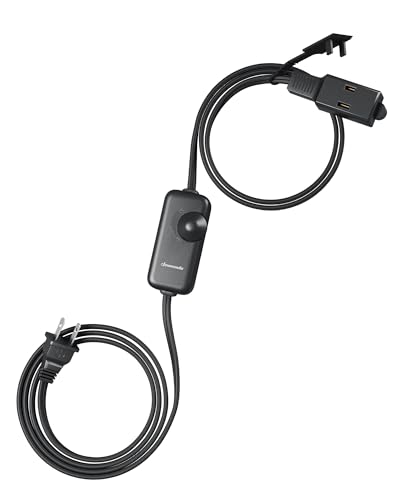
DEWENWILS offers a 100-125V controller with a 1-to-3-socket design, enabling control of multiple fans from a single device. The plug-in, plug-and-play setup simplifies installation, while the adjustable speed range helps optimize airflow and noise for radon reduction, hydroponics ventilation, or small cooling projects. This option suits users who want flexibility to power more than one fan from one controller.
Motor Speed Controller AC 120V 15A

This model emphasizes precision and safety. It uses a precision potentiometer for speed control with 1-volt accuracy, combined with overload protection that shuts off power if current spikes. The housing is made from heat-resistant ABS plastic to endure regular use in ducted ventilation. It is designed for AC fans and aims to provide durable, stable performance in everyday applications.
Buying Guide: Key Considerations For Selecting A Duct Fan Speed Controller
- Electrical compatibility: Match the controller’s voltage (typical 100-125V or 110-120V) and current rating with your fan’s requirements. Exceeding the current rating can trigger safety protections or motor damage.
- Motor type: Controllers are generally intended for AC brushed motors. Do not use with brushless motors unless the product specifies compatibility.
- Load type: Consider whether your application is resistive (like simple inline fans) or inductive (motors with starting torque). Some controllers list maximum resistive and inductive loads; stay within these limits for reliability.
- Protection features: Overload, short-circuit, and fuse protections help protect both equipment and users. Independent switches for protection add an extra layer of safety.
- Cord length and reach: A longer cord (e.g., six feet) provides more installation flexibility in larger rooms or complex duct layouts.
- Number of outlets: If you need to power more than one fan, consider models with 1-to-3 sockets or multi-outlet support for convenient operation.
- Noise and airflow control: Three-speed models offer simple, dependable control. For precise tuning, rely on models with higher accuracy or LED readouts to monitor voltage and performance.
- Ease of installation: Plug-in designs reduce wiring requirements and simplify setup, especially for DIY installations or temporary setups.
- Brand and support: Choose reputable brands with documented specifications and reliable customer support to ensure compatibility with your system.
When selecting a duct fan speed controller, balance power needs, motor compatibility, and installation convenience. For hydroponics or home ventilation, choosing a model with clear readouts and safe protection features can help maintain consistent airflow while reducing energy use and noise. Always follow the manufacturer’s installation guidelines and avoid experiments that could overload the circuit or damage the fan.