Protecting households from gas leaks requires reliable, easy-to-use detectors that can identify common fuels like methane, propane, and butane. This guide highlights five top-rated detectors designed for quick detection, clear alarms, and practical usability in homes, RVs, and small workspaces. Each option combines fast response times, visual and audible alerts, and portable designs to help pinpoint leaks before they become dangerous. Below, compare key specs and how they address different needs, from compact pocket tools to extended-reach probes.
| Product | Brand | Key Capability |
|---|---|---|
| PT199 Natural Gas Leak Detector | TOPTES | 0.5s visual/audio alarm; 2 AAA batteries; detects methane, propane, butane |
| PT520A Natural Gas Detector | TOPTES | 17-inch gooseneck probe; 50–10,000 ppm range; fast 0.5s alerts |
| Klein Tools ET120 Gas Leak Detector | KLEIN TOOLS | 50–10,000 ppm range; adjustable sensitivity; 85dB alerts |
| PT177 Gas Leak Detector | TOPTES | Pocket-sized with auto-calibration; 0.5–3s alarm window; 75 dB |
| PT210S Gas Leak Detector | TOPTES | 4-inch probe; percent LEL readout; 0.5s response |
TopTes PT199 Natural Gas Leak Detector
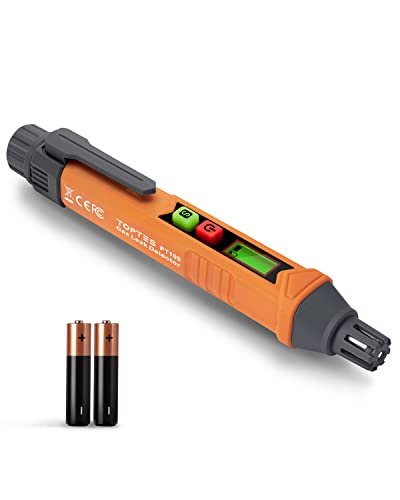
The PT199 from TopTes is a compact combustible gas leak detector capable of sensing multiple fuels, including natural gas, methane, propane, and LPG. It provides rapid detection with a 0.5-second visual and audible alarm, helping users locate leaks quickly. The device runs on two included AAA batteries and offers a 30-second warm-up. An LCD screen indicates the presence and intensity of gas, turning red at higher concentrations. A low-battery indicator activates below 2.4V, and the unit auto-powers off after five minutes of inactivity or gas detection, supporting energy efficiency and simplicity in everyday use.
TopTes PT520A Gas Leak Detector

The PT520A offers an extended reach with a 17-inch gooseneck probe for locating leaks in tight spaces such as pipelines, gas fireplaces, and basements. It detects methane, propane, natural gas, LPG, and more, with an emphasis on precision in difficult-to-reach areas. The detector responds within 0.5 seconds and features seven colored bars plus a 75dB alarm that intensify as gas concentration increases. Its detection range spans 50 to 10,000 ppm, making it suitable for both indoor and outdoor leak detection scenarios.
Klein Tools ET120 Gas Leak Detector

The Klein ET120 combines a wide detection range with adjustable sensitivity. It can identify gas concentrations from approximately 50 to 10,000 ppm, enabling versatile monitoring in various environments. The ET120 provides two sensitivity settings—High (50 to 1,000 ppm) and Low (1,000 to 10,000 ppm)—to tailor detection to the task. A five-LED visual alert system plus an 85dB audible alarm increase in tandem with gas concentration, ensuring clear warnings in noisy environments.
TopTes PT177 Gas Leak Detector

The PT177 is a pocket-friendly gas detector with a 30-second auto-calibration after powering on and a fast response window of 0.5 to 3 seconds. It detects a broad range of combustible gases including LPG, methane, ethane, propane, and butane. The device features five red LEDs and a 75 dB audible alarm that intensify as gas concentration increases. A compact pocket clip and included storage bag make it easy to carry and store, making it a convenient tool for RV users, DIYers, and homeowners with gas appliances who need quick checks on the go.
TopTes PT210S Gas Leak Detector

The PT210S combines portability with a four-inch probe, ideal for detecting leaks in hard-to-reach places. It displays the gas concentration in Percent LEL, providing a direct readout for assessing leak severity. Response time is rapid at 0.5 seconds, and the device uses a visual red display along with a 75 dB audible alert as concentration rises. Detection ranges span from 100 ppm to 5,000 ppm (1% LEL to 10% LEL), offering precise monitoring for home kitchens, basements, or outdoor areas around gas lines.
Buying Guide
- Detection range and specificity: Choose a detector with a broad range (e.g., 50–10,000 ppm) for natural gas and propane, and ensure it can identify multiple fuels if your appliances vary.
- Response time: Fast alarms (0.5 seconds or better) help you locate leaks quickly and evacuate safely.
- Alarms and indicators: Look for devices with audible alarms (around 75–85 dB) and visible LED indicators, and consider LCD readouts for gas concentration levels.
- Probe length and accessibility: Long goosenecks (12–17 inches) or four-inch probes improve access to tight spaces, fireplaces, and behind appliances.
- Power and portability: Battery-operated units with auto-shutoff save energy and are easier to use in multiple locations; include batteries when possible for immediate use.
- Calibration and maintenance: Some models offer auto-calibration and simple warm-up procedures; pocket-sized detectors may require periodic recalibration for accuracy.
- Durability and form factor: Consider pocket-friendly tools for quick checks and larger detectors with extended probes for more thorough inspections.
When selecting a combustible gas leak detector, align the tool’s capabilities with your space. For routine home use, a compact detector with reliable alarms and quick warm-up is often sufficient. If you need to inspect larger areas or spaces with hard-to-reach pipes, a model with a long probe and enhanced sensitivity provides added safety. For RV owners or remote locations, battery longevity and portability are pivotal. Evaluating the detector’s ability to read %LEL values can assist in assessing the severity of a leak, supporting informed safety decisions and timely interventions.