For travelers living on the road, a reliable camper van solar system kit is essential for powering essentials without hooking up to shore power. This guide reviews five top-rated solar kits, covering each system’s capacity, components, and installation ease. Readers will learn what to consider when selecting panels, controllers, batteries, and inverters to match their vehicle, climate, and daily electricity needs.
Summary of chosen products
- Renogy 400 Watt Premium 4 Pcs 100W Kit — high efficiency panels with MPPT controller.
- ECO-WORTHY 200 Watt 12V Panel Kit — solid entry-level RV off-grid option.
- Renogy 200W Monocrystalline RV Panel Starter Kit — compact, flexible setup with PWM controller.
- ECO-WORTHY Ultra 1200W 24V Off-Grid Lithium System — high-capacity, dual-axis tracking for maximum output.
- ECO-WORTHY 800W Complete Solar Panel Kit — all-in-one kit with inverter and Bluetooth for monitoring.
Renogy Premium 400W Solar Power Kit

The Renogy Premium Kit combines four 100W solar panels with a 40A MPPT charge controller, a Bluetooth module, fuse, mounting Z brackets, adaptors, and tray cables. Its 22.5% efficiency panels deliver steady daily outputs around 2-2.5kWh under favorable sun, backed by a 10-year panel warranty and a multi-year controller warranty. The kit is designed for straightforward setup on camper vans, RVs, or off-grid cabins, with pre-drilled holes and ready-to-use wiring for faster installation.
Key features include sturdy 3.2mm low-iron glass and a wide 35mm aluminum frame to withstand wind and snow loads. The MPPT controller improves charging efficiency and adapts input to battery temperature, reducing under- or over-charging. This kit suits RV owners seeking robust performance and long-term reliability for weekend trips or extended van life.
ECO-WORTHY 200W Panel Kit With PWM Controller

This kit targets RV and camper applications with a 200W monocrystalline panel, a 30A PWM controller, and durable aluminum framing. It estimates about 800Wh per day under four hours of bright sun, making it suitable for smaller van setups or supplementing a larger system. The panel’s corrosion-resistant frame, IP65-rated junction box, and wind/snow tolerance support durable outdoor use. It’s a convenient starter option for travelers who want a simple, reliable solar setup and clear expansion potential.
Renogy 200W Monocrystalline RV Solar Starter Kit
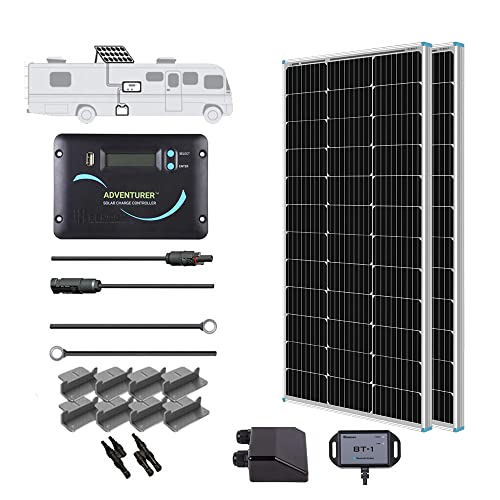
This 200W starter kit pairs two 100W panels with a 30A PWM controller designed for RVs, campers, boats, and off-grid applications. The panels feature 22% efficiency with a corrosion-resistant aluminum frame built for outdoor use and reliable performance in variable conditions. The Adventurer-Li PWM controller offers protection against overcharging, overload, and short circuits, ensuring safe battery charging and a tidy, compact installation. It’s a practical upgrade path for campers needing a compact yet capable solar footprint.
ECO-WORTHY Ultra 1200W 24V Off-Grid System
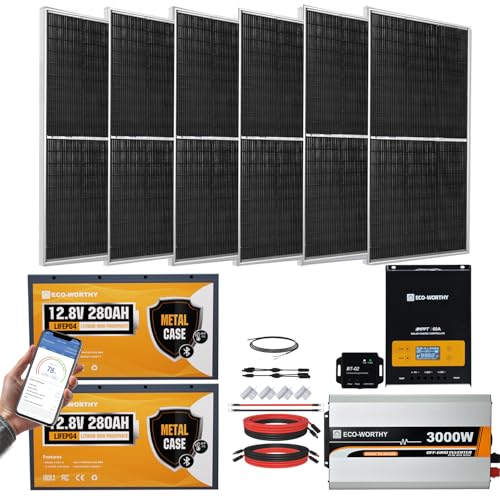
For van travelers seeking serious power, the Ultra kit features six 195W panels, a 60A MPPT controller, dual 12.8V 280Ah Li-ion batteries, and a 3000W pure sine wave inverter. With a daily output of approximately 5.52 kWh under optimal sunlight and a dual-axis tracker optional upgrade, this system aims to deliver robust energy for appliances, climate control, and entertainment. Designed for extended trips or full-time van life, the kit emphasizes high efficiency and scalable storage, along with a Battery Management System for safety and longevity.
ECO-WORTHY 800W Complete Solar Panel Kit

This all-in-one 800W kit includes four 200W solar panels, a 60A MPPT controller, a 3000W UPS inverter charger, two 12V 100Ah lithium batteries, and Bluetooth monitoring. It emphasizes user-friendly installation and robust power delivery, suitable for larger camper van setups that require reliable AC power for devices like air conditioners, refrigerators, TVs, and kitchen appliances. Bluetooth connectivity helps monitor charging status and energy flow from a phone or tablet.
Buying Guide: Key Considerations for Camper Van Solar Systems
- Power needs and daily usage: Assess common loads (refrigerator, fans, lights, charging devices) and choose a system with a comfortable daily energy budget. A larger daily requirement benefits from higher wattage panels and scalable battery capacity.
- Panel configuration and footprint: For vans, balance between total wattage and available roof space matters. A 2-4 panel setup is common for mid-sized vans, while larger builds may demand six or more panels or higher-efficiency cells.
- Charge controller choice: MPPT controllers optimize charging under partial shading and varied temperatures, increasing efficiency. PWM controllers are simpler and affordable but may be less efficient in larger systems.
- Battery technology and capacity: Lithium iron phosphate (LiFePO4) batteries offer longer cycle life and deeper discharge than lead-acid but at higher upfront cost. Battery sizing should align with inverter capacity and daily consumption.
- Inverter sizing and type: A pure sine wave inverter supports sensitive electronics and AC appliances. Ensure inverter wattage matches peak loads (e.g., AC units, microwaves) and consider surge capacity.
- Durability and weather resistance: Look for corrosion-resistant frames, high wind and snow loads, and IP ratings for junction boxes to withstand road travel and outdoor storage.
- Installation complexity: Kits with pre-wired cables, mounting brackets, and pre-drilled holes simplify installation. Consider whether you’ll mount on a roof rack, the van’s roof, or a portable setup.
- Expandability: If future energy needs rise, plan for modular systems that allow adding panels, additional batteries, or a larger inverter without replacing the entire kit.
- Warranty and support: A long-term warranty on panels and a good service policy help ensure reliability for mobile use and frequent vibrations on the road.
- Monitoring and maintenance: Bluetooth or app-based monitoring helps track power flow and battery health, enabling proactive maintenance and optimization of sun exposure.
These products offer a range of wattages, controller types, and storage options to fit different camper van lifestyles. When choosing, prioritize total daily energy requirements, roof space, and the desired level of autonomy from shore power. A balanced system with efficient panels, a capable MPPT controller, and lithium storage typically provides the most dependable off-grid performance for American road travelers.