Carbon monoxide (CO) is a colorless, odorless gas that can pose serious risks on boats, in RVs, and at home. Modern CO detectors use electrochemical sensors and digital readouts to provide real-time awareness, alerting you with loud alarms and visual indicators. This guide highlights top options from reputable brands, highlighting each device’s battery life, alarm capabilities, display features, and suitability for travel, maritime use, and stationary locations.
The following quick-reference table lists five CO detectors chosen for their reliability, ease of use, and portability. All are suitable for boats, RVs, and travel environments where CO monitoring is essential.
| Product | Brand | Key Features | Type |
|---|---|---|---|
| Runidur 10-Year Battery CO Detector | Runidur | 10-year non-replaceable battery, LCD real-time CO display, flashing LED signal lights | Portable CO Monitor |
| Kidde Battery Powered CO Detector | Kidde | Electrochemical sensor, wall/table placement, 85 dB alarm, low battery indicator | Battery-Powered Alarm |
| First Alert CO400 Battery Operated Alarm | First Alert | Advanced electrochemical sensor, battery powered, 85 dB alarm | Battery Alarm |
| MTI Marine CO Alarm | Safe T Alert | Marine-specific CO alarm, white finish | Marine CO Alarm |
| briidea HMCOA-01 Marine Detector | briidea | Adjustable alarm threshold, red LED, LCD display, 100 dB alarm, 12V relay | Marine Alarm |
Note: Each device has unique strengths—whether extended battery life, marine suitability, or adjustable alarm thresholds—so choosing the right detector depends on your vessel type, environment, and monitoring needs.
Runidur 10-Year Battery CO Detector

The Runidur CO detector is designed for long-term reliability with a non-replaceable CR123A lithium battery offering up to 10 years of operation. Its upgraded electrochemical CO sensor provides rapid detection with an audible alert greater than 85 decibels and a flashing red LED. A built-in LCD displays real-time CO concentrations, and the device lets you monitor battery life and status at a glance. This combination makes it suitable for boats, RVs, and homes where maintenance windows are limited and continuous protection is desired.
Target use: Travel, RVs, and fixed installations on boats or in cabins. The large LCD readout helps users verify current CO levels during operations or after a suspected exposure. The long-life battery minimizes maintenance on longer voyages or trips where replacement parts are scarce.
Kidde Carbon Monoxide Detector
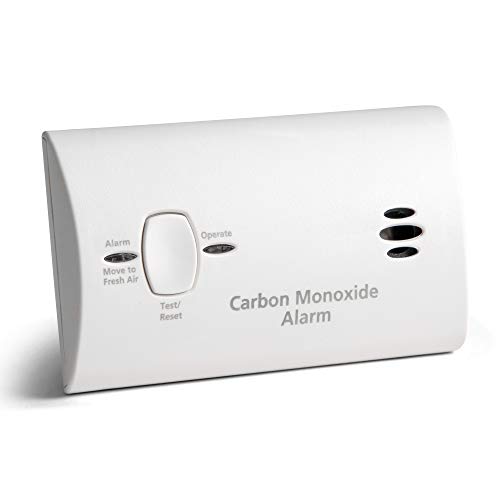
This battery-powered CO alarm from Kidde uses an electrochemical sensor to detect CO and provide dependable protection during power outages. It operates on two AA batteries (included) and can be wall-mounted or placed on a tabletop, making it versatile for boats, campers, and homes. The green LED indicates power, while an 85-decibel alarm and a red LED signal the presence of CO. Its simple installation and low-maintenance design suit travelers and weekend boaters who need straightforward protection without complex wiring.
Target use: Quick deployment in cabins or small living spaces. The unit remains functional during power failures thanks to battery operation, ensuring continuous CO monitoring in remote locations or during travel.
First Alert CO400 Battery Operated Alarm
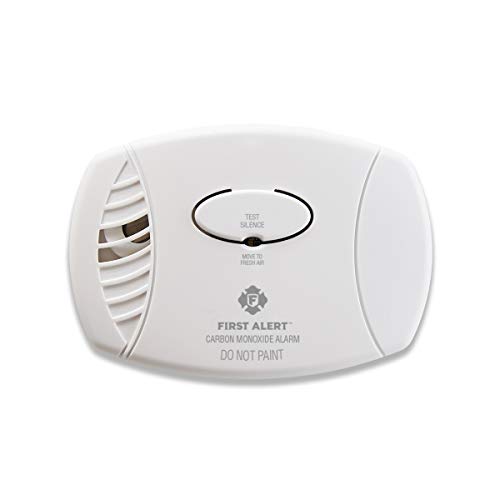
The First Alert CO400 is a straightforward, battery-operated CO detector designed for reliable, constant monitoring. It uses an electrochemical sensor for accurate CO detection and provides a loud 85-decibel alarm when dangerous levels are reached. The unit is easily placed on a wall or tabletop and uses replaceable batteries, which is convenient for travelers who prefer standard batteries that are easy to source. The indicator lights help users verify power status at a glance.
Target use: Home safety, RVs, and boats where simple, dependable CO monitoring is essential and wiring is impractical or unavailable.
MTI Marine CO Alarm White

MTI Industries’ marine CO alarm is designed with boats and other marine environments in mind. This white detector provides reliable CO monitoring tailored for maritime use. While concise on details, its marine-specific focus suggests compatibility with standard boat electrical setups and the need for compact, robust detectors on watercraft. For skippers needing a dedicated marine CO alarm, this unit offers a straightforward option with marine-focused branding and form factor.
Target use: Boats and other watercraft where a compact, marine-oriented detector is preferred for continuous CO monitoring on board.
briidea HMCOA-01 Marine CO Detector

The briidea HMCOA-01 Marine CO Detector emphasizes user-adjustable alarm thresholds, a clear visual LED indicator, an LCD display, and a high 100 dB audible alarm. The ability to set the CO alarm threshold between 10 and 500 PPM allows customization to different safety standards and environments. Its 12V 3A NC relay adds further integration flexibility for boat electrical systems and automation. The detector is designed to withstand humid marine conditions with conformal coating and water resistance features, ensuring reliable operation on vessels with variable humidity.
Target use: Marine environments where adjustable CO alarm thresholds and strong audible/visual alerts are valuable, especially on boats with variable air quality conditions.
Buying Guide: Key Considerations For Choosing A CO Detector
When selecting a carbon monoxide detector for boats, RVs, or travel, consider the following factors to balance safety with practicality.
- Power source and maintenance: Determine whether you prefer a hard-wired, battery-powered, or long-life battery option. In travel scenarios, battery-powered detectors with replaceable batteries or long-life cells reduce maintenance on the go.
- Sensor technology: Most detectors use electrochemical sensors for CO detection. Look for models with proven accuracy, fast response times, and a recommended replacement interval for sensors or batteries.
- Audible and visual alerts: A loud alarm (typically 85 dB or higher) and visible LED indicators help alert occupants quickly, especially in cabins, RVs, or enclosed boats.
- Display and readouts: LCD displays showing real-time CO levels enable immediate awareness and better decision-making during suspected exposure or high-risk conditions.
- Marine suitability: For boats, choose detectors designed or tested for humid, salt air environments. Conformal coatings and marine-rated housings add durability.
- Adjustable thresholds: Some marine models let you customize the alarm threshold, enabling compliance with varying safety standards or personal risk tolerances.
- Form factor and installation: Consider mounting options (wall vs. tabletop), size, and whether the detector needs to operate during power outages or in mobile conditions with movement and vibrations.
- Maintenance access: Choose detectors with easy battery replacement and simple testing procedures to ensure ongoing reliability during trips and on vessels.
Comparisons across the featured models show a balance between extended-life, low-maintenance units and marine-focused detectors with adjustable alarms. For travelers and boat owners, the combination of a reliable sensor, accessible readouts, and straightforward maintenance determines overall safety efficacy. Always place CO detectors in sleeping areas and common living spaces for best protection, and follow manufacturer guidelines for installation and testing intervals.