Choosing a battery powered generator for home backup or off-grid living involves balancing capacity, recharge speed, and portability. The following five models offer reliable LiFePO4 chemistry, substantial outputs, and versatile charging options to keep essential devices running during outages or outdoor adventures. This guide presents each product’s strengths, key specs, and practical usage scenarios to help you pick the right fit for your needs.
Summary of Selected Products
| Product | Brand | Key Benefit |
|---|---|---|
| EF ECOFLOW Delta 2 | EF ECOFLOW Store | High capacity with fast charging and multiple outlets |
| Explorer 300 | Jackery Store | Lightweight portability with solid 293Wh and fast recharge |
| 3840Wh LiFePO4 Station | ABOK Store | Very high capacity, long lifespan, multiple charging methods |
| BLUETTI Elite 30 V2 | BLUETTI Store | Compact, UPS capability, solid surge power |
| Anker SOLIX C1000 Gen 2 | Anker Store | Ultra-fast recharge, high output, compact form |
EF ECOFLOW Delta 2: Big Capacity, Fast Charge

The EF ECOFLOW Delta 2 delivers 1024Wh with a LiFePO4 battery and an 1800W AC output. It supports rapid charging to 80% in about 50 minutes and 100% in around 80 minutes via AC input, enabling quick returns to full battery after power outages. Its expandable capacity lets you add extra batteries to reach up to 3kWh for longer outages, making it suitable for home backup, camping, or RV use. With 15 outlets, it powers a wide range of devices, from essential appliances to small power tools.
Jackery Explorer 300: Lightweight Outdoor Backup

The Explorer 300 offers 293Wh of lithium-ion capacity with two Pure Sine Wave AC outlets and a total of multiple ports for charging several devices at once. It recharges quickly—about 2 hours to reach 80% via wall outlet with a 60W USB-C PD input, and can be recharged using a car outlet or Jackery SolarSaga solar panels. This model emphasizes portability for outdoor activities, emergency blackout use, and situations where weight is a consideration, while still supporting essential devices during outages.
3840Wh LiFePO4 Power Station: High-Capacity Home Backup

This powerful unit delivers a 3840Wh LiFePO4 battery with up to 3600W continuous output and 4500W surge, sufficient to run many household appliances. It supports AC, PV, and car charging methods, and claims very fast recharging to full capacity when combining AC and PV charging. The power station features fifteen ports for versatile device charging, making it a strong option for long outages, off-grid living, or RV setups where heavy loads are required.
BLUETTI Elite 30 V2: Compact UPS-Ready Power

The Elite 30 V2 provides 288Wh of LiFePO4 capacity with 600W continuous output and 1500W surge, plus a 10ms UPS function. This model emphasizes portability and rapid readiness for home backup during storms or outages. It is designed for quick energy top-ups and daily portable power while maintaining efficiency with lower standby and running power consumption compared to earlier designs.
Anker SOLIX C1000 Gen 2: Fast Recharging Power
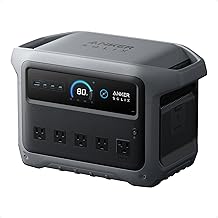
The Anker SOLIX C1000 Gen 2 offers 1,024Wh LiFePO4 capacity with up to 2,000W continuous output (3,000W peak). It features 49-minute ultra-fast recharging at the recharging rate of 1,600W, enabling rapid restoration after outages. With multiple USB-C and USB-A ports, this compact model supports powering several devices quickly, making it suitable for emergency backup, remote work setups, or camping where quick recharge matters.
Buying Guide: Key Purchase Considerations
When selecting a battery powered generator for home backup or off-grid use, consider the following factors to match your needs:
- Capacity and longevity: LiFePO4 chemistry typically offers longer cycle life and better thermal stability. Choose a battery capacity that covers your essential loads for the expected outage duration, and note expandable options if you anticipate longer events.
- Output power and surge: Assess continuous (rated) power for everyday devices and surge (peak) power for motors and certain tools. A unit with higher surge can handle more appliances at startup.
- Recharge speed and methods: Fast recharging reduces downtime between outages. Look for AC, USB-C PD, car, and solar charging compatibility to maximize uptime during extended outages or remote locations.
- Port accessibility: Ensure a mix of outlets (AC, USB-C, USB-A, DC car ports) so you can power essential appliances, laptops, and small electronics without adapters.
- Portability vs. capacity: Heavier, high-capacity models provide longer runtime but are less portable. Consider a balance that fits your space, mobility needs, and storage conditions.
- Durability and warranties: Outdoor-ready builds with solid casings and warranties can reduce long-term risk. Review temperature range and design for frequent transport if you plan to move the unit often.
- Noise and emissions: Battery-powered units run quietly and without fuel combustion, which is advantageous for home environments, camping, and RV use.
- Expandability: Some systems support additional battery packs. If you foresee needing more runtime in the future, choose a model that allows easy expansion.
- Solar compatibility: If you prefer off-grid energy, verify solar panel compatibility and charging efficiency to optimize solar-powered operation.
These considerations help compare models across the spectrum—from compact, portable setups to high-capacity home backup systems. Always align the device’s specifications with your critical needs, such as how many devices you must run and for how long, to determine the best match.