Discover top grid-tie inverters capable of battery storage, MPPT optimization, and flexible PV/battery integration. This guide highlights five reliable options that support various input ranges, battery voltages, and control modes to suit American homes and small businesses aiming to maximize solar energy use and resilience.
| Product | Brand | PV Input Range | Battery Voltage | Output |
|---|---|---|---|---|
| Micro Grid-Tie Inverter with Battery Storage (UDM-GS 800W) | POWLSOJX | 20V-60V | 36V/48V | 180-265VAC |
| Grid Tie Inverter 600W | Y&H | 15-22V MPPT (PV) | — | AC110V |
| Micro Grid-Tie Inverter with Battery Storage (UDM-GS 1250W) | POWLSOJX | 20V-60V | 36V/48V | 180-265VAC |
| 1000W Grid Tie Inverter | JJIESHENG | 36V solar panel | 36V | 1100W (AC output) |
| TINGEN 1200W Grid Tie Inverter | TINGEN | 55-90V | 48V | 90-140V AC |
POWLSOJX Micro Grid-Tie Inverter with Battery Storage (800W)
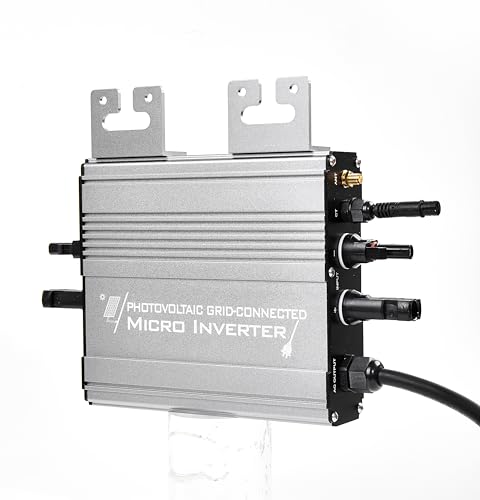
The POWLSOJX UDM-GS 800W combines grid-tie operation with battery storage, offering multiple connection modes and APP control for remote monitoring. It supports 20V-60V PV input and 36V/48V battery banks, with an AC output range of 180-265VAC. The device is designed for flexible configuration, including simultaneous inverting and battery storage, and features a high-performance MPPT to optimize solar harvest. This model is suitable for homes seeking integrated energy storage and grid-tied backups.
Y&H Grid Tie Inverter 600W

The Y&H 600W grid-tie unit is designed for 12V or similar panel configurations with MPPT in the 15-22V range. It emphasizes clear guidance for proper wiring and heat management, noting that the inverter can generate heat and should be placed in a ventilated, cool environment. It is suitable for smaller solar installations where efficient DC-to-AC conversion and reliable grid back-up are desired.
Y&H 1200W Grid Tie Inverter With LCD

This 1200W Y&H model includes an LCD display to show the working status and supports setting photovoltaic/battery modes. It is designed for 48V-60V battery inputs with an AC output in the 110V range. It emphasizes MPPT for efficient energy harvesting and is positioned for larger residential or small commercial installations that require dependable grid-tie operation with battery support.
POWLSOJX Micro Grid-Tie Inverter (1000W)
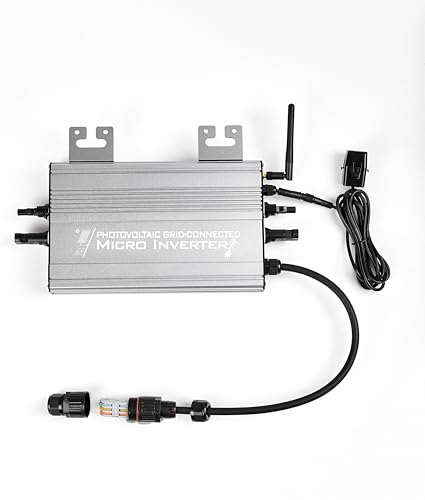
The 1000W POWLSOJX unit mirrors the 800W model’s flexibility with higher power capacity. It supports 2 x 600Wp PV inputs with 36V or 48V batteries, six connection modes, and robust MPPT control to maximize energy capture. This option is suitable for medium-sized residential systems or backup configurations that require stronger inverter performance without sacrificing modular integration.
TINGEN 1200W Grid Tie Inverter
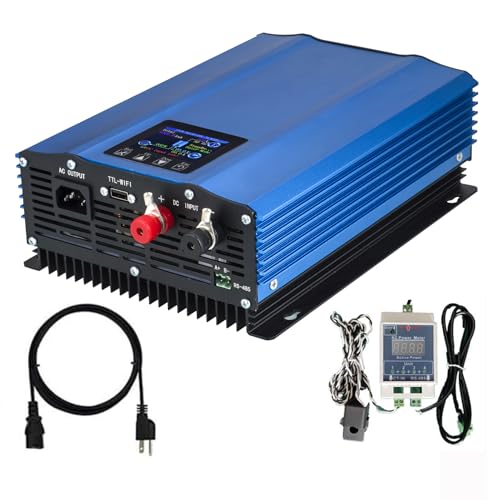
The TINGEN 1200W grid-tie offers an LCD display for real-time parameters and four operation modes, including PV-focused and battery enhancer configurations. It supports higher PV input voltages (55-90V) and 48V battery systems, with AC output in the 90-140V range. This model is well-suited for users expanding to higher voltage solar arrays or integrating battery backup for reliable performance during outages.
Buying Guide: Key Purchase Considerations
When choosing a battery-ready grid-tie inverter, consider the following factors to ensure a match with your solar setup and energy goals.
- PV input range and voltage compatibility: Ensure the inverter’s MPPT and voltage range align with your solar panels and preferred battery voltage (e.g., 12V, 24V, 36V, 48V). A wider MPPT window helps maximize harvest in varying sun conditions.
- Battery compatibility: Confirm support for your battery chemistry and voltage. Some models emphasize 36V/48V systems, while others target lower voltages.
- Power rating and headroom: If you anticipate growing system size, choose an inverter with higher continuous power and the ability to scale without performance loss.
- MPPT performance: A robust MPPT algorithm improves energy capture, especially under partial shading or temperature changes. Look for stated MPPT efficiency and tracking accuracy.
- Modes and control: Consider units offering multiple connection modes, load shifting, and APP or LCD interfaces for monitoring and control. Remote control can simplify maintenance and optimization.
- Cooling and enclosure: Effective cooling reduces thermal losses and extends inverter life. Ensure installation in a ventilated area, and be mindful of ambient temperatures in your locale.
- Safety and certifications: Check for necessary electrical certifications and protection features such as overvoltage, short-circuit, and anti-islanding safeguards.
- Wiring and installation: Review wiring requirements, conduit needs, and proper connection to PV panels, batteries, and the grid. Miswiring can cause damage or inefficiencies.
Across these models, the trade-offs involve capacity versus cost, voltage compatibility, and the balance between feature-rich control and straightforward operation. For users prioritizing energy storage integration, models with flexible battery compatibility and robust MPPT tend to deliver superior long-term performance. For smaller installations, lighter, simpler grid-tie units can efficiently manage solar output with adequate safety features.