When power outages strike or you’re off the grid, a reliable backup power solution keeps essential devices running. This guide highlights five top-rated backup power generators and portable power stations designed for homes, camping, and travel. Each option balances capacity, recharge speed, portability, and safety to fit different scenarios without relying on fuel-powered generators for indoor use.
| Product | Brand | Capacity | Best For |
|---|---|---|---|
| APC BE600M1 Back-UPS | APC | 600 VA / 330 W | Home office and small electronics |
| Jackery Explorer 300 | Jackery | 293 Wh | Camping and light outdoor power |
| EF ECOFLOW Delta 2 | EF ECOFLOW | 1024 Wh | Home backup and RVs |
| Anker SOLIX C1000 Gen 2 | Anker | 1024 Wh | Emergency backup and remote work |
| MARBERO Portable Power Station 88Wh | MARBERO | 88 Wh | Ultra-portable camping and quick charges |
APC BE600M1 Back-UPS 600VA
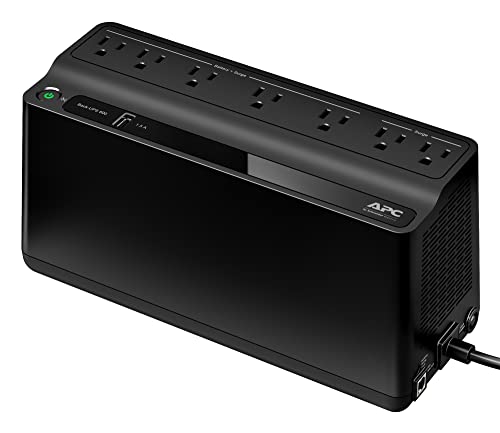
Uninterruptible power supply (UPS) designed to protect critical electronics during short outages. The APC BE600M1 provides 600 VA / 330 W of battery-backed power with seven outlets: five with battery backup and surge protection, two with surge protection only, plus a USB charger port for phones and small devices. While compact, it’s best for computers, modems, routers, and vital home office gear where a brief outage would be disruptive. Its integrated protections reduce voltage spikes, helping equipment avoid damage and data loss during brownouts and power flickers.
Key considerations: capacity and load management matter for your setup. The BE600M1 is ideal for single-room protection or a small how-to setup, offering a quick recovery time and a simple cable layout. For larger homes or devices that demand more wattage, pairing with a higher-capacity unit or a portable generator may be warranted.
Jackery Explorer 300 Portable Power Station

The Explorer 300 offers 293 Wh of lithium-ion battery capacity in a compact, travel-friendly form. Weighing about 7.1 pounds, it powers two Pure Sine Wave AC outlets and supports multiple charging options, including 60W USB-C PD input/output, a fast charge port, USB-A, and a car port. It recharges quickly—up to 80% in roughly two hours via wall outlet and 60W PD USB-C—making it convenient for weekend getaways, camping, or as a quick home backup in mild outages. Its design emphasizes safe, stable power to charge laptops, cameras, drones, and small appliances without fuel or noisy operation.
Considerations include total wattage limits and the number of devices you need to power simultaneously. The Explorer 300 excels for light, on‑the‑go power needs but may not sustain high-wattage appliances for extended periods.
EF ECOFLOW Delta 2 Portable Power Station

The Delta 2 model delivers 1024 Wh with 1800 W AC output (and 100 W USB-C). It features rapid recharge speeds (0–80% in about 50 minutes, 0–100% in 80 minutes with AC input) and expandability for larger off-grid needs. With 15 outlets and LiFePO4 chemistry, this unit emphasizes safety, longer cycle life, and ample capacity for home backup, camping, and RV use. It supports solar charging and can be paired with additional batteries for extra capacity, making it a strong all-around option for longer outages or higher power demands.
When evaluating, note recharge speed, total output, and the compatibility of ports with your devices, as well as the potential for future expansion via additional packs or solar input.
Anker SOLIX C1000 Gen 2 Portable Power Station

The Anker SOLIX C1000 Gen 2 offers 1,024 Wh of LiFePO4 energy with a substantial 2,000 W output (3,000 W peak). It recharges rapidly using HyperFlash technology, reaching full charge in about 49 minutes with supported input, and can power up to 10 devices simultaneously. Portable and compact for its capacity, it’s well-suited for emergency backup, remote work, and off-grid living. The battery chemistry (LiFePO4) provides longevity and stability for extended use in demanding environments.
Key considerations include recharge speed, port variety, and app-based controls for monitoring. The C1000 Gen 2 balances high power with portability, though it’s heavier than smaller models and may be out of reach for ultra-light travel scenarios.
Portable Power Station 600W 293Wh (bailibatt)

This bailibatt model delivers 600 W continuous output (1200 W surge) from a 293 Wh lithium battery. It provides seven output ports, including one 600W AC outlet, USB-C PD ports, USB-A, fast-charge ports, car port, and DC. Weighing around 7.7 pounds, it emphasizes portability for home backup, camping, and travel. With multiple output options and a compact footprint, it’s practical for charging laptops, cameras, and small appliances during outdoor adventures or minor outages.
When choosing, assess the total load you expect to run and ensure the port mix matches your device inventory. This model suits moderate power needs on the go rather than sustained heavy loads.
MARBERO Portable Power Station 88Wh

The MARBERO 88Wh power station focuses on ultra-portability for quick charges and light duty off-grid use. With eight output ports, it supports AC outlets, USB-C PD, USB-A, and car DC, supplying up to a combined 120 W or so for small devices. Its compact design makes it ideal for short camping trips, tablets, smartphones, cameras, and other essential electronics. It’s best viewed as a supplementary power source rather than a primary backup for high-wattage appliances.
Consider how many devices you intend to power and the total runtime at your typical outage length. Its portability makes it a practical add-on for travelers and minimalist setups.
Buying Guide: Key Purchase Considerations
- Power capacity and outlets: Match capacity (Wh or VA) to your essential devices. Count the number of ports you need and ensure there are both AC and USB options if you rely on laptops, phones, and cameras.
- Recharge speed and sources: Consider how fast you need a recharge and whether you will recharge from wall outlets, car adapters, or solar panels. LiFePO4 chemistry offers longer cycle life and safety for many models, especially larger packs.
- Portability vs. power: Heavier models deliver more power but are less portable. For camping or travel, prioritize lighter units with adequate wattage for your critical devices; for home backup, higher capacity units or a UPS pairing may be preferable.
- Safety and compatibility: Ensure the unit uses pure sine wave output for sensitive electronics and includes protection features such as short-circuit, overcharge, and thermal protection. Check if the device supports pass-through charging to run devices while charging the pack.
- Expandability: Some models offer expandable capacity with additional batteries or solar input. If you anticipate longer outages or growing power needs, consider expandable options.
- Port variety and real-world use: A broad mix of AC outlets, USB-C PD, USB-A, and car ports increases versatility for laptops, cameras, drones, phones, and small appliances.
- Noise, fumes, and emissions: Portable power stations provide silent operation without fuel, making them suitable for indoor use and quiet environments.
In summary, selecting a backup power solution depends on your typical use case: compact, silent, and portable for travel and camping; or higher-capacity, feature-rich options for home backup and work continuity. The products listed here span these needs, offering varied capacities, recharge options, and form factors to fit different American households and outdoor lifestyles.