When working with sensitive electronics or static-prone tasks, a reliable anti-static floor mat can protect components and improve comfort. This guide highlights five durable options, their key features, and how to choose the right mat for your workspace. The selections balance dissipative and conductive anti-static properties with comfort, durability, and everyday usability.
| Product | Brand | Type | Size (approx.) | Key Benefit |
|---|---|---|---|---|
| NoTrax 825 Cushion Stat™ w/Dyna-Shield® | Notrax | Cushion Stat dissipative/anti-static | 3′ x 5′ / 2′ x 3′ | High wear protection with Dyna-Shield top layer |
| Groundhug by Scientific Americas | Groundhug | ESD anti-static floor mat with grounding cable | 4′ x 3′ | Heat resistant with dual-layer rubber construction |
| Drydiet Anti Fatigue Mat | Drydiet | Anti-fatigue with ESD conductivity | 3’x5′ / 2’x3′ | Ergonomic comfort plus static protection |
| Floortex Anti-Static Vinyl Lipped Chair Mat | Floortex | Anti-static vinyl chair mat | 36″ x 48″ | Protects carpets; easy chair movement |
| Dissipative/Conductive ESD Rubber Mat | Scientific Americas | Disipative/conductive rubber mat | 36″ x 48″ | Durable for PCB traffic with heat/chemical resistance |
These products cover a range from lightweight desk-area solutions to larger workshop mats, ensuring a proper static-dissipation path while supporting movement, comfort, and durability. The selections emphasize reliable static control, resistance to heat and chemicals, and suitability for electronics assembly, repair, or office workstations.
Notrax Cushion Stat with Dyna-Shield

Product overview: This Dissipative/Anti-Static mat uses a Notrax exclusive Dyna-Shield PVC sponge, designed to absorb static electricity and protect sensitive circuitry. The top protective layer adds wear resistance, extending the mat’s life in demanding environments. The Cushion Stat construction provides comfortable cushioning while maintaining effective static control.
Notrax Cushion Stat 2′ x 3′

Product overview: This smaller variant shares the Cushion Stat philosophy—dissipative/anti-static properties with a compact footprint suitable for tighter work areas or tool stations. While specific dimensions are smaller, the inclusion of Dyna-Shield and protective top layer maintains durability and static protection for electronics-focused tasks.
Groundhug ESD Anti-Static Floor Mat

Product overview: This 0.08″ thick dual-layer rubber mat combines a dissipative top layer with a conductive bottom layer, delivering robust ESD protection. It stands up to heat, chemicals, and heavy traffic, making it suitable for soldering areas, assembly benches, and repair stations where static control is essential.
Floortex Anti-Static Vinyl Lipped Chair Mat

Product overview: This chair mat features anti-static PVC to prevent static buildup and dust around sensitive equipment. It is designed for carpets, offering easy chair mobility and ergonomic benefits. The lip helps keep mat in place while protecting carpet piles from rolling chair casters.
Floortex Computex Anti-Static Chair Mat
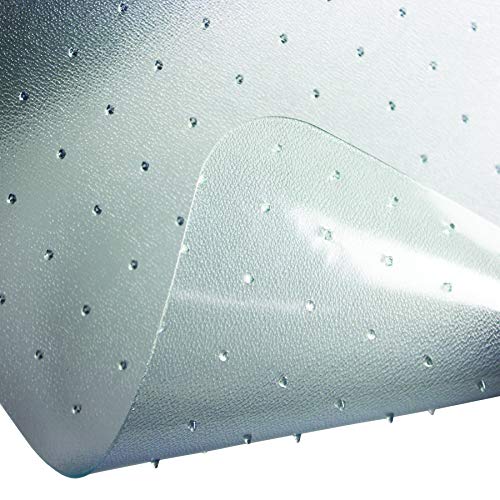
Product overview: The Computex mat adds an anti-static formulation for improved electrostatic dissipation while providing a clear, easy-glide surface. It’s designed to protect carpets and floors and reduce static-related buildup around desks and workstations, contributing to a cleaner electronics workspace.
Scientific Americas Dissipative/Conductive Rubber Mat

Product overview: This gray speckled rubber mat offers dissipative and conductive properties with 3 mil thickness. It is designed to withstand harsh environments, including heat and common chemicals, while providing solid static control for PCB assembly areas and carts that frequently travel across the surface.
Buying Guide: Key Considerations for Anti-Static Floor Mats
- Static control mechanism: Determine whether you need dissipative or conductive properties. Dissipative mats reduce charge buildup gradually, while conductive mats provide a faster discharge path to ground. Consider the electronics you handle and how quickly static should be removed.
- Thickness and durability: Heavier-duty environments benefit from thicker mats that resist wear, chemicals, and heat. Lightweight mats are easier to move but may wear faster under heavy traffic.
- Surface comfort: Ergonomic features such as anti-fatigue properties help reduce fatigue during long standing sessions. Look for cushioned cores or memory foam layers if comfort is a priority.
- Grounding compatibility: Some mats include grounding cables or rely on grounded workstations. Ensure your setup supports proper grounding connections to avoid static buildup.
- Environment and maintenance: For soldering or chemical-heavy environments, choose mats with chemical resistance and heat tolerance. Easier-to-clean surfaces reduce maintenance time.
- Carpet vs. hard floors: Chair and caster compatibility matters. Lipped or edge-protected mats prevent rolling off the floor and protect carpet piles on desks and workstations.
- Size options: Select mat sizes that fit your workspace, leaving room for movement and tool placement. Larger mats provide broader static protection but require more space and cost.
When selecting an anti-static floor mat, balance static-control performance with comfort, durability, and the specific tasks at hand. For electronics work, prioritize dissipative or conductive properties aligned with your grounding plan, then evaluate ergonomics and surface durability to ensure long-term usability.