When selecting a 50 amp propane generator, homeowners seek reliable dual-fuel or tri-fuel options that can sustain essential loads during outages. This guide highlights five top recommendations that deliver substantial starting watts, long run times, and safety features such as CO sensors and transfer-switch readiness. Each model supports propane for longer convenience and flexible fuel management while maintaining solid performance across American homes.
| Brand | Model | Fuel Options | Key Strength |
|---|---|---|---|
| Westinghouse | 12500 Watt Dual Fuel | Gas / Propane | Remote start, transfer switch ready |
| DuroStar | DS13000MX | Gas / Propane | High power, CO alert |
| Westinghouse | 14500 Peak Watt Tri-Fuel | Gas / Propane / Natural Gas | Long runtime, multiple fuel types |
| WEN | DF1100T | Gas / Propane | Electric start, dual voltage |
| Westinghouse | 12500 Peak Watt Dual Fuel (CO Sensor) | Gas / Propane | CO shutdown, robust outlets |
The following selections focus on big-load reliability, transfer-switch compatibility, and safety features that help keep critical circuits powered during outages. Each product entry includes a concise overview of its capabilities and how it fits a 50 amp propane-ready setup.
Westinghouse 12500 Watt Dual Fuel Backup Generator

The Westinghouse 12500 Watt Dual Fuel generator offers gasoline and propane options with remote start via included key fob. It supports transfer switch readiness for seamless integration with home electrical panels. Running watts reach up to 9500 on gas and 8500 on propane, with 12 hours of run time on a 6.6-gallon tank. This model includes two GFCI outlets and a 50A RV-ready outlet, plus an L14-30R 30A transfer switch connection. A durable 457cc engine powers the unit, with automatic low-oil shutdown and a digital hour meter to help monitor maintenance needs. VFT real-time output display assists in managing loads during outages.
DuroStar DS13000MX 13,000-Watt Dual Fuel Generator

Designed for whole-home power backup, the DS13000MX provides 13,000 watts on gasoline with dual fuel capability to propane for extended runtimes and cleaner emissions. The unit is built for rugged use and includes CO alert technology that automatically shuts the generator if elevated carbon monoxide is detected, enhancing safety for indoor and semi-enclosed spaces during outages.
Westinghouse 14500 Peak Watt Tri-Fuel Backup Generator

With a peak output of 14,500 watts on gas and 13,500 on propane, this tri-fuel model also accommodates natural gas. It features a heavy-duty 550cc engine, a long runtime on a 9.5-gallon tank, and built-in fuel gauge. The unit supports transfer switch readiness and includes multiple outlets protected by rubber covers for weather safety. This generator is positioned as a robust solution for larger homes or extended outages requiring substantial power on multiple circuits.
WEN 11,000-Watt Dual Fuel Portable Generator
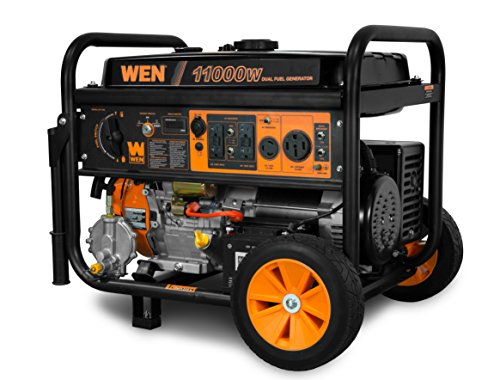
The WEN DF1100T offers 11,000 surge watts and 8,300 running watts on gasoline, plus 9,500 surge and 7,500 running watts on propane. It can switch quickly between 120V and 240V, supporting transfer switches and home backup needs. An electric start simplifies operation, and the 457cc engine provides reliable performance. This model is suitable for mid-to-large loads where higher efficiency and quick deployment matter during outages.
Westinghouse 12500 Peak Watt Dual Fuel Generator With CO Sensor

This model matches the need for a strong standby power source with a 12500 peak watt rating and 9500 running watts on gasoline, 11200 peak watts and 8500 running watts on propane. It includes a remote start, a 6.6-gallon fuel tank with gauge, and dual outlets including a 50A RV receptacle. Notably, it features automatic CO shutdown along with a digital hour meter for maintenance tracking and a robust engine designed for dependable long-term use.
Westinghouse Outdoor Power Equipment 14500 Peak Watt Dual Fuel

Designed for larger homes, this dual-fuel unit delivers 14,500 peak watts and 11,500 running watts on gasoline, with propane delivering 13,500 peak and 10,500 running watts. It runs up to 19 hours on a 9.5-gallon tank with a fuel gauge and supports high-amp outlets for whole-house loads. The engine uses a cast-iron sleeve and includes automatic low oil shutdown and CO safety features to protect occupants and equipment during prolonged outages.
Westinghouse 8200 Peak Watt Tri-Fuel Inverter Generator

As a tri-fuel inverter generator, this model offers 8200 peak watts on gasoline, 5940 running watts on propane, and 5280 running watts on natural gas, with a focus on fuel efficiency and low total harmonic distortion. It includes a 50A outlet and transfer-switch readiness. Inverter technology moderates RPM for reduced noise and improved fuel economy, making it suitable for sensitive electronics in addition to core household circuits.
Westinghouse 13500 Peak Watt Tri-Fuel Generator

With 13,500 peak watts and 10,500 running watts on propane, plus 9,500 running watts on natural gas, this tri-fuel unit provides flexible operation for larger homes. It features a 9.5-gallon tank with a fuel gauge and multiple protected outlets for a safe, scalable home backup solution. Remote start, CO safety shutdown, and a heavy-duty engine design support longer outage resilience and system reliability.
Buying Guide: Key Purchase Considerations
- Fuel flexibility: Dual fuel and tri-fuel generators offer versatility during fuel shortages and outages. Consider how long each fuel type can sustain essential circuits.
- Power output: For home backup, prioritize units with high peak and running watts to cover critical loads like refrigeration, HVAC, and lights. Ensure the 50A outlets can feed prepared circuits via a transfer switch.
- Transfer switch readiness: A transfer switch connection simplifies integration with your home’s electrical panel and minimizes manual switching risks.
- Safety features: Look for CO sensors, automatic shutdowns, and weather-resistant outlets with protective covers to prevent exposure to the elements during outages.
- Run time and tank size: Larger fuel tanks extend runtime; match to typical outage durations you anticipate and consider fuel availability in your area.
- Engine durability: Cast iron sleeves and robust OHV engines are indicators of longevity. Regular maintenance intervals should be understood before purchase.
- Noise and comfort: Inverter-based models generally run quieter and more fuel-efficient, which matters if you’ll use the generator near living spaces.
- Portability vs. stationary needs: Portable models are versatile for RVs and job sites, while transfer-switch ready units may be better for fixed home backup setups.