Finding a reliable 5,000-watt generator can secure emergency power for your home, RV trips, and essential devices. This guide highlights five top options, comparing dual-fuel capability, noise levels, remote starts, and safety features like CO sensors and automatic shutoffs. Each model is evaluated for everyday American use, so you can choose based on runtime, portability, and compatibility with home or vehicle charging needs.
Summary Table of Selected Products
| Product | Brand | Power (Peak / Running) | Fuel Type | Key Safety/Features |
|---|---|---|---|---|
| DF680iX | WEN | 6800 / 5100W | Gasoline / Propane | CO Watchdog, Bonded-neutral 240V, electric start |
| Westinghouse 5000 Peak | Westinghouse | 5000 / 3900W | Gas | Remote start, RV/30A outlets, LED data center |
| PowerSmart 5000 | PowerSmart | 5000 / 4000W | Gas | CO Protect, quiet operation |
| Westinghouse Dual Fuel 5000 | Westinghouse | 5000 / 3900W | Gas / Propane | Remote start, parallel capable, CO sensor |
| Westinghouse 4650 | Westinghouse | 4650 / 3600W | Gas | CO Sensor, multiple outlets |
WEN 6800-Watt Dual Fuel Inverter Generator

The DF680iX combines dual-fuel flexibility with smart safety features in a compact inverter platform. It runs on gasoline for up to 6800 surge watts and 5100 running watts, or propane for 6000 surge watts and 4500 running watts, giving users options according to fuel availability and noise tolerance. A bonded-neutral 240V configuration enables low-power Level 2 charging for batteries and hybrids, making it a practical option for vehicle backup. The WEN Watchdog CO Shutdown Sensor automatically turns off the unit if carbon monoxide levels become dangerous, adding a crucial safety layer for homes and campsites. This model includes electric start for quick recovery after a power interruption and is well-suited for RVing, camping, and small-home power needs.
Key features include dual-fuel versatility, a CO watchdog, and a user-friendly electronic start. For users seeking a reliable balance of power and safety, this generator offers respectable performance with ongoing fuel options. Potential buyers should consider fuel availability and any required accessories for quiet operation in residential areas.
Westinghouse 5000 Peak Watt Inverter with Remote Start

This generator delivers 5000 peak watts and 3900 running watts with a focus on quiet operation and portability. It features a remote start via key fob, multiple startup options (electric and recoil), and a mix of outlets including a 5–20R 120V duplex, RV-ready TT-30R, and two USB outlets. The unit is designed for travel trailers, homes, and outdoor events where noise and usability matter. An integrated rotating digital display provides real-time data on fuel level, power output, runtime, voltage, and total hours, helping users manage fuel and load efficiently. This model is particularly appealing for campers and small households needing reliable, quiet power with remote convenience.
PowerSmart 5000 Watt Portable Inverter Generator
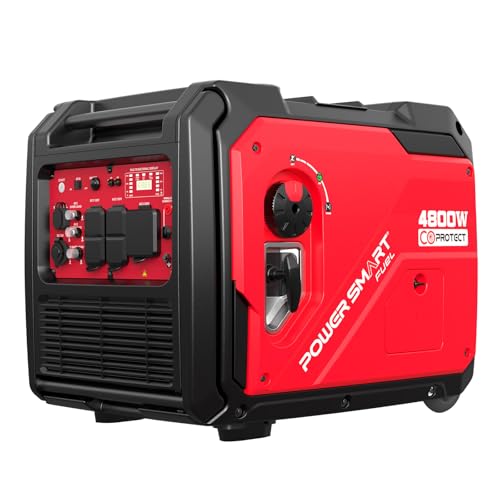
The PowerSmart model offers 5000 starting watts and 4000 running watts with less than 3% THD, delivering clean power for sensitive electronics. It provides up to 10 hours of runtime at half load and operates quietly at 59 dBA from 23 feet at 25% load, increasing its appeal for home use, camping, and tailgating. The design includes a wheel and handle kit for ease of transport, with an overall weight around 89 pounds. This balance of run time, noise control, and portability makes it a solid option for those prioritizing stable, quiet power with straightforward mobility.
Westinghouse 5000 Peak Watt Dual Fuel Inverter
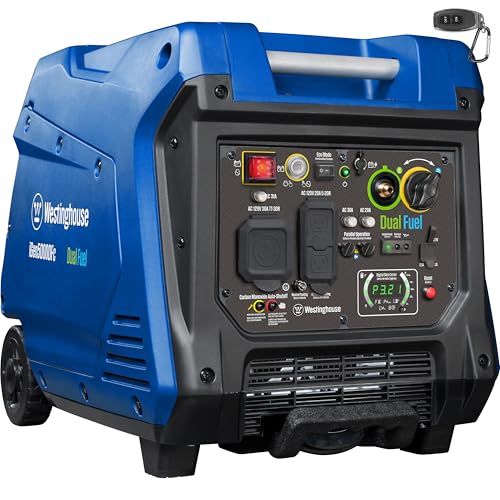
This dual-fuel inverter provides 5000 peak watts and 3900 running watts with less than 3% THD, featuring a grounded floating neutral and CO shutdown for safety. It includes a 5–20R 120V outlet, an RV-ready TT-30R 30A outlet, and two USB ports, enabling flexible power distribution for home, RV, or campsite use. The integrated CO sensing and automatic shutdown offer critical protection, while the parallel-capable design allows linking with another unit for added capacity. It is a practical, safety-focused option for users who value feature-rich, portable power with modern monitoring capabilities.
Westinghouse 6600 Peak Watt Home Backup Generator

This unit offers 5300 running watts and 6600 peak watts, with a 4.7-gallon tank and a fuel gauge for extended use. It includes a 120/240V volt selector, multiple receptacles (including RV-ready and transfer switch ready options), and rubber-outlet covers for safety. A 14.5-hour runtime per tank at typical loads makes it suitable for longer outages or RV adventures. It is designed to be transfer switch ready, delivering a practical solution for home backup with safer, code-compliant integration into existing electrical systems.
Generac GP3600 Portable Generator

Generac’s GP3600 uses PowerRush technology to deliver faster starting power, boosting capability by up to 40% for demanding loads. It includes built-in CO sensor protection and a large fuel-tank design with a gauge to monitor fuel levels, enhancing safety and reliability during emergencies or recreational use. The unit is designed for home backup, RV use, and outdoor activities where a balance of performance, safety, and extended runtime is essential. Its emphasis on smart protection makes it a dependable option for homeowners seeking a compact yet capable backup generator.
Westinghouse 6600 Peak Watt Home Backup Generator
Note: This entry reiterates the importance of safety and power availability in a larger backup unit. With a 6600 peak watt capacity and robust run time, it remains a strong option for emergency power, RVs, and home applications where dependable performance is critical. The unit’s support for transfer switches and RV-ready outlets makes it adaptable to different setups, while CO sensors contribute to safer operation in enclosed spaces.
Buying Guide: Key Purchase Considerations
- Power needs: Assess your essential devices and expected surge loads. Choose a unit with sufficient peak watts to cover startup requirements without overloading circuits.
- Fuel options: Dual-fuel models offer flexibility during fuel shortages or outages. Propane typically stores longer and burns cleaner, while gasoline provides higher peak power.
- Safety features: Look for automatic CO shutdown sensors, grounded outlets, and proper shutoffs for safe operation indoors or near sleeping areas.
- Noise and portability: Inverter models generally run quieter and lighter, which is advantageous for campsite use and residential neighborhoods. Consider weight, wheel kits, and ergonomic handles for easy transport.
- Outlets and compatibility: Ensure the generator has the right outlets (RV TT-30R, 5–20R, USB) and, if needed, the option to parallel with another unit for extra capacity.
- Remote start and convenience: Remote electric start adds ease during cold starts or after outages. Check for battery life and ease of access to the recoil start as a backup option.
- Runtime and efficiency: Higher running watts with efficient fuel consumption leads to longer runtimes between refuels—critical for extended outages.
- Maintenance and service: Consider engines with durable designs, fuel gauges, and straightforward maintenance routines. Availability of replacement parts matters for long-term reliability.
Choosing the right 5,000-watt generator depends on how you plan to use it—home backup, RV adventures, or job-site power. The models listed here balance power, safety, and portability, giving you a range of options that fit typical American homes and mobile lifestyles. Always follow local regulations for generator placement and venting, and use carbon monoxide detectors when operating any fuel-powered unit indoors or in enclosed spaces.