Power resilience matters, whether you’re facing outages, camping trips, or off-grid living. This guide highlights five top 3000-watt class battery generators that deliver robust continuous output, fast recharging, and versatile ports. Each model is evaluated for home backup, RV use, and emergency scenarios, with a focus on reliability, battery chemistry, and expansion options. Read on to compare performance, charging speed, and practical features that help you keep essential devices running when the grid goes dark.
Summary of chosen products:
- Jackery HomePower 3000: 3600W continuous, 3072Wh, UPS within 20ms, AA/USB ports and RV connection
- Anker SOLIX C1000 Gen 2: 2000W output (3000W peak), 1024Wh LiFePO4, fastest recharge
- OUPES Mega 1: 2000W (4500W surge), 1024Wh LiFePO4, expandable up to 5120Wh
- Anker SOLIX F2000: 2400W (surge 3600W), LiFePO4, high device capacity
- DaranEner 1800W: 1800W / 3000W surge, 1382.4Wh LiFePO4, 15ms UPS
Jackery HomePower 3000 Portable Power Station

The Jackery HomePower 3000 provides a high-capacity backup solution with a 3600W continuous output and a 3072Wh battery. Its UPS feature supports seamless transfer within ≤20 milliseconds, making it suitable for security systems, medical refrigerators, and critical electronics during outages. With multiple ports including AC, USB-C, USB-A, and DC, and a dual 100W PD setup, this unit covers fast charging for phones and laptops while supporting RV use through a built-in TT-30 port. Suitable for home and outdoor scenarios, it balances power and portability for essential appliances.
Key considerations:
– Pros: Strong UPS performance, broad port selection, ample capacity for fridge and Wi-Fi, RV compatibility.
– Cons: Higher weight and size compared to smaller models; price reflects 3000W class capability.
Anker SOLIX C1000 Gen 2 Portable Power Station

The Anker SOLIX C1000 Gen 2 delivers 2,000W continuous output (3,000W peak) and a 1,024Wh LiFePO4 battery, with UltraFast charging in about 49 minutes. Its compact form makes it highly portable for travel or small spaces, and it supports a variety of devices via multiple ports. The system is ideal for emergency backups, remote work setups, and light off-grid living where space and speed matter.
Key considerations:
– Pros: Fast recharge, LiFePO4 chemistry for longevity, portable size, reliable 2kW output.
– Cons: Battery capacity may be tight for prolonged outages without solar expansion.
OUPES Mega 1 Portable Power Station
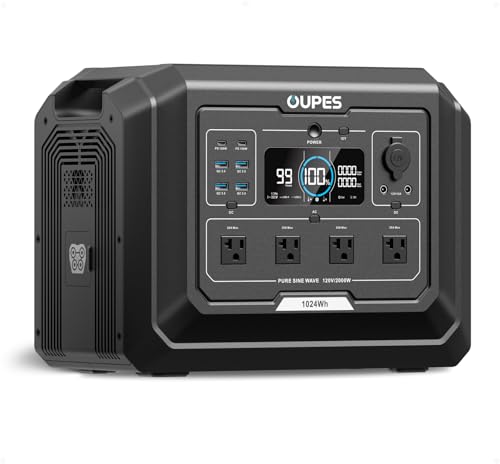
The OUPES Mega 1 offers 2000W continuous output with a 4500W surge and a 1024Wh LiFePO4 battery. Notably, it supports modular expansion, enabling up to 5120Wh by connecting two extra batteries, which makes it a scalable option for longer outages or more demanding loads. It also features professional-grade power delivery suitable for sensitive electronics, with a focus on stable and safe operation during power events.
Key considerations:
– Pros: Expandable capacity, high surge rating, solid energy density, suitable for professional or home backup.
– Cons: Requires additional batteries for larger setups; price adds up with expansion.
Anker SOLIX C1000 Gen 2 With Water-Resistant Bag

This package includes the SOLIX C1000 Gen 2 along with a water-resistant bag, enhancing outdoor usability. It features the same Fast 49-minute recharge via 1,600W input, 2,000W continuous output (3,000W peak), and 1,024Wh LiFePO4 battery. The added bag helps protect the unit from moisture and dust in camping, RV trips, or disaster-prepared environments, while maintaining portable convenience for families that travel frequently.
Key considerations:
– Pros: Outdoor-ready package, fast recharge, rugged build, ample device support.
– Cons: Higher cost when bundled with accessories; still a 2kW system that may require solar or grid recharge for extended outages.
Anker SOLIX F2000 Portable Power Station
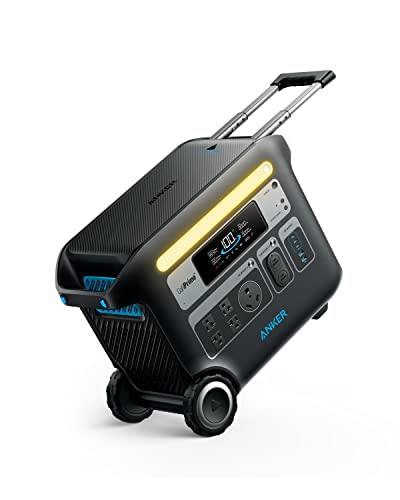
The SOLIX F2000, also known as PowerHouse 767, is a robust option with 2400W continuous output and generous device handling. Its LiFePO4 battery supports long life, while GaNPrime architecture helps with efficiency and compact design. It includes a range of ports (AC, USB-C, USB-A, RV port) to power multiple devices simultaneously. This model is well-suited for home backup, camping, and RV use, especially when you need to power several high-demand devices at once.
Key considerations:
– Pros: High device capacity, durable battery chemistry, extensive port selection.
– Cons: Heavier and potentially more expensive than smaller 2kW options; may be overkill for simple backup needs.
DaranEner Portable Power Station 1800W

The DaranEner unit provides 1800W continuous power (surge up to 3000W) with an 1382.4Wh LiFePO4 battery and a 15ms UPS switch. This configuration emphasizes rapid automatic switching to battery power during outages to protect sensitive devices like computers and routers. The battery chemistry and fast UPS make it a strong choice for users prioritizing uninterrupted operation for critical electronics in homes and on the road.
Key considerations:
– Pros: Very fast UPS response, solid LiFePO4 chemistry, good balance of capacity and port availability.
– Cons: Lower continuous output compared to 2kW-3kW mainstream models; expandability options are more limited.
Buying Guide: Key Purchase Considerations
- Power needs: Match continuous power (W) with your essential loads. If you have a fridge, wifi router, lights, and a few small appliances, 2000–3600W continuous output covers most needs.
- Battery chemistry and lifespan: LiFePO4 batteries typically offer longer cycle life and better thermal stability than other chemistries, which matters for long-term reliability.
- Recharge speed: Fast recharge reduces downtime. Look for models with UltraFast recharge via AC, and consider solar compatibility if you plan to stay off-grid.
- UPS and transfer time: A low transfer time (under 20 ms) protects sensitive devices. Verify whether the unit has a built-in UPS (some models feature automatic switchover).
- Portability vs capacity: Larger capacity often means heavier weight. Choose based on your space, whether it’s a home backup station or a portable RV solution.
- Expandability: Some models offer expandable batteries for longer outages. Factor in cost and compatibility when planning for future needs.
- Connectivity: Ensure port variety (AC outlets, USB-C, USB-A, RV/TT-30) matches your devices. Consider dedicated RV ports if you plan to power a camper.
- Durability and weather resistance: Outdoor-ready kits (with protective bags or enclosures) help during camping or travel in varying conditions.
- Warranty and support: Look for robust warranties and accessible customer support to protect your investment over time.
How To Choose For Your Situation
- Home backup: Prioritize high capacity (≥1000Wh) with strong UPS performance and multiple ports for essential appliances.
- RV and travel: Portability matters; consider compact units with RV-friendly ports and easy recharging on the go.
- Off-grid living: Consider expandable systems and solar compatibility to extend runtime without grid access.