Choosing a 24V DC PoE injector helps power network devices in remote locations, off-grid solar installations, and compact deployments where AC power isn’t readily available. This guide highlights five reliable options that support 24V input, deliver PoE+, and work with common outdoor and enterprise devices. Each product below is evaluated for compatibility, efficiency, and ease of integration with solar, battery, or DC power sources.
| Product | Brand | Key Benefit |
|---|---|---|
| Gigabit DC PoE+ Injector | PLUSPOE | Wide input range and PoE+, ideal for remote radios |
| 24V Gigabit POE Injector | PLUSPOE | Passive PoE mode with 24V output, flexible power sources |
| TP-Link PoE Injector | TP-Link | Passive 24V PoE with simple wall-mount design |
| iCreatin 24V Gigabit POE Injector | iCreatin | Compact 24V injector with protection features |
| PoE Texas DC-Powered PoE+ Injector | PoE Texas | Regulated 50V PoE+ for solar and battery setups |
Gigabit DC PoE+ Injector From PLUSPOE

This PLUSPOE model accepts a wide input range of 12-48VDC and outputs PoE+. It is compliant with 802.3af/at standards and supports gigabit Ethernet (10/100/1000 Mbps). The device is designed to power PoE+ equipment at distances up to 100 meters (328 ft) with its auto-sensing technology, which ensures up to 30W to a PoE+ device while remaining backward compatible with 802.3af devices. LEDs provide PoE diagnostics for quick troubleshooting, making it suitable for solar installations, field deployments, and remote surveillance cameras. Use cases include outdoor access points, cameras, and other PoE-capable devices in variable power environments.
24V Gigabit POE Injector From PLUSPOE

This injector provides a 12-48VDC input and outputs 24VDC at 1A (24W) in PoE mode B, powering devices via two pairs (4/5 positive and 7/8 negative). It is designed for inline use with remote infrastructure such as PtP and PmP devices from brands like Ubiquiti and Mikrotik, including Loco5AC, EdgeRouterX, and UniFi models. The design supports solar and RV solar setups, offering data rates up to Gigabit and built-in isolation to protect your gear. It’s well-suited for off-grid camera networks and rural network extensions where a stable 24V supply is available.
TP-Link PoE Injector 24V Passive
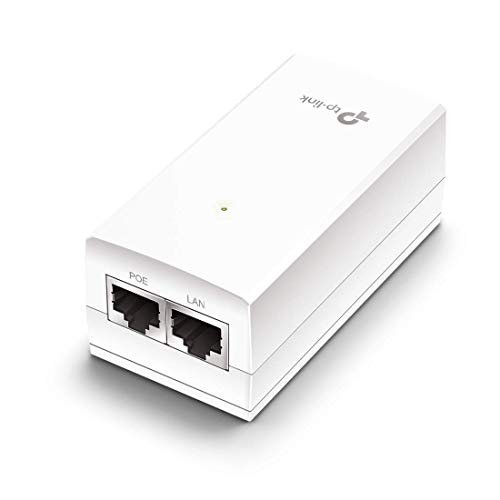
The TP-Link TL-PoE2412G provides a simple passive 24V PoE solution with gigabit ports and a compact form factor. It automatically determines the necessary power and is designed for wall-mounted deployment, making it convenient for space-constrained setups. This injector is a straightforward option for powering small access points or cameras where a fixed 24V PoE supply is sufficient and older PoE devices are in play, facilitating quick integration into existing networks and shelters or cabinets.
iCreatin 24V Gigabit POE Injector
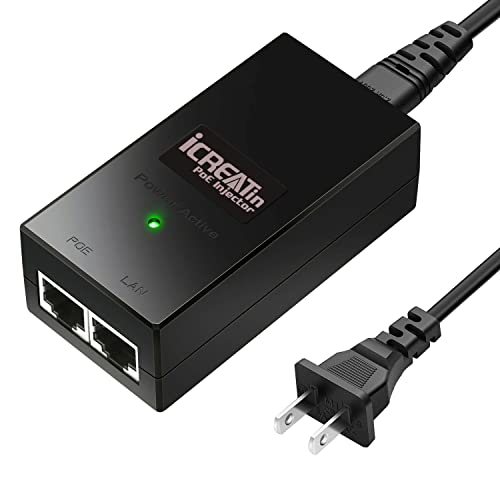
The iCreatin 24V Gigabit POE Injector is a compact, cost-effective passive PoE option for 24V devices. It is designed as a replacement adapter for specific 24V PoE devices and notes that it does not support 802.3af/at or 48V PoE. The device includes multiple protections such as over-current, over-load, over-voltage, and anti-interference protection to safeguard connected gear. It is geared toward users needing a small, budget-friendly PoE solution for 24V radios or cameras that operate within a restricted PoE profile.
PoE Texas 30W DC-Powered PoE+ Injector

This inline PoE injector from PoE Texas accepts a wide DC input range (12-60V) and outputs a regulated 50V PoE+ up to 30W, suitable for solar and battery-powered installations. It is designed to power IEEE 802.3af/at devices and is adaptable for remote WiFi, cameras, and radios. Two input options exist: a DC barrel input or RJ45 PoE data input, enabling flexible deployment in solar or off-grid projects. Note that included power supplies are not included, reflecting common field configurations where customers supply their own source.
Gigabit DC PoE+ Injector For ePMP And More

This PLUSPOE injector accepts 12-36V input and provides 50V 30W PoE+ output (Mode B). It supports 10/100/1000 Mbps and is designed to convert non-PoE Gigabit ports to PoE+ ports, enabling PoE device networking at extended distances up to 100 meters. The unit emphasizes compatibility with ePMP2000/3000, Force series, Q61, and various outdoor devices, making it a strong choice for robust, outdoor radio deployments where a reliable PoE supply is crucial.
Buying Guide: Key Considerations For 24V DC PoE Injectors
- Power delivery and mode: Determine whether you need PoE (802.3af/at) or passive PoE, and confirm the device’s required wattage (15.4W for 802.3af, 30W for PoE+). Some injectors offer Mode B (passive two-pair) suitable for certain radios.
- Input voltage and source: Choose an injector with a broad input range (e.g., 12-48V or 12-60V) to accommodate solar panels, batteries, or vehicle power. Check compatibility with your power source and duty cycle expectations.
- Distance and networking: Consider the maximum PoE-enabled distance (often up to 100 meters). If longer runs are needed, plan for mid-span power injectors or PoE extenders.
- Protection and reliability: Look for over-current, over-voltage, and anti-interference protections. For outdoor or solar installs, rugged housings and LEDs for diagnostics can simplify maintenance.
- Device compatibility: Ensure the injector supports your target devices (Ubiquiti, Mikrotik, TP-Link, etc.) and whether the output is standard 24V or a regulated 50V PoE+ output.
- Form factor and mounting: Wall-mountable or compact inline designs save space in cabinets or shelters and ease field deployment.
- Power source considerations: If using solar or batteries, verify whether the injector requires a dedicated power supply, or if it can be powered inline from the primary DC source.
- Installation scenario: For remote surveillance or PtP links, ensure you select a model with stable PoE output under varying weather and load conditions.
- Future-proofing: If you anticipate expanding your network, consider injectors that offer higher wattage support and compatibility with newer PoE standards to avoid frequent replacements.