A reliable battery system is essential for off-grid camper van life. This guide highlights five top battery options that balance capacity, durability, and compatibility with solar setups. Each option includes key features to help you compare performance, longevity, and installation ease for daily van use.
| Product | Brand | Voltage / Capacity | Key Feature |
|---|---|---|---|
| ECO-WORTHY 3584Wh 12V 280Ah LiFePO4 RV Battery | ECO-WORTHY | 12V, 280Ah | Real-time monitoring, low-temp protection, built-in 200A BMS |
| Redodo 12.8V 100Ah Group 24 LiFePO4 Battery | Redodo | 12.8V, 100Ah | Lightweight, 4000+ cycles, 100A BMS |
| Timeusb 24V 100Ah LiFePO4 Battery | Timeusb | 24V, 100Ah | Space-saving, 2x energy vs 12V, 4000+ cycles |
| NOCO Lithium NLX31: 12V 120Ah LiFePO4 | NOCO | 12V, 120Ah | High starting power, durable deep-cycle use |
| Redodo 2 Pack 12V 100Ah Group 24 LiFePO4 Battery | Redodo | 12.8V, 100Ah (pair) | Two-pack, 4000+ cycles, strong BMS protections |
Note: All products listed are suitable for camper van setups, including integration with solar panels, inverters, and battery boxes. Availability and specifications can vary by retailer or region. This guide emphasizes data from product listings to help you compare at-a-glance.
ECO-WORTHY 3584Wh 12V 280Ah LiFePO4 RV Battery

The ECO-WORTHY LiFePO4 battery integrates a built-in 200A BMS and low-temperature protection, supporting reliable operation in colder campsites. Real-time monitoring via the ECO-WORTHY app helps track voltage, current, and remaining capacity, enabling proactive maintenance and planning for off-grid energy needs. A robust metal-framed construction adds durability and shock resistance, making it suitable for mobile applications like campers and trailers.
Redodo 12.8V 100Ah Group 24 Battery

The Redodo 12.8V 100Ah LiFePO4 battery is designed to fit standard Group 24 compartments, with a compact footprint that makes it easy to install in van battery boxes. It emphasizes weight reduction and longer life, offering up to 4000 cycles and a built-in 100A BMS with fallback protections. This model is well-suited for RVs, vans, and off-grid solar storage where space and weight matter.
Timeusb 24V 100Ah LiFePO4 Battery

Timeusb offers a 24V LiFePO4 option with a compact, space-saving design. Its 100Ah capacity is paired with a durable BMS that manages overcharge, over-discharge, short circuits, and high temperature. The 2X energy claim reflects efficiency gains when used in series to achieve higher system voltage, potentially simplifying wiring for certain camper van setups that rely on 24V configurations.
NOCO Lithium NLX31: 12V LiFePO4 120Ah

NOCO’s NLX31 combines starter and deep-cycle performance in a dual-purpose 12V format. It delivers up to 1,600 amps peak for reliable engine starts and 120Ah of deep-cycle capacity with a 200A continuous discharge capability. This makes it a versatile choice for RVs that need strong starting power alongside sustained living-areas energy supply, while maintaining higher energy density than many traditional lead-acid options.
NOCO Snap-Top BG27 Battery Box

For camper van setups using Group 27 size batteries, the NOCO Snap-Top BG27 Battery Box provides rugged protection and straightforward installation. The snap-top design and pre-drilled mounting options simplify securing a deep-cycle or lithium battery in a confined space, while built-in mounting features reduce the need for additional straps and hardware in tight van compartments.
NOCO Snap-Top BG24 Battery Box

The Snap-Top BG24 Battery Box is designed for Group 24 batteries, combining a durable shell with an easy-install design. It accommodates 12V automotive, marine, RV, and deep-cycle lithium batteries, making it a practical enclosure option for van builds that prioritize organized wiring and reliable protection against moisture and physical impact in mobile settings.
Redodo 2 Pack 12V 100Ah Group 24 LiFePO4 Battery
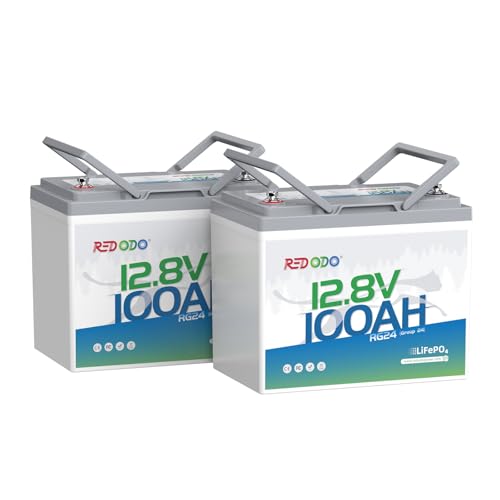
This 2-pack provides two 12.8V 100Ah LiFePO4 batteries with a robust 100A BMS and long cycle life, designed for easier parallel or multi-battery configurations in larger van energy systems. The combined capacity supports extended off-grid duration and can reduce run-time interruptions in all-in-one camper setups.
Buying Guide: Key Purchase Considerations For Camper Van Batteries
- System voltage and compatibility: Campers often use 12V systems, but some setups leverage 24V or higher inverters. Choose a battery chemistry and voltage that align with your inverter, charger, and solar controller. LiFePO4 is common for its long life and safety.
- Capacity and runtime needs: Calculate daily energy consumption (lights, fridge, water pump, electronics) and match it with usable capacity, considering DoD (depth of discharge) and cycles. Larger vans with higher energy needs may justify 200–280Ah or multi-battery configurations.
- Cycle life and durability: A higher cycle count translates to longer service life, especially for frequent off-grid use. Look for 2000–4000+ cycles in LiFePO4 options and consider warranty terms.
- Temperature considerations: Cold weather can affect performance. Batteries with low-temperature protections and BMS safeguards help prevent damage and ensure reliability in chilly campsites.
- Weight and space: Van conversions must balance weight and space. LiFePO4 packs generally provide better energy density and lighter weight than lead-acid, enabling more usable capacity within vehicle constraints.
- Battery management system (BMS): A strong BMS protects against overcharge, over-discharge, short circuits, and temperature extremes. Ensure the BMS supports your charging sources (solar, alternator, shore power).
- Expansion options: If you plan to add solar or more loads later, consider modular or dual-pack configurations that allow easy expansion without rewiring complexity.
- Physical protection: For mobile use, select battery enclosures or boxes with solid construction, secure mounting, and weather resistance to protect against vibrations and moisture.
- Charging strategy: Verify compatibility with your solar charger, alternator, and any generator. Some batteries benefit from optimized charging profiles or precharge routines to maximize efficiency and lifespan.